“From our earliest days as hunter-gatherers, it was women who stoked the first hearth fires, stirred the first pots, brewed the first beer, and baked the first bread.”

 Danielle Prohom Olson from ‘Reclaiming the Magical Herstory of Food’ for GatherVictoria.com (2017)

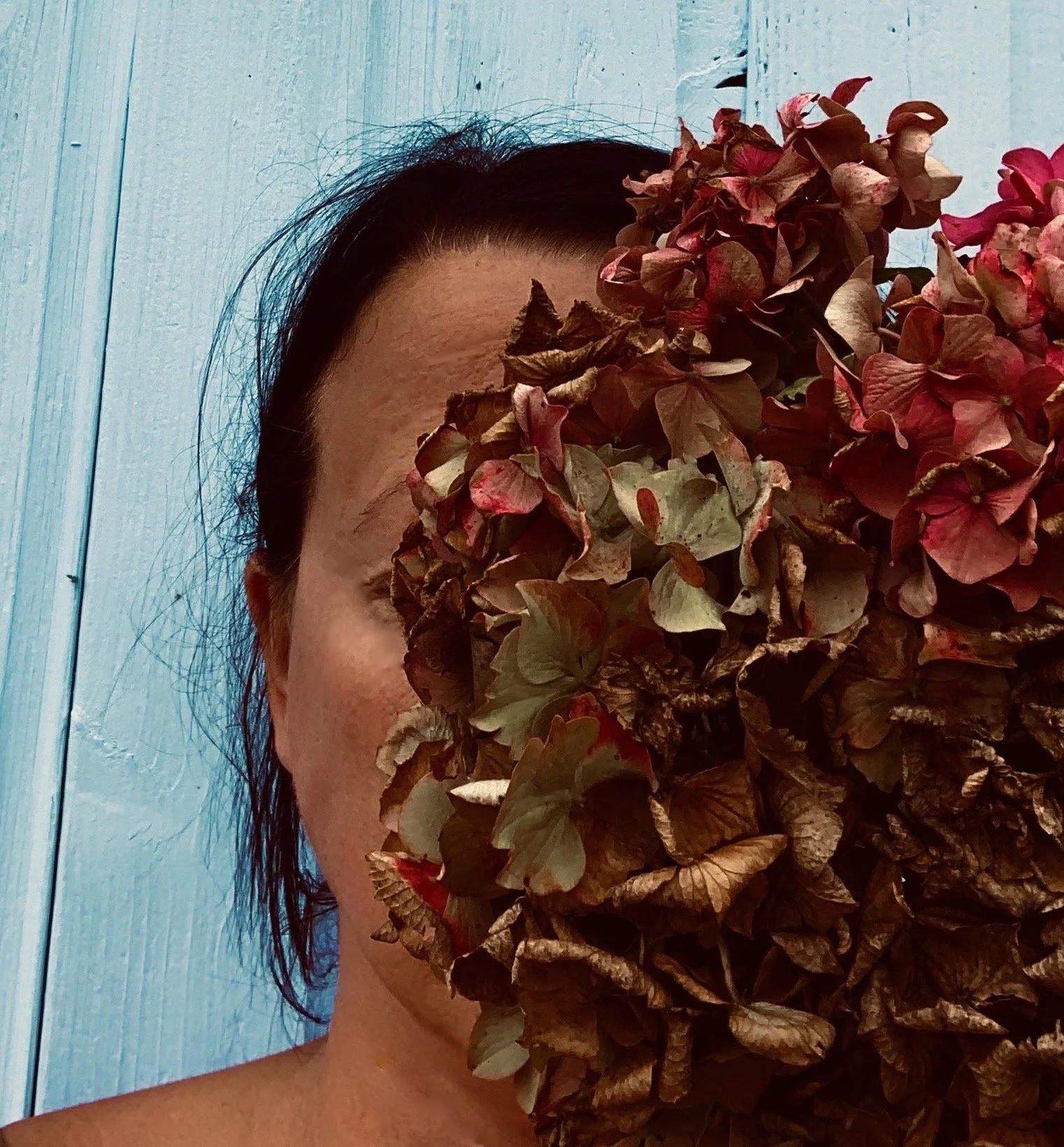
Half of a woman’s face is obscured by a large bouquet of dried flowers, with only her eye, eyebrow, and part of her face visible. She has dark hair and is standing in front of a painted light blue wooden wall.

Growing up in the North of England has deeply influenced my art practice, shaping the core of my research. My surroundings have always informed my creative journey, an evolving relationship with the object, nature, and womanhood.

In the early years of my practice, I worked with traditional, object-focused methods, creating pieces that offered a sense of permanence and security. These conventional materials and techniques were a strong foundation, but over time, I felt constrained by them. As my awareness of environmental issues deepened, I questioned the sustainability of my practice and the lasting impact of the materials I was using. This led to a significant shift in my work, a transition to incorporating a more fluid, sustainable, and nature-driven approach.

ARTISTS STATEMENT

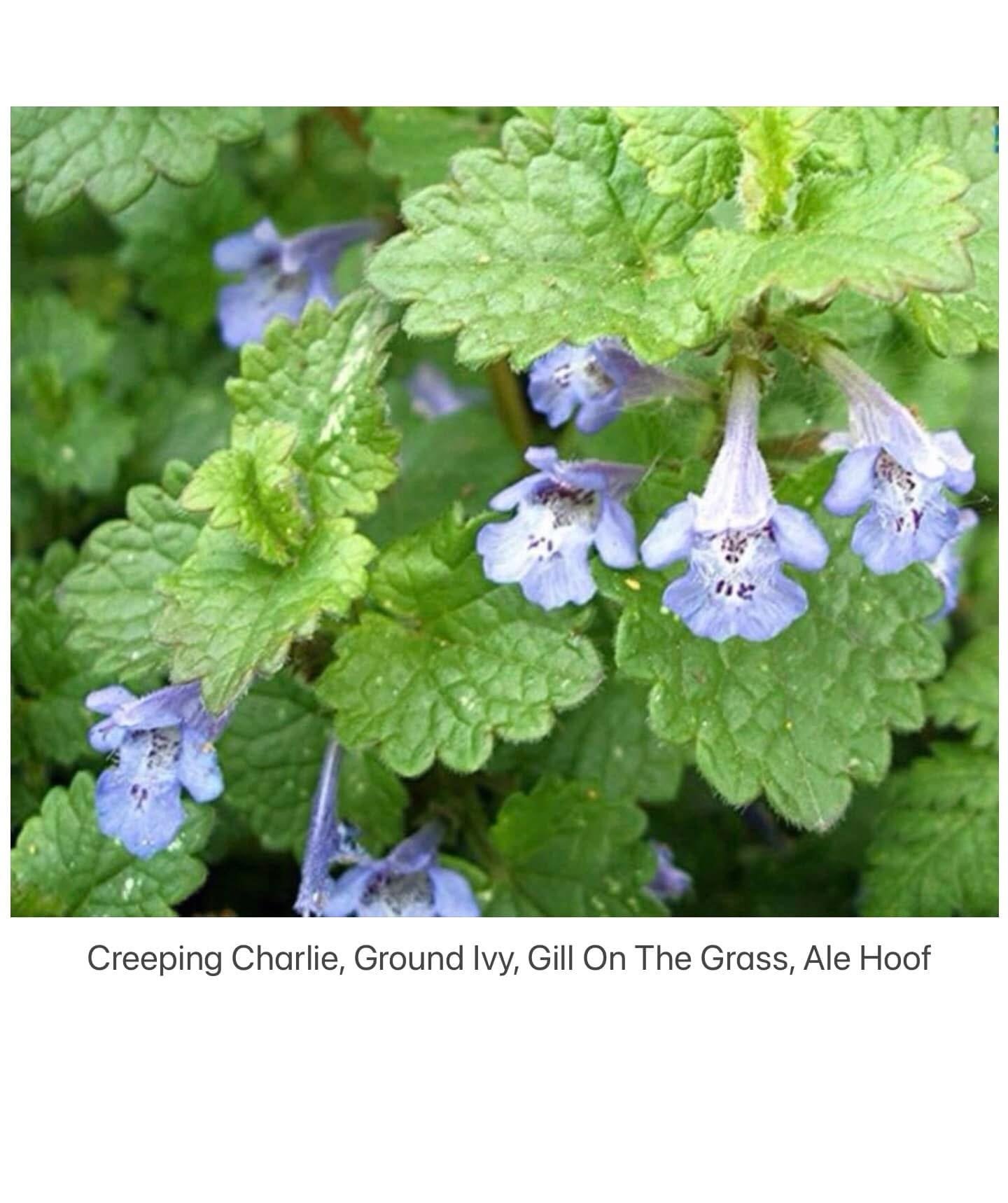
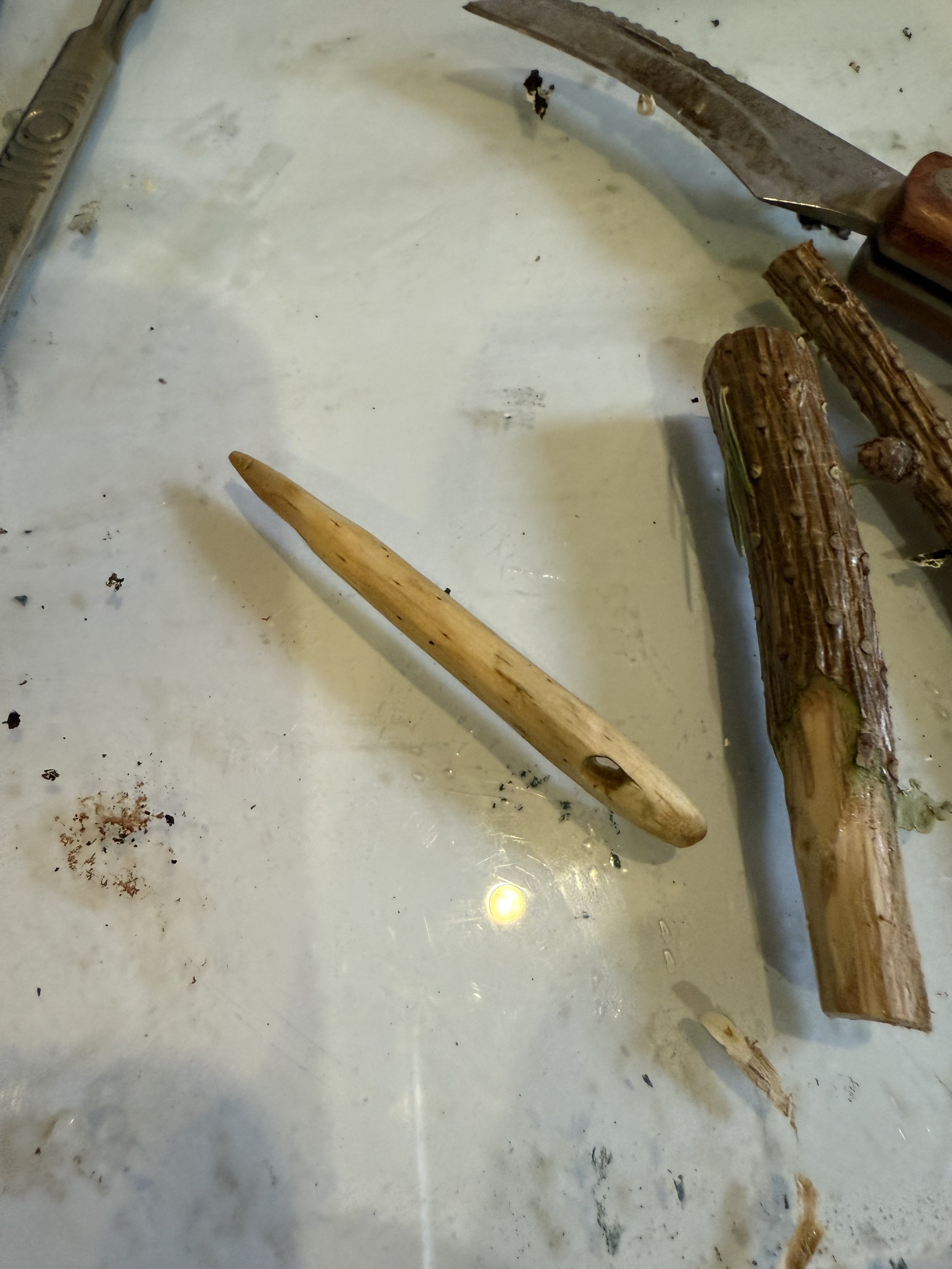
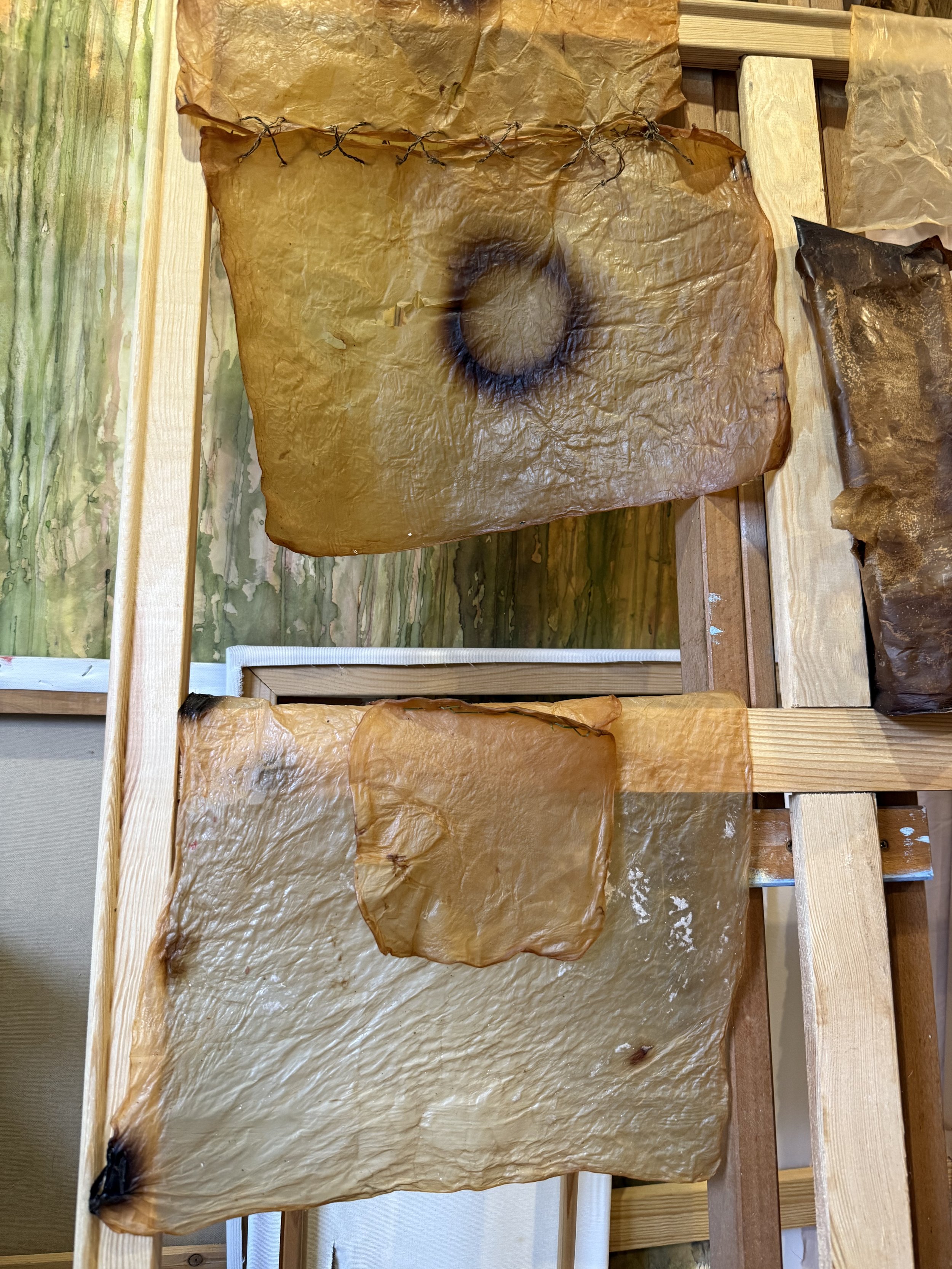
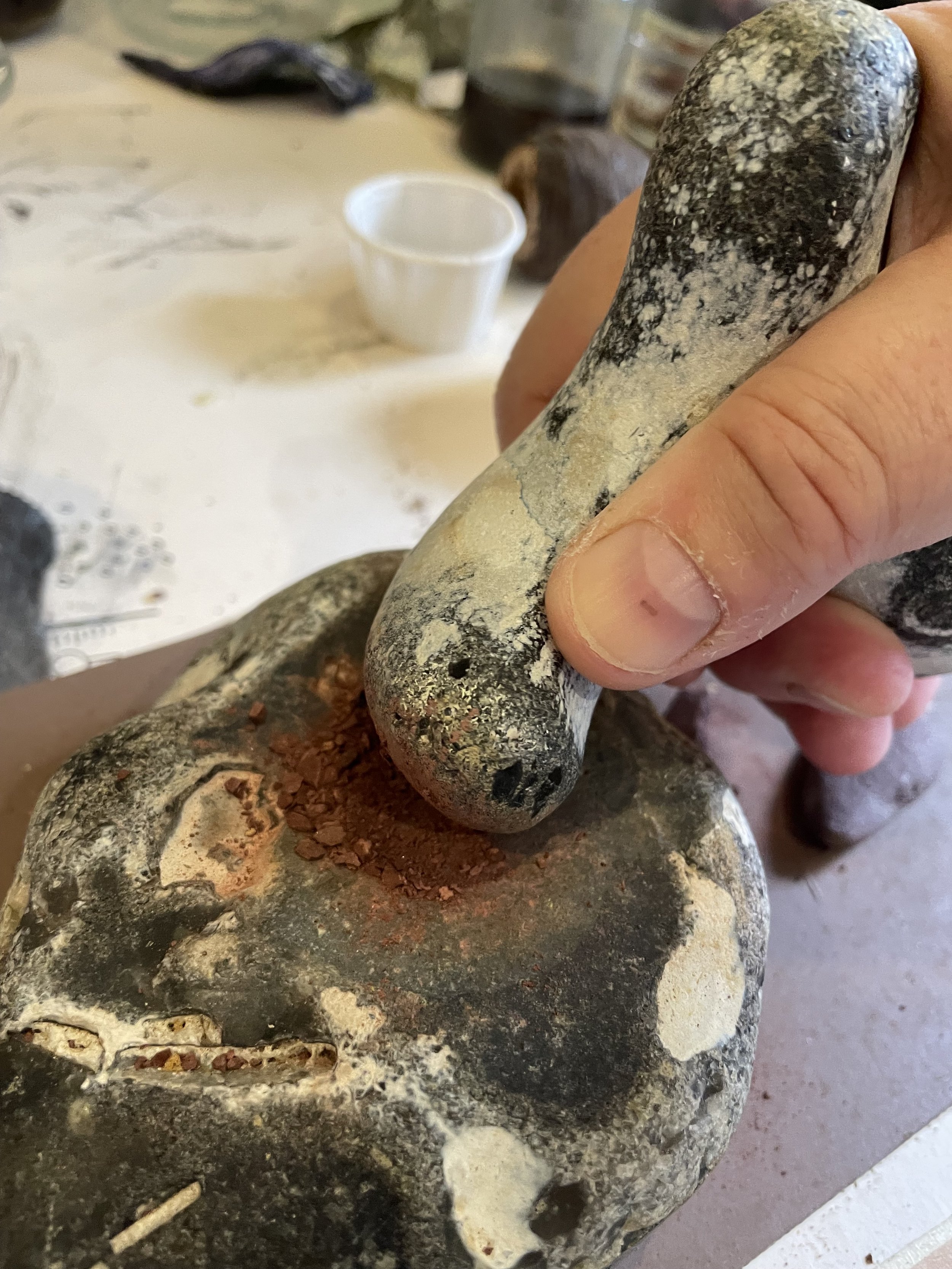
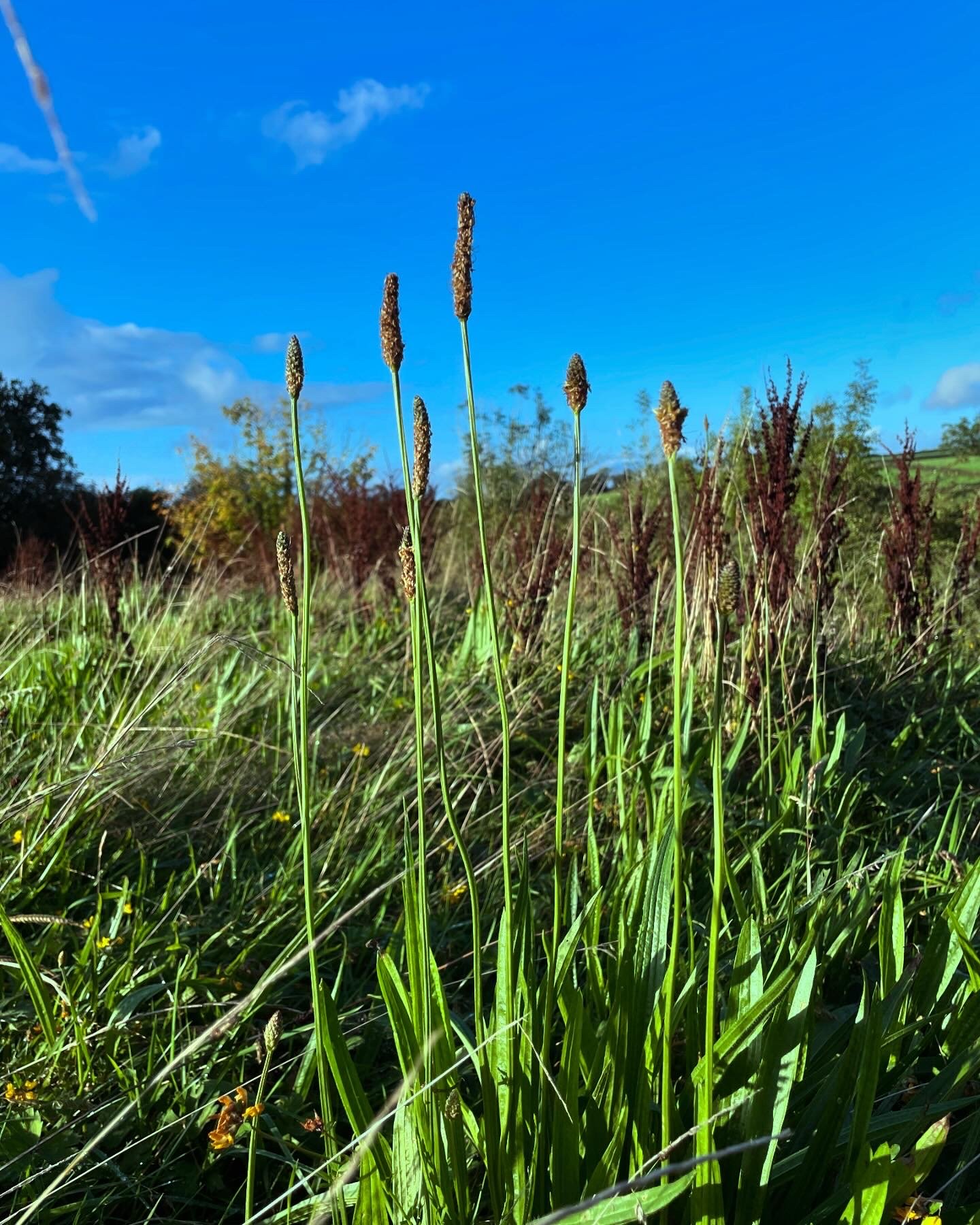
I turned to foraging, a practice I did for health and relaxation. Over the past few years my health has dictated how I manage my practice and as a forager, initially for relaxation, became central to my practice. I has had to enlist the help of my partner, (you never see them but they are there helping with and supporting all I do), with gathering organic materials and to do the heavier or more challenging jobs to allow me to continue to connect with the environment they have become my assistant in my work and helping to implement my ideas, by experimenting with natural pigments, making materials and exploring the creative potential of edible and medicinal plants. This approach aligns my practice with an eco-conscious philosophy, emphasising impermanence, biodegradability, mirroring the cyclical rhythms of nature and connecting with others.

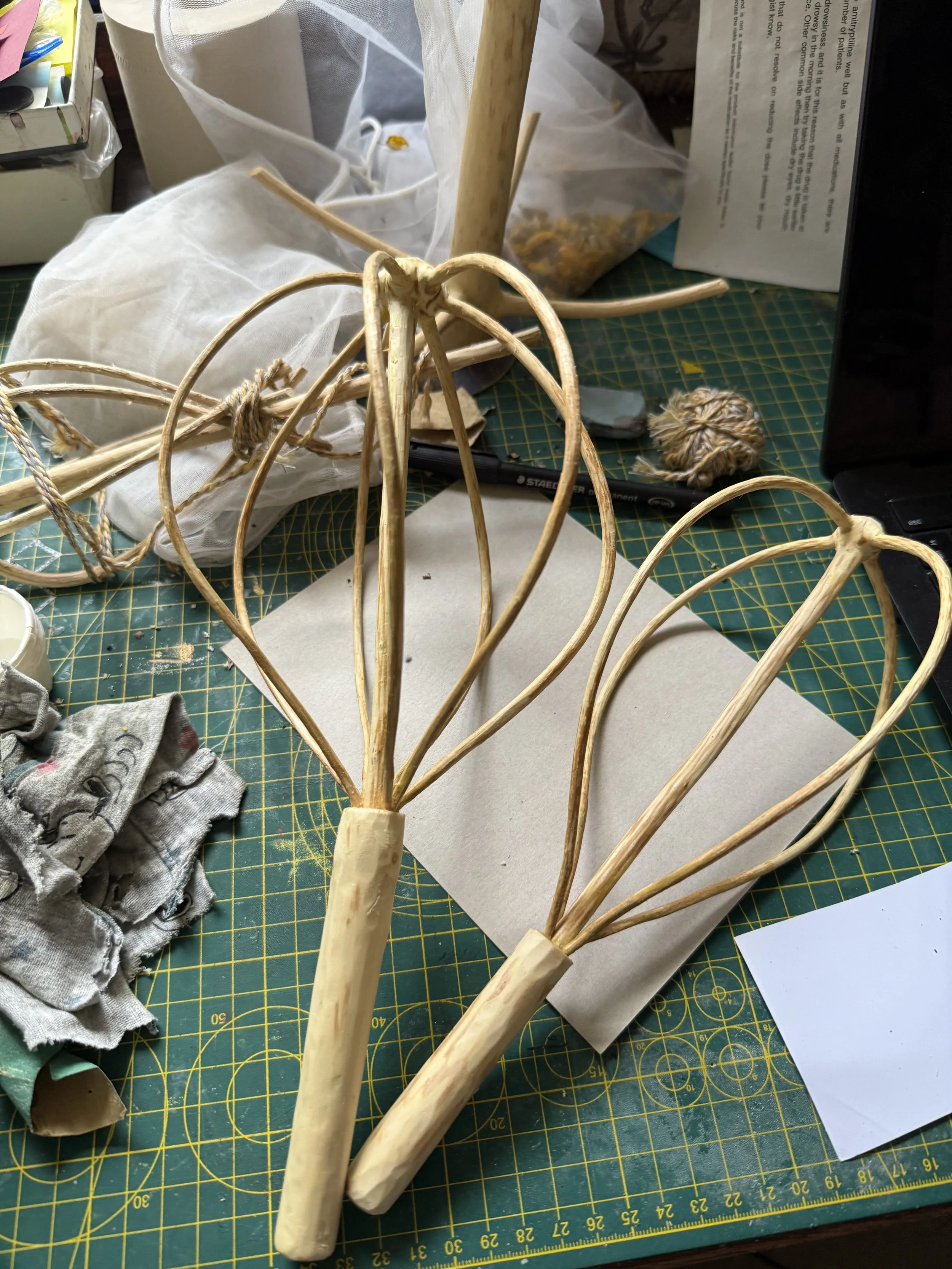
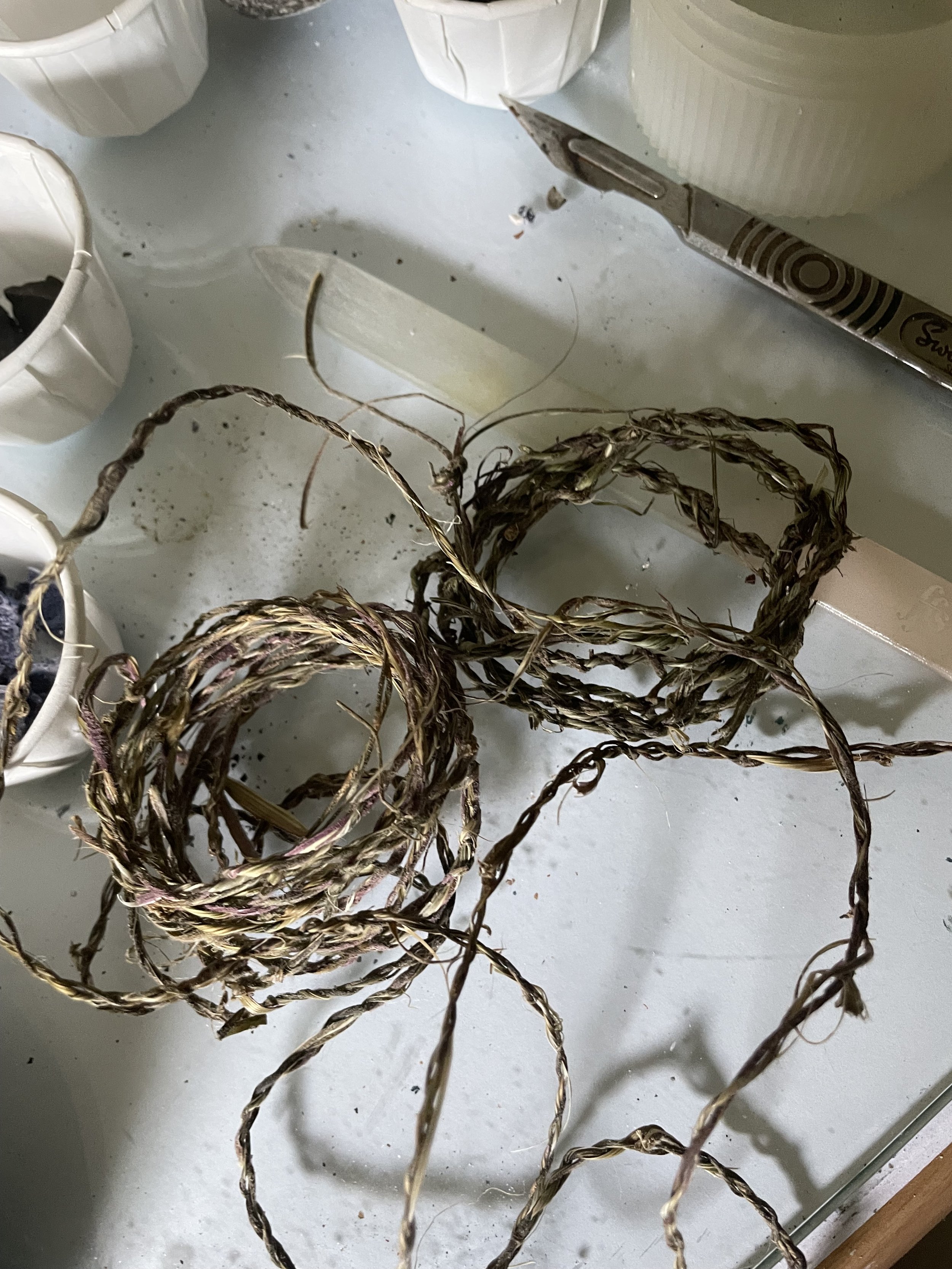
In recent years, my studio practice has taken a deliberate and reflective turn toward techniques traditionally classified as “craft.” These methods, weaving, gathering, hand-stitching, assemblage, printmaking, natural dyeing, have not only deepened the tactile language of my work but have also reconnected me with creative processes that I have instinctively gravitated toward since childhood. For as long as I can remember, I have moved fluidly between so-called “fine art” and “craft.” Yet it wasn’t until I entered formal art education that I became fully aware of how policed this boundary truly is.

During my time at university, I was met with persistent resistance to the craft-inflected aspects of my practice. I was repeatedly questioned, challenged, told that craft was decorative, that textiles were domestic, that repetition lacked conceptual weight. I was implicitly (and sometimes explicitly) told that these ways of making were not fine art. And like many emerging artists eager to belong, I internalised this message, temporarily setting aside a way of working that felt natural, embodied, and meaningful.

But after graduating, I found myself drawn back, compelled by an urge that was not nostalgic, but necessary. As I re-integrated these materials and techniques into my practice, I began to understand just how culturally constructed the division between art and craft truly is. What once felt like a personal tension began to reveal itself as a larger systemic issue, one rooted in patriarchal, colonial, and capitalist ideologies that have historically diminished the value of labour typically carried out by women, Indigenous peoples, and the working class.

This return to craft is not a retreat but a radical reconnection. It is both an aesthetic and ethical realignment with practices that are slow, intentional, and materially aware. Through this process, I have begun to question the hierarchies that have long shaped the art world: Who gets to be called an artist? Whose work is preserved and whose is forgotten? What materials are considered serious, and which are dismissed as sentimental, hobbyist, or domestic?

My recent work, and the research that underpins it, explores the urgent need to dissolve the outdated binary between fine art and craft. More than just a theoretical exercise, this merging speaks directly to the climate crisis. Craft methodologies often involve local materials, regenerative processes, and a profound respect for the land. They resist the logic of mass production, extraction, and disposability. By reclaiming these approaches within contemporary fine art, I believe we can forge a more sustainable, grounded, and inclusive future for artistic practice.

This ongoing body of work seeks not only to honour the embodied knowledge within craft but to position it as a viable and necessary methodology for addressing ecological collapse. It is an act of creative resistance, one that challenges the gatekeeping mechanisms of the art world while envisioning new ways of making that are responsive, resilient, and responsible…

I am also passionate about community engagement and collaboration. As a co-founder of Haus-a-rest, an online art zine, I help bring together like-minded artists, writers, poets, and theorists to highlight new and established creatives. In addition, I have organised exhibitions in unconventional spaces, ranging from small travelling galleries and pop-ups in disused buildings to larger shows in commercial venues, both locally and internationally.


Get in touch

It all begins with an idea, If you wish to talk about a commission, event, exhibition, or nature or have a proposal then send the details over and I will get back to you personally.

A selection of work and research….