Implements: A Conversation with the Gathered World
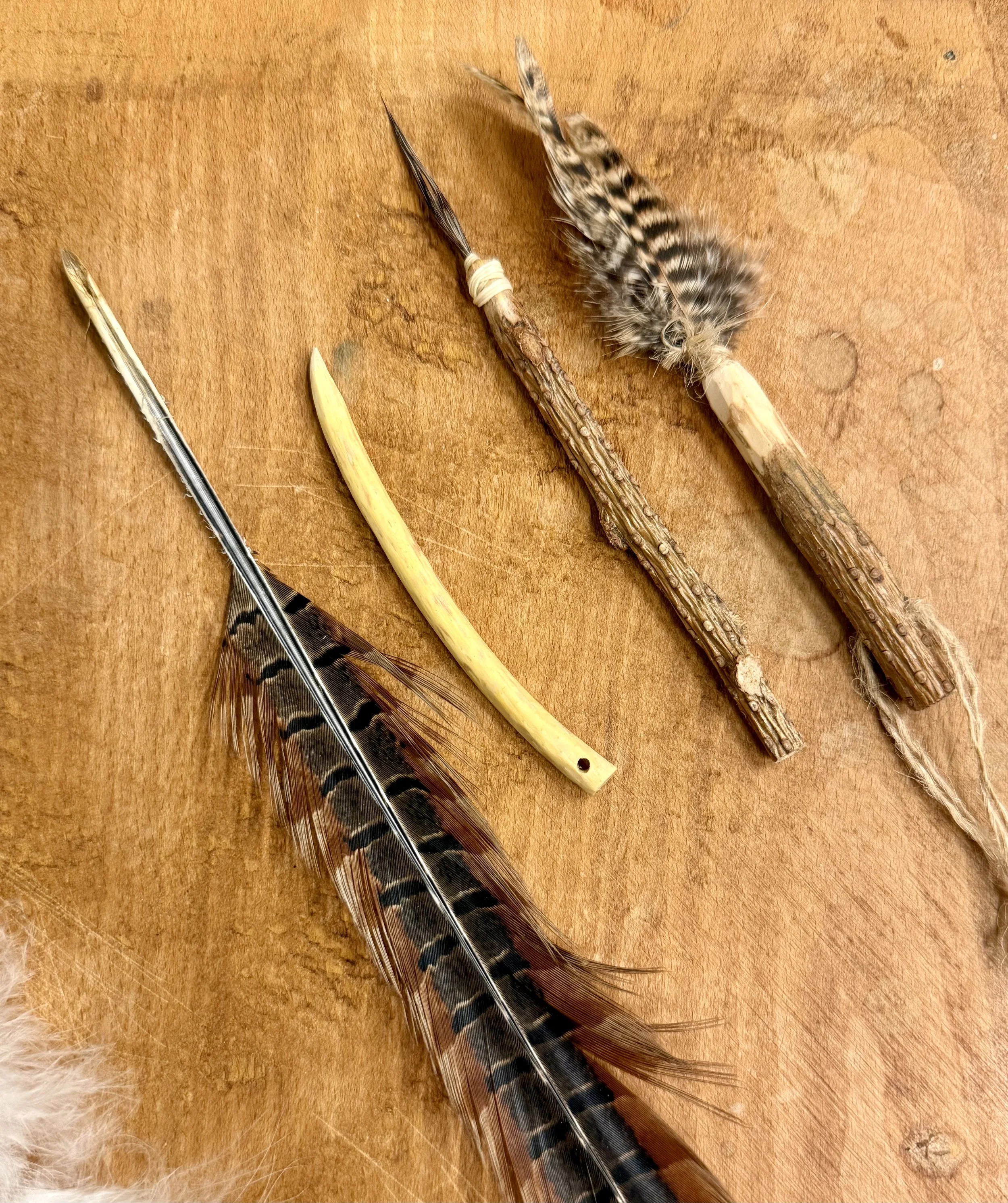
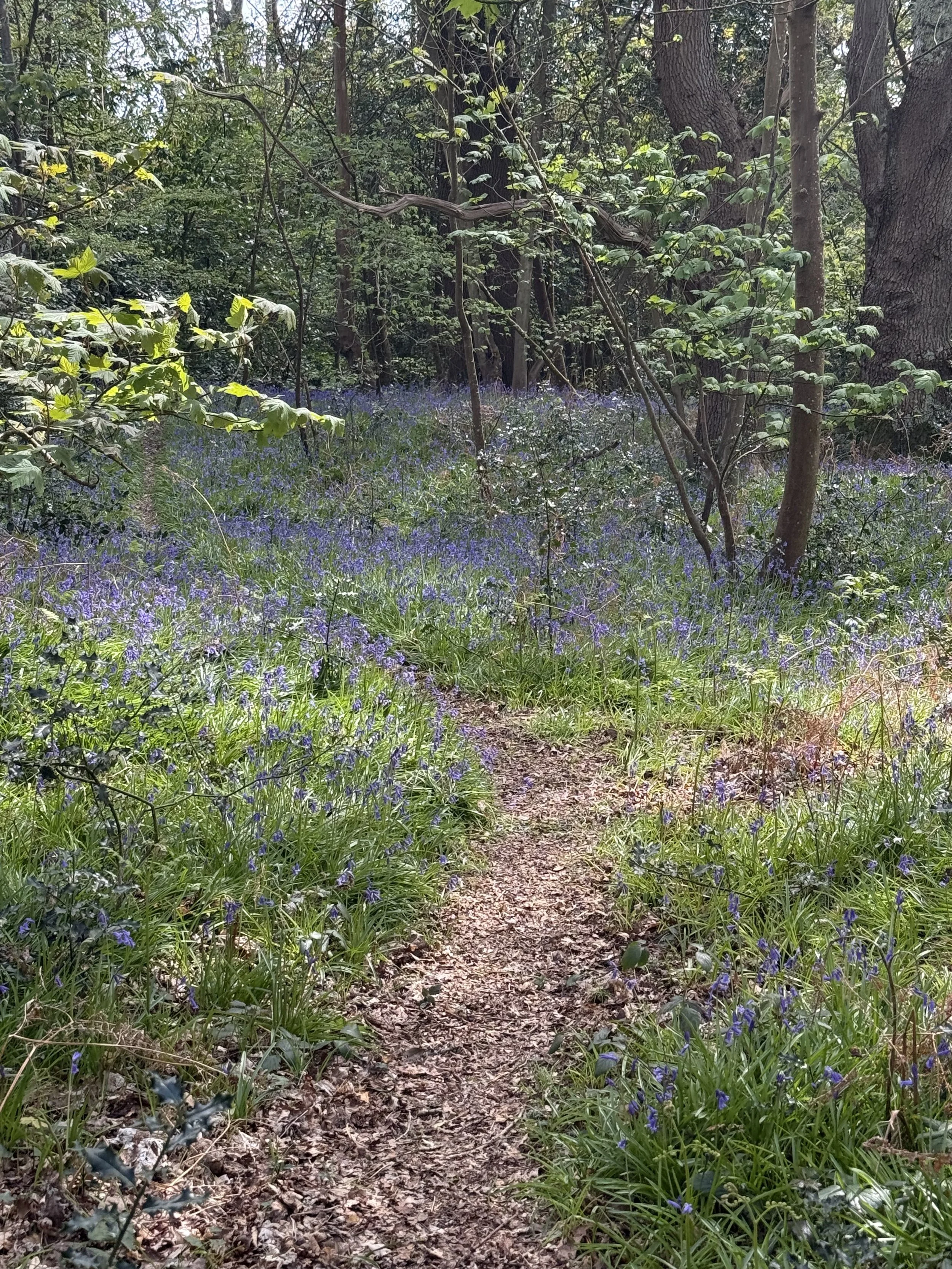
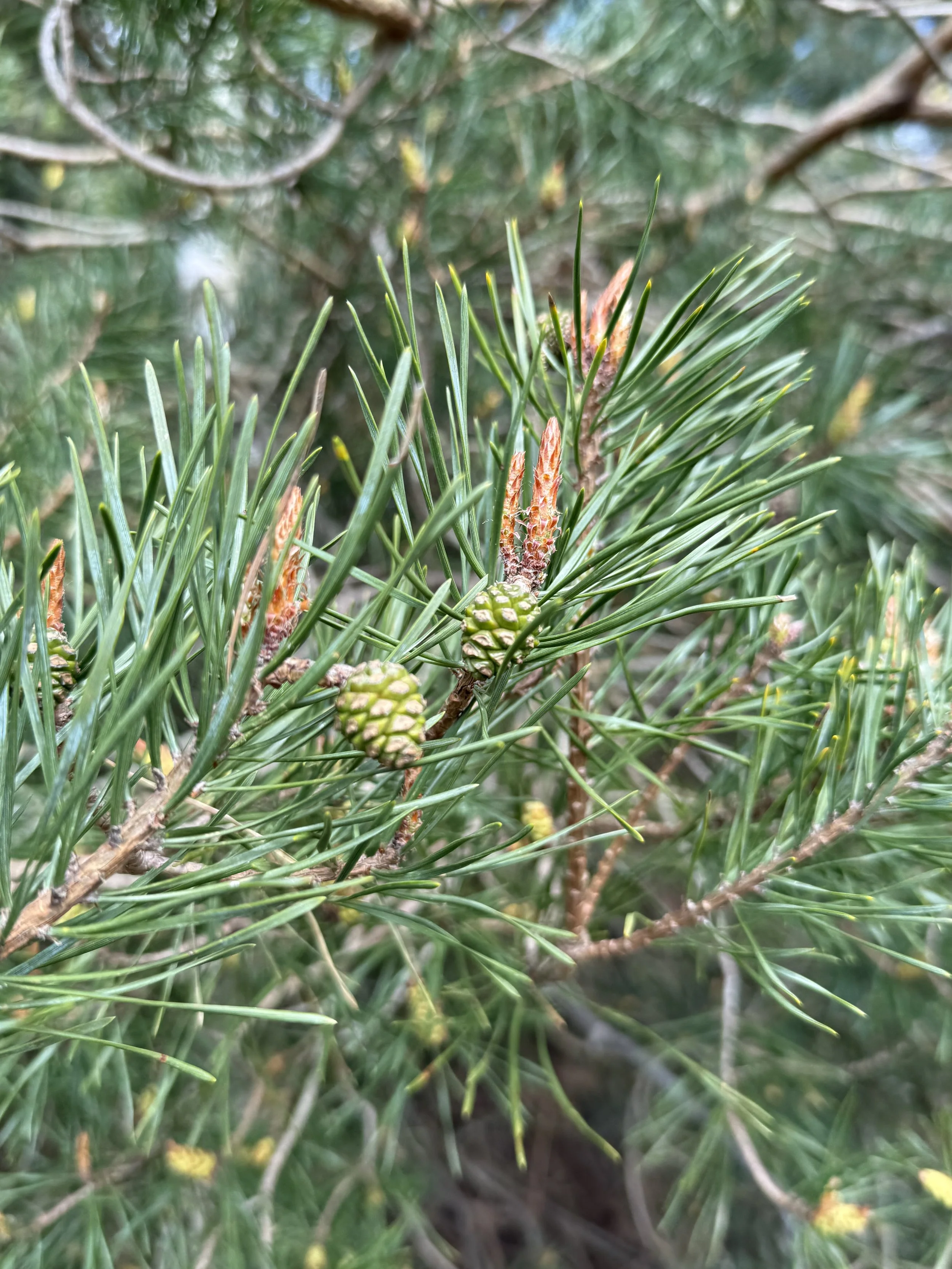
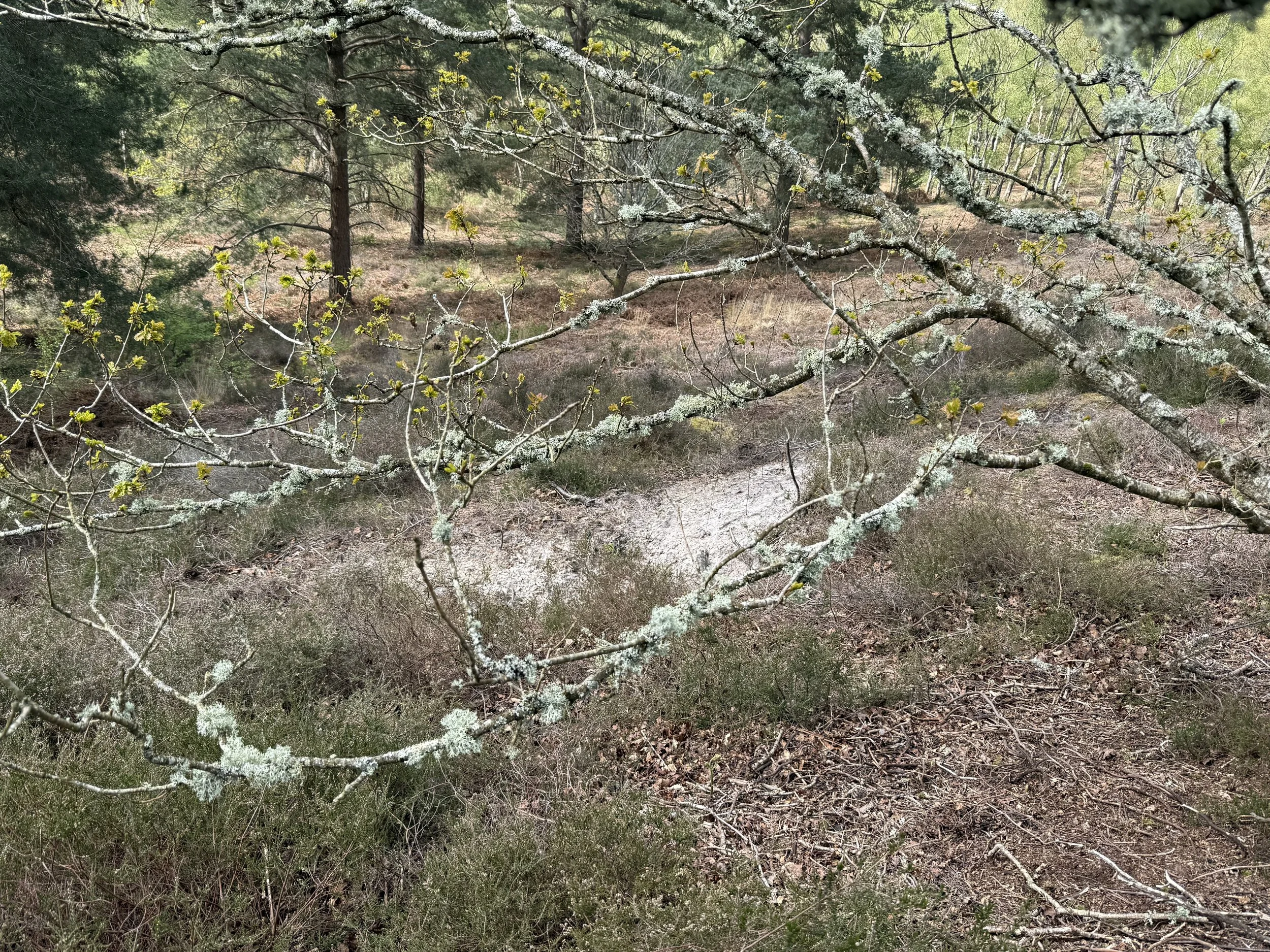
The land offers what it no longer needs. A feather released mid-flight. Fleece snagged and surrendered to a hawthorn. A twig fallen not from weakness but from readiness. These are not remnants, they are offerings, and this work begins in the act of receiving them.
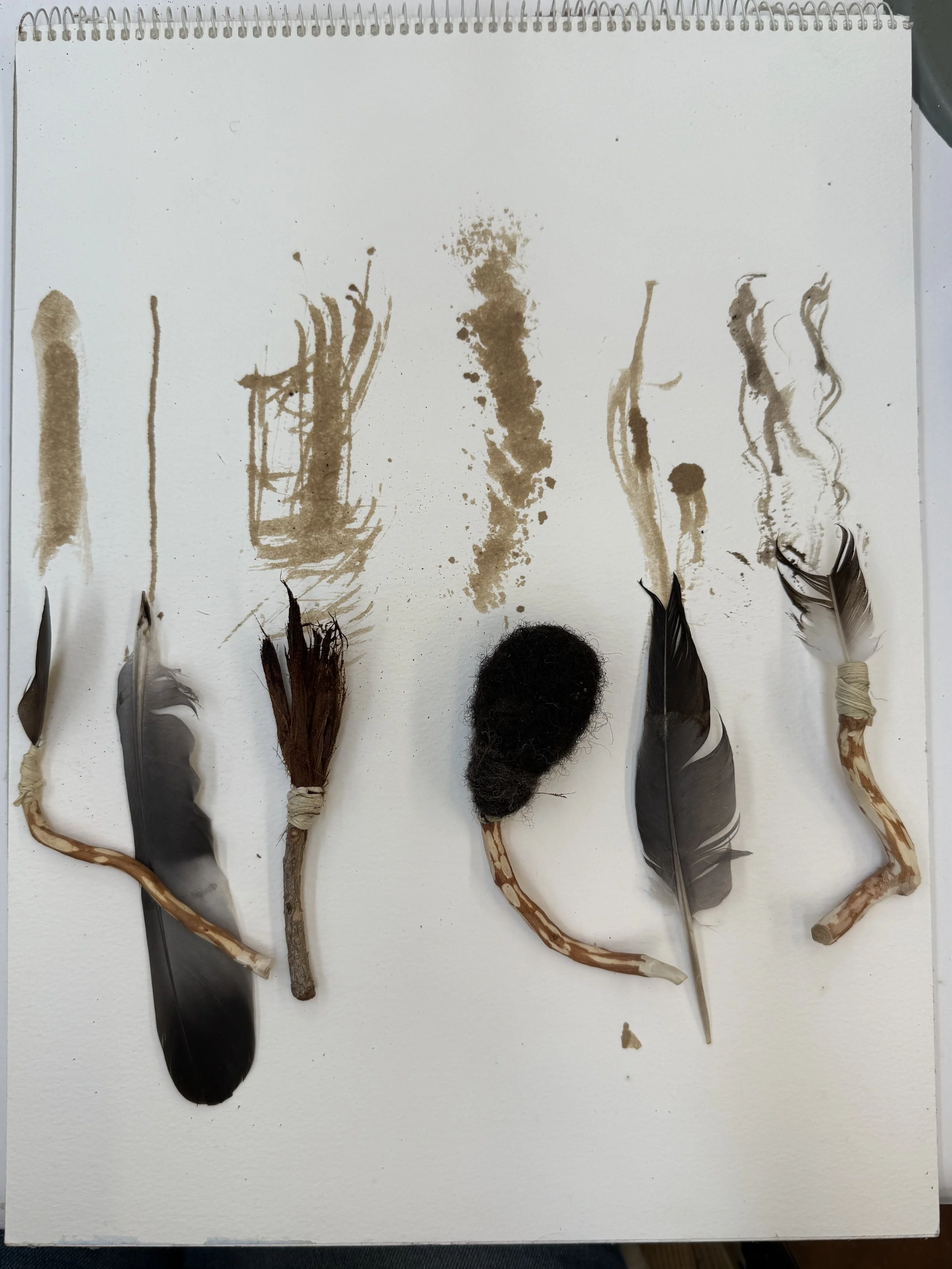
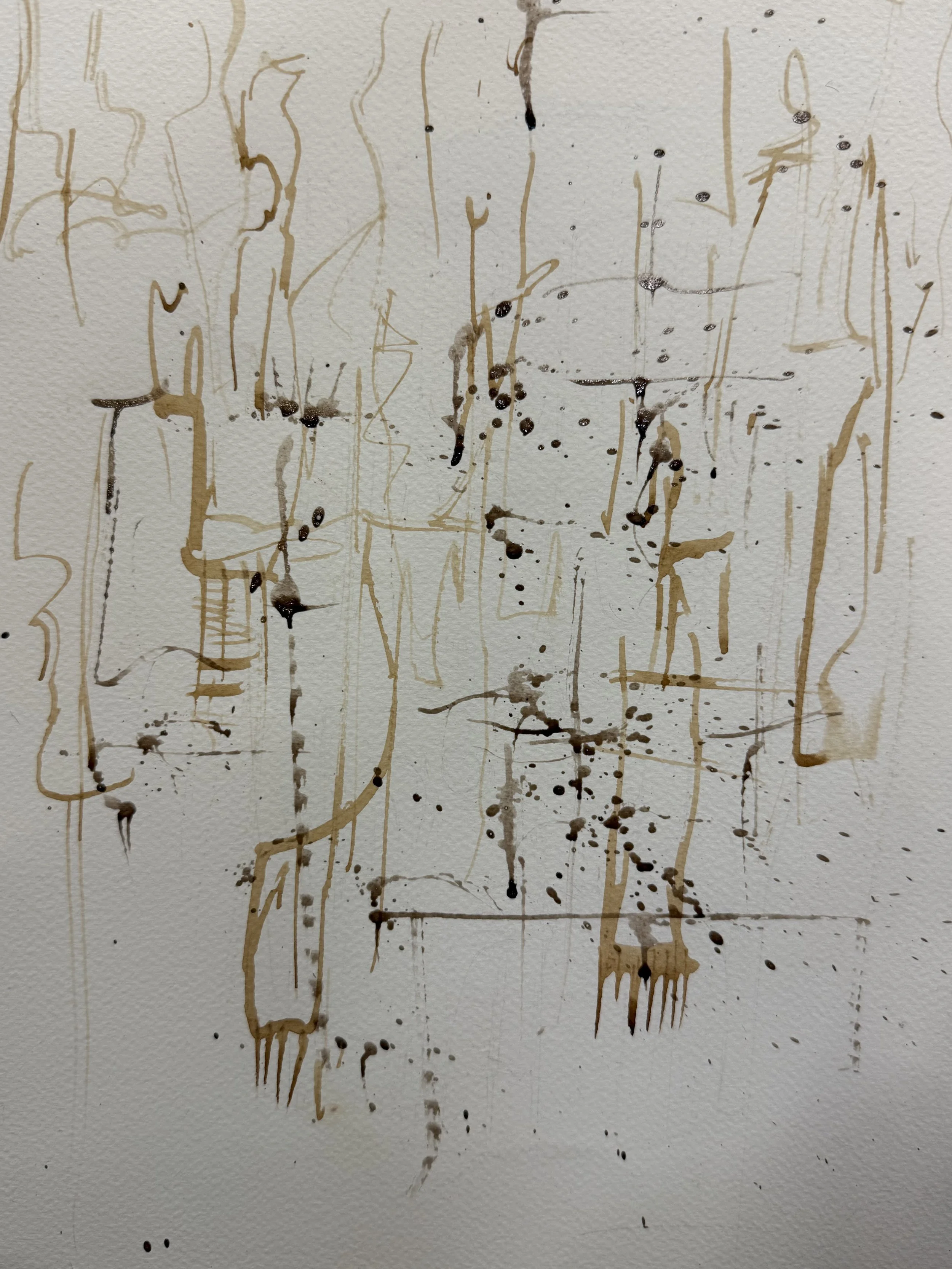
In this series of paintings and drawings, every mark is made with an implement born of foraging, quills stripped by wind and weather, raw fleece bound to branch, bark split to a natural edge, sticks worn smooth by water or simply by time. Nothing is manufactured for the purpose of making. Everything arrives already shaped by a life lived outside the studio.
This is a practice rooted in symbiosis. The land does not give without relationship, and these tools carry that relationship into every gesture across the page. The feather that once navigated air now navigates surface. The bark that once held a tree now holds a line. There is no separation between the material and its history, and that history becomes the mark.
There is reciprocity here too, a kind of quiet exchange. To forage attentively is to pay attention, to notice what has been shed, what lies at the threshold of decay, what is in the process of becoming something else. In returning that matter to creative use, nothing is wasted and nothing is extracted. It is borrowed, transformed, and eventually returned.
The resulting work is uneven, unpredictable, and alive in ways that a manufactured brush cannot replicate. A feather resists. A knotted stick stutters. Fleece absorbs and blooms. These are not flaws but conversations, the material pushing back, insisting on its own nature, refusing to be merely a vehicle. The drawings and paintings that emerge carry the texture of that negotiation: between hand and tool, tool and surface, surface and the wider, breathing world that gave everything its first form.
Creating a sustainable arts practice from nature...
The idea of making my own drawing tools really intrigued me and I though it was a good challenge to set myself, this would also go hand in hand with my home made inks.
I am quite impulsive and if i get an idea i like to test it out as soon as possible, one because i will be thinking about it until i do it, and two because I didn’t want to forget about it or put it off.
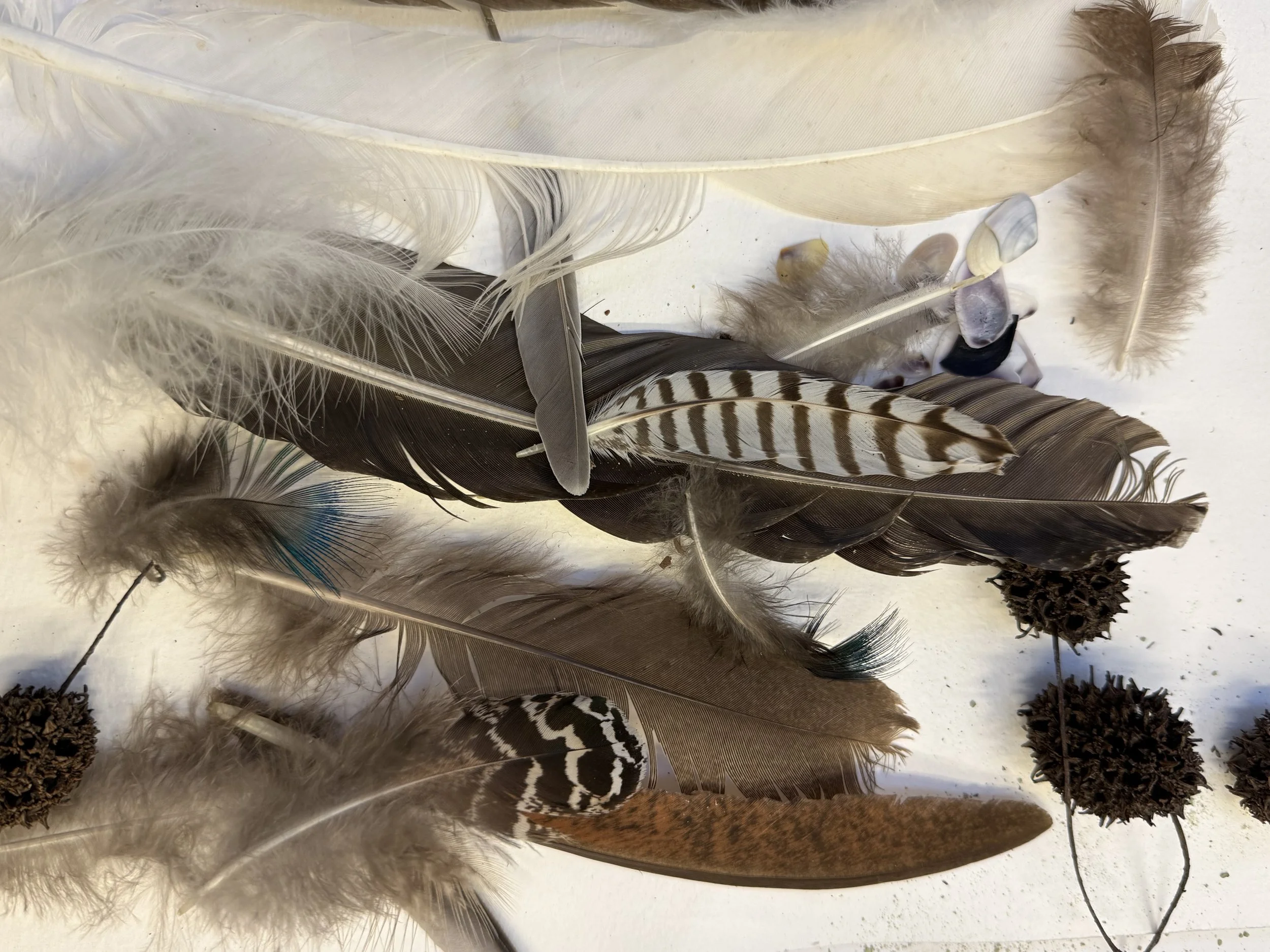
But what did I have at that moment to do this, I really wasn’t sure where to start except with the obvious feathers .
Then while preparing dinner which happened to have fresh corn cobs it hit me. I was already using the cobs for dinner and soups and the silks to make a tincture, what could i use the husks for that might be different to eating with them.
I said to myself “I would if I could make a paint brush ? I knew the husks could be made in to threads for making corn dollies and a type of rope or string. Would it work for a brush?
Well it did, I took me some time to get the hang of it, as I needed to wet them so they would twist easy and then i had to think of how to assemble it. But it looks like it has worked, I just need to get the courage up to test it out. I just don’t want it to break because i love how it looks!
My foraging so far has mainly been for food, health and natural beauty products . Gathering picking then creating recipes to eat, medicines to take and creams and balms to apply.
This left me with waste products of squeezed berries, chopped up leaves and trimmings of all types. As I am trying to evolve my arts practice and incorporate these acts and rituals into my making. As someone who uses all forms of creation within their practice, it is becoming obvious that I now need to look at the materials I am using to create work with.
When I am left with waste produce or pickings now, I am going to be looking at how these can be reused, to create inks, watercolours, oils and building or drawing implements. As I hope to buy fewer and fewer “man made chemical materials”
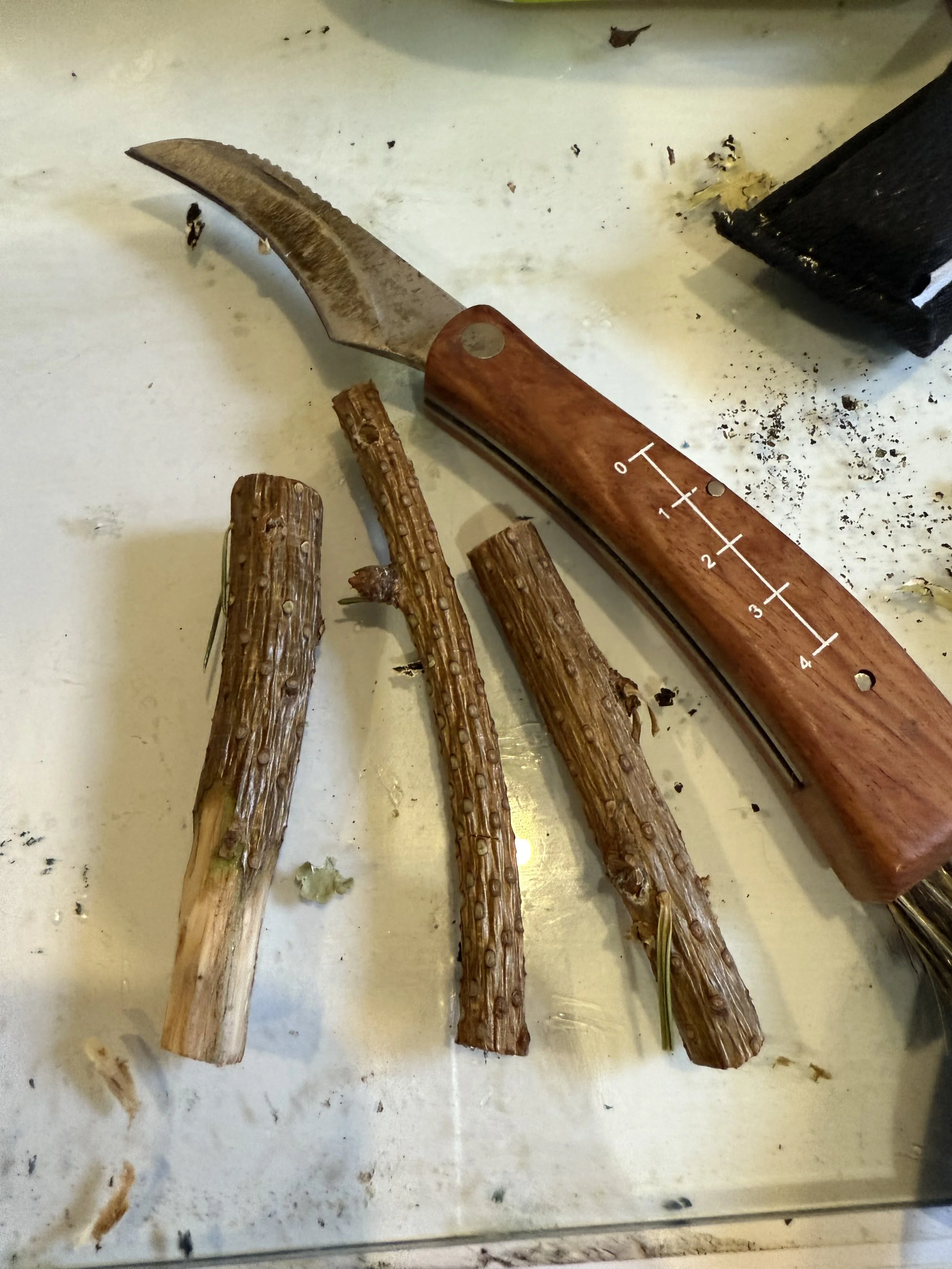
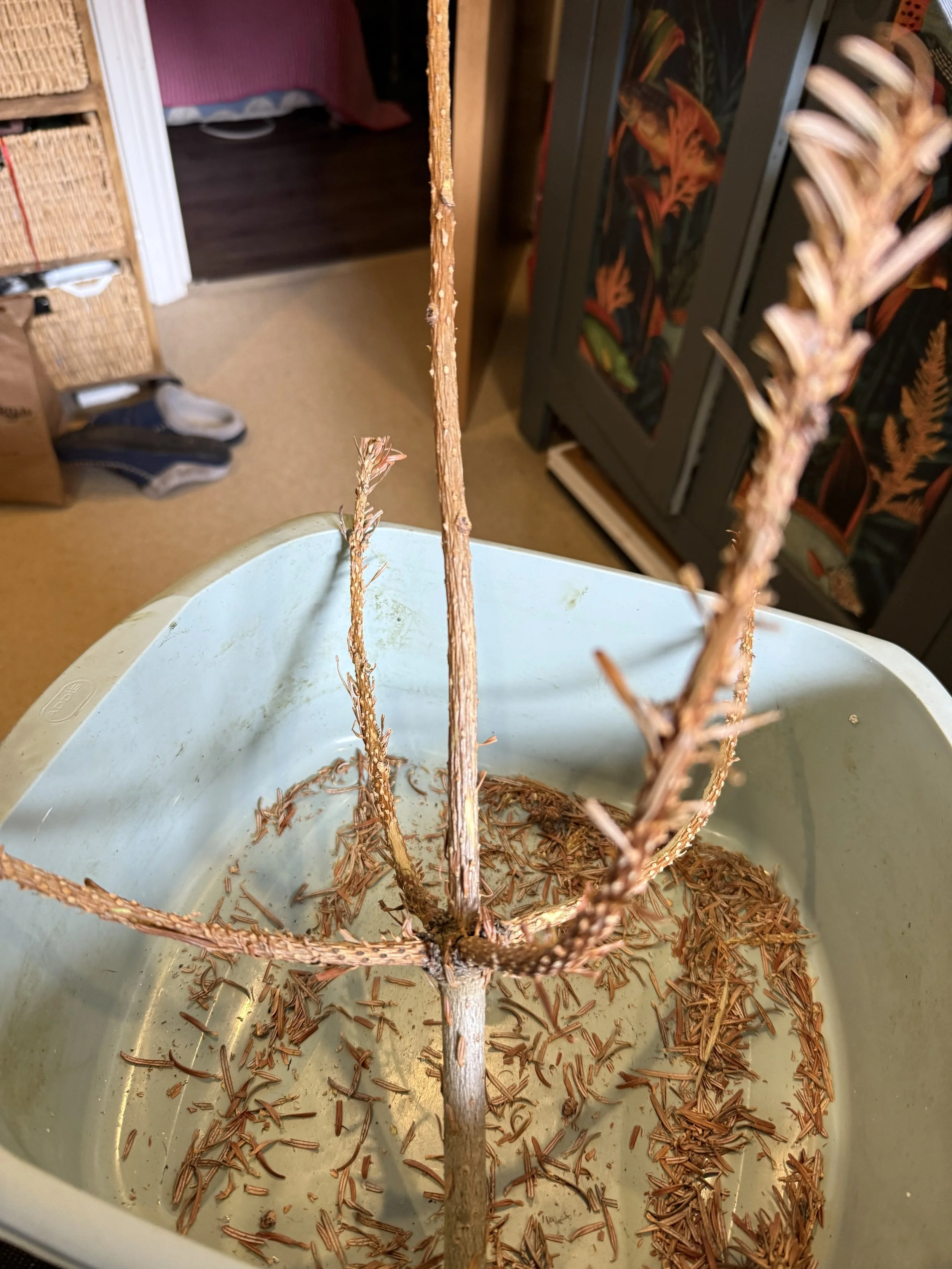
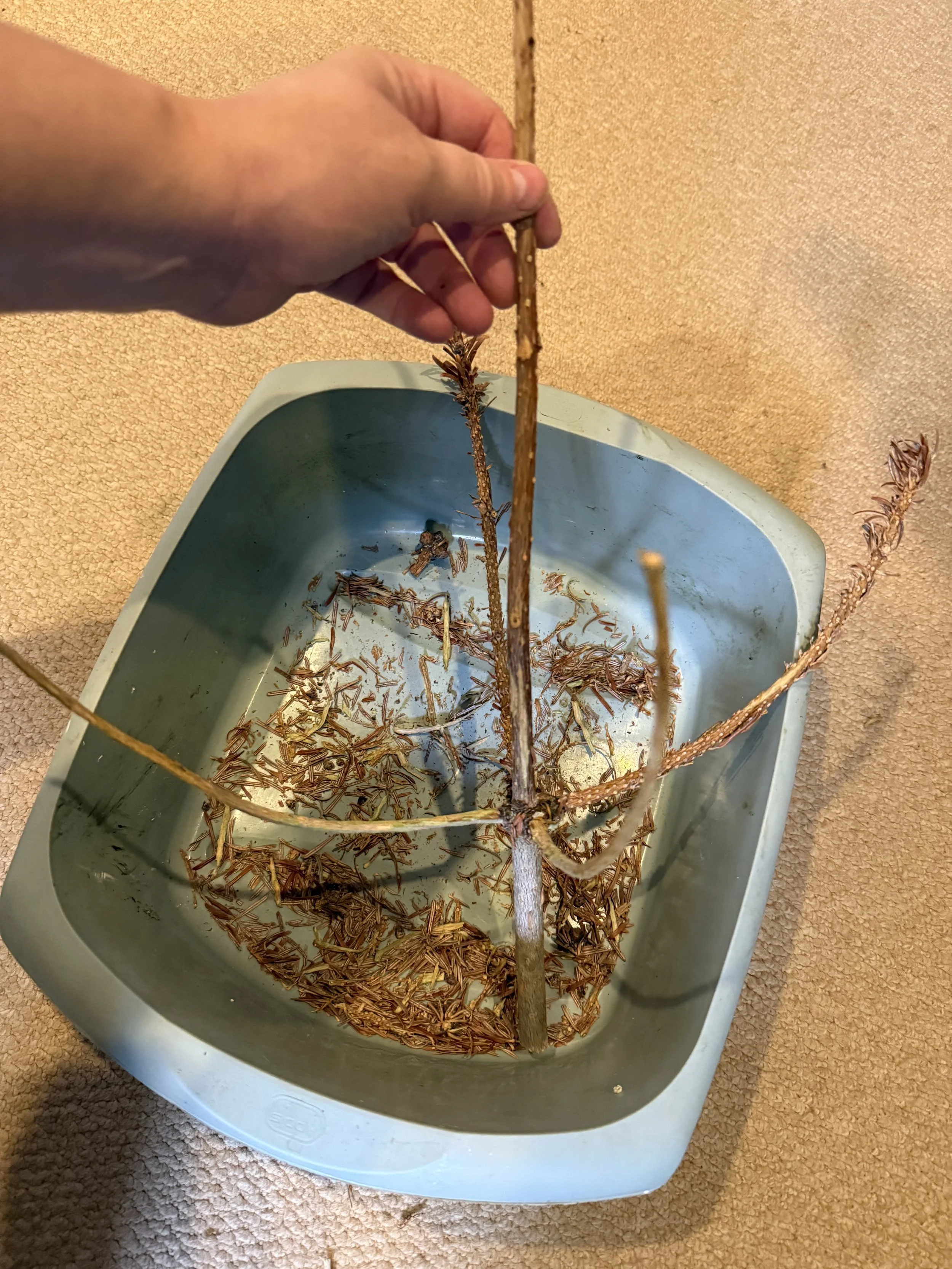
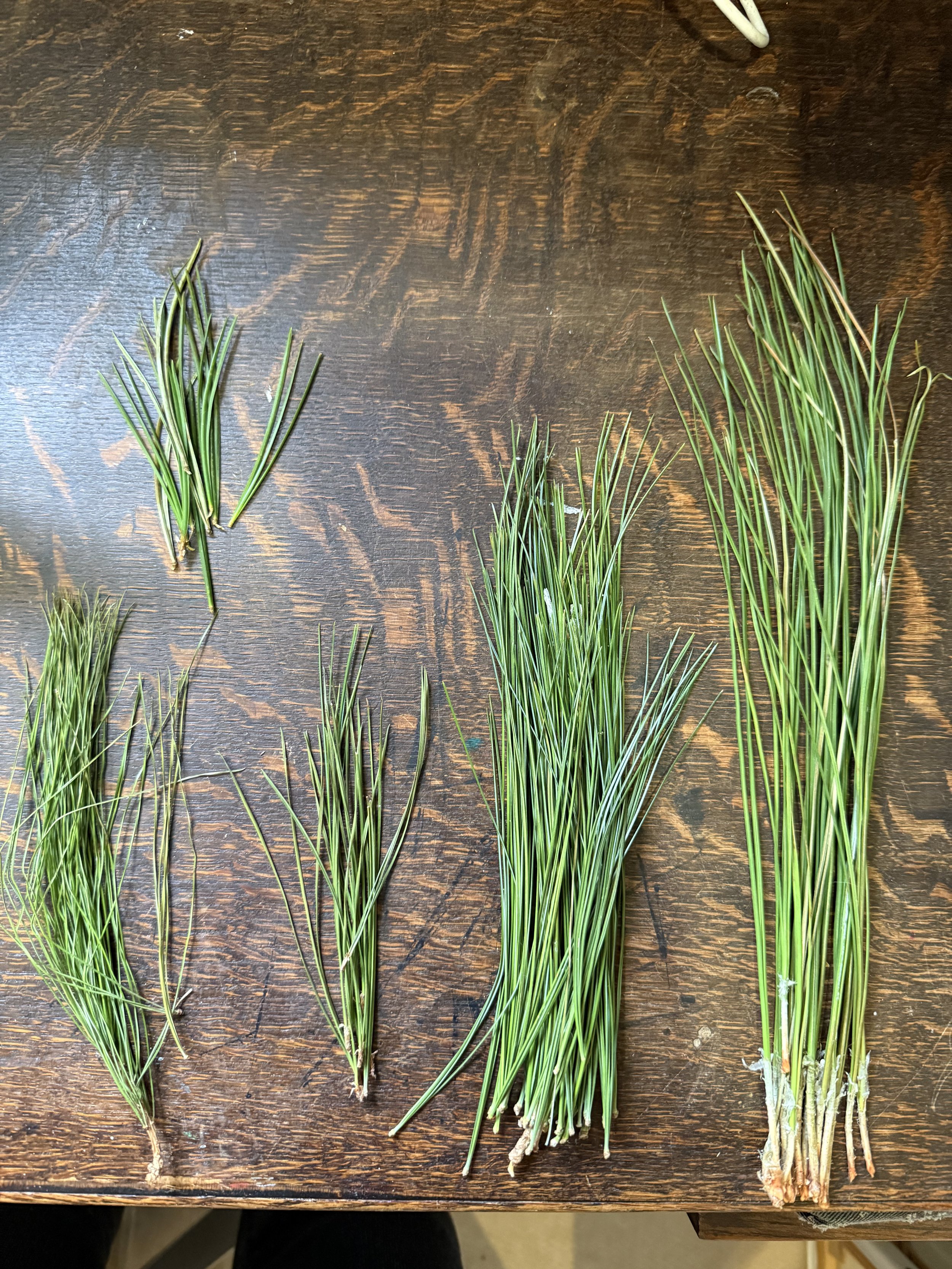
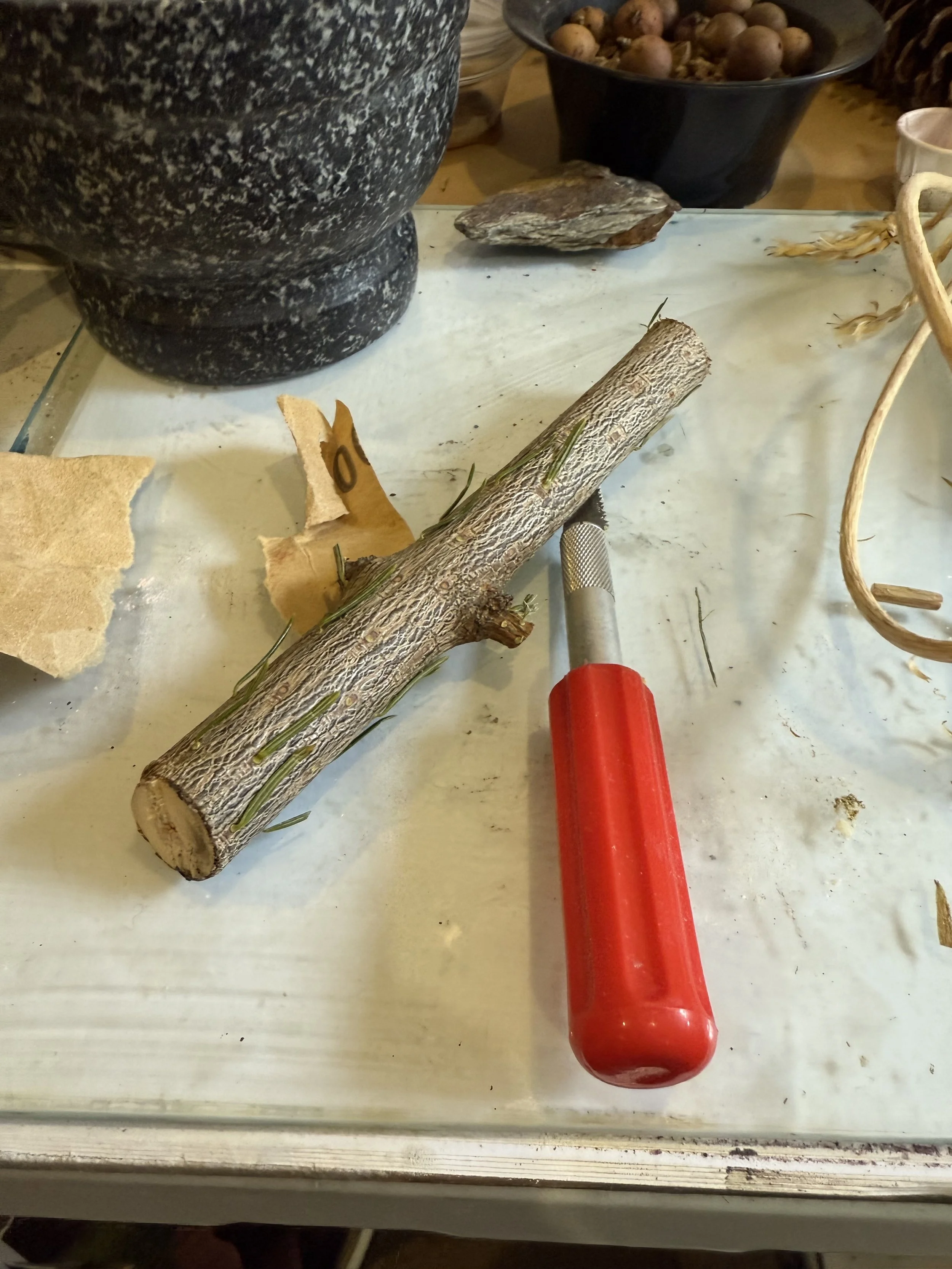
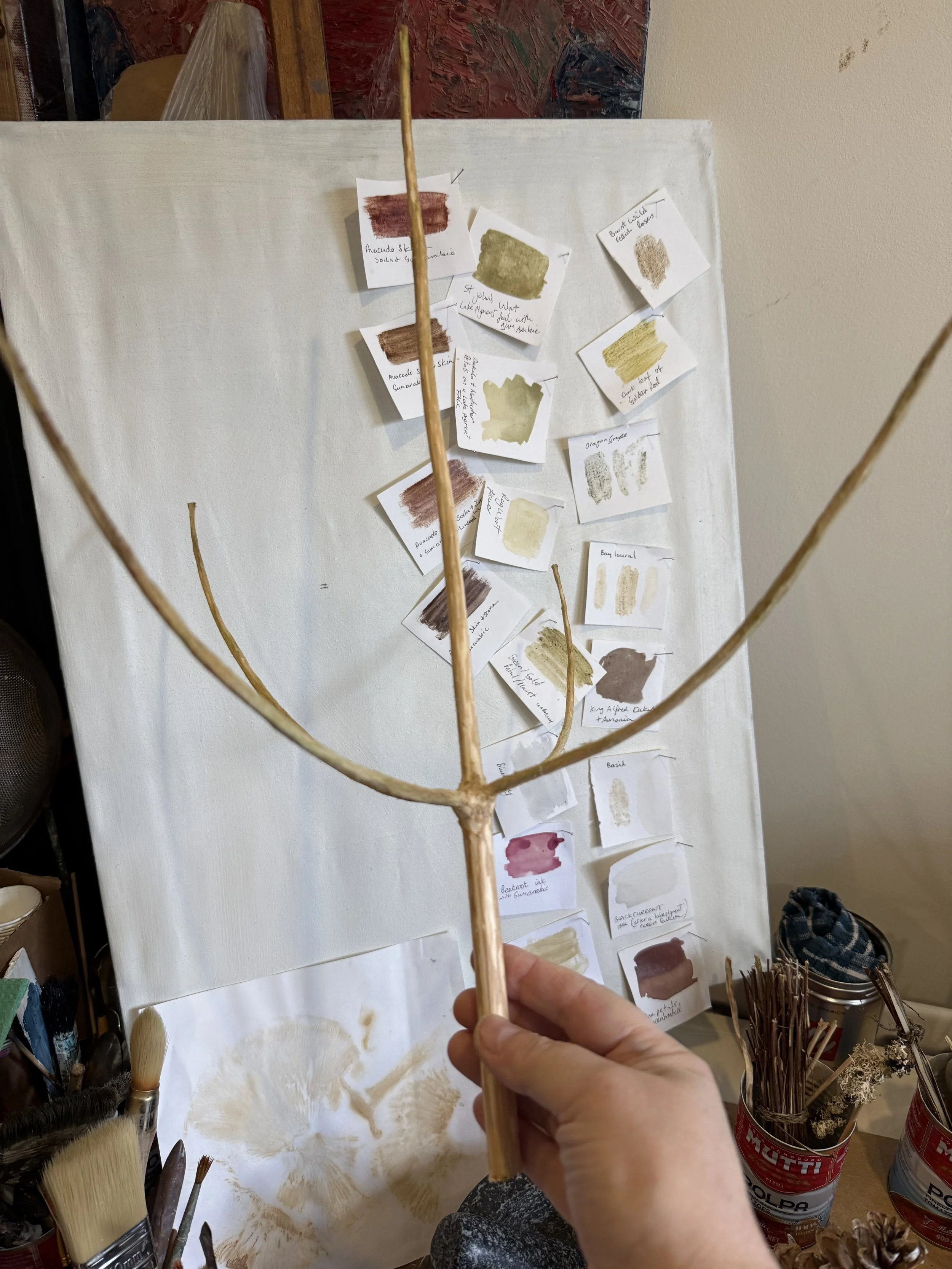
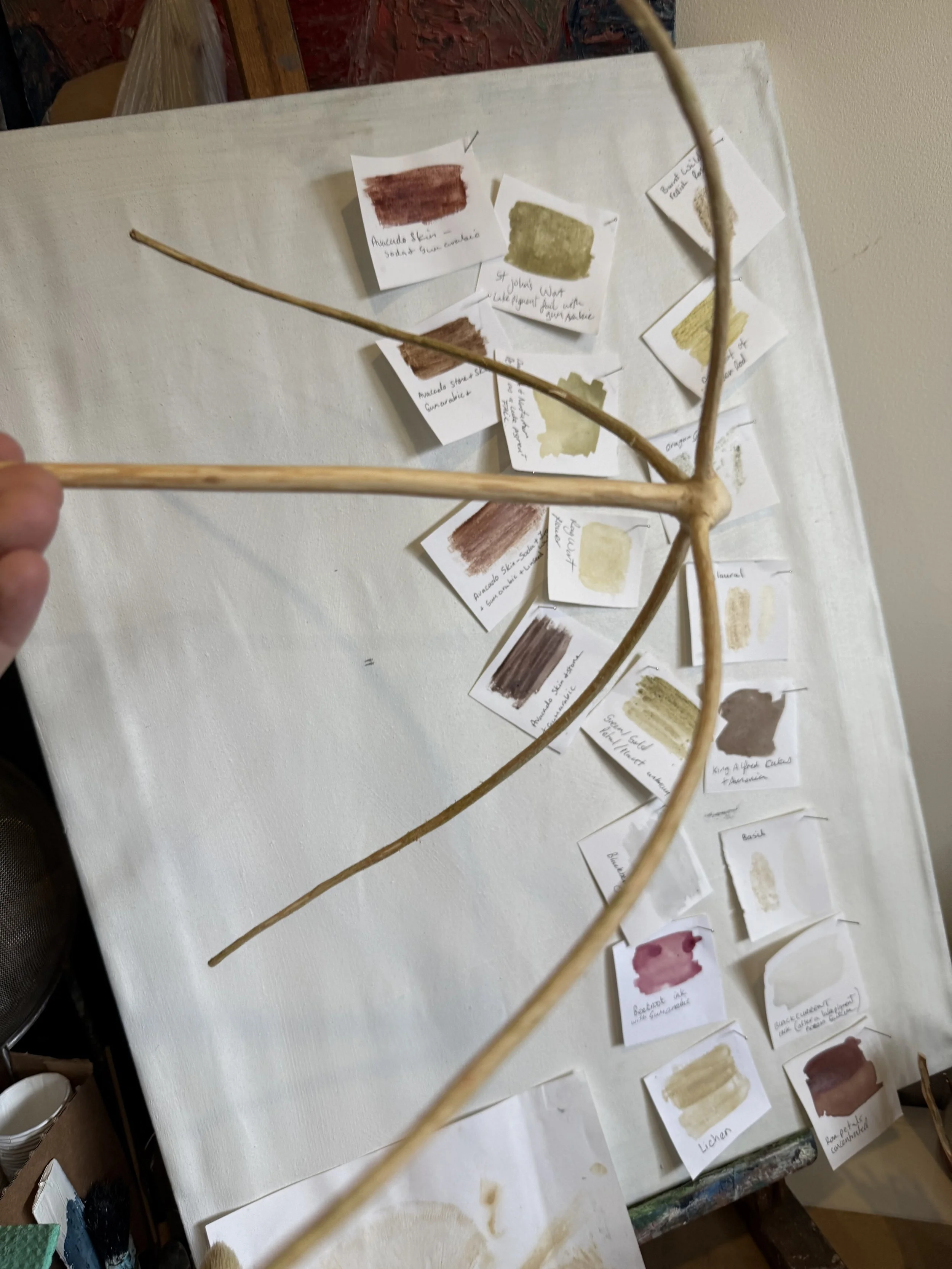
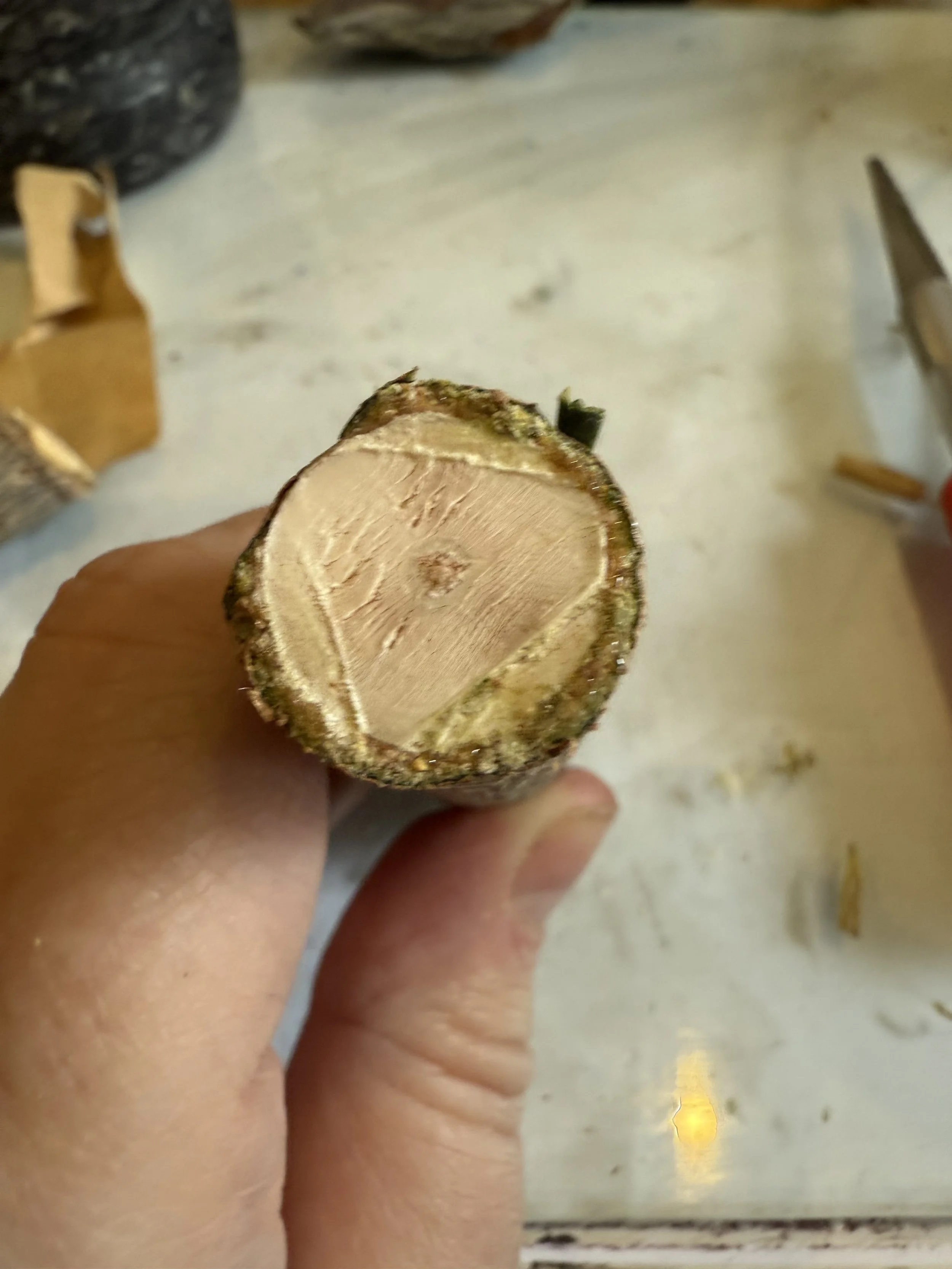
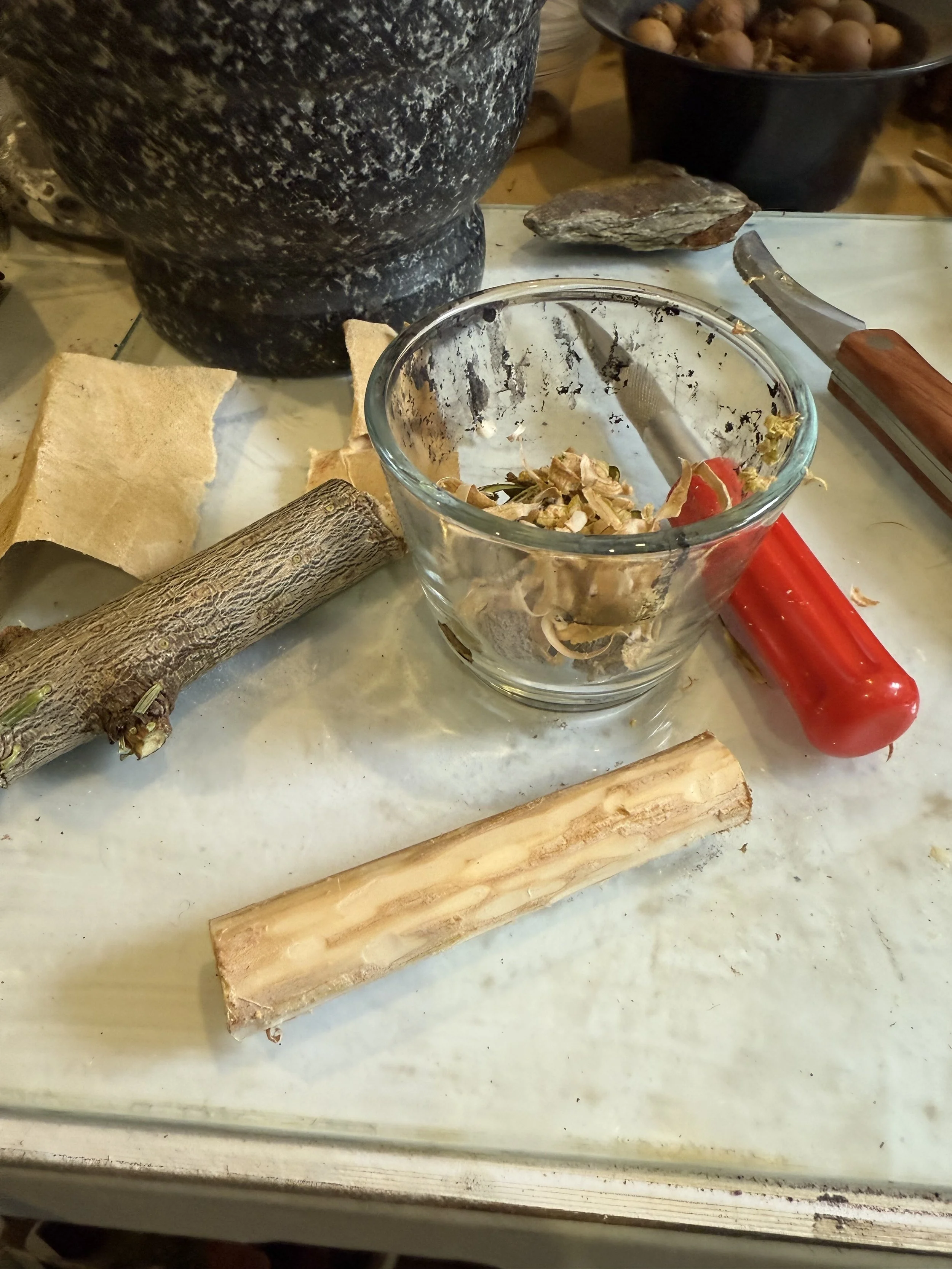
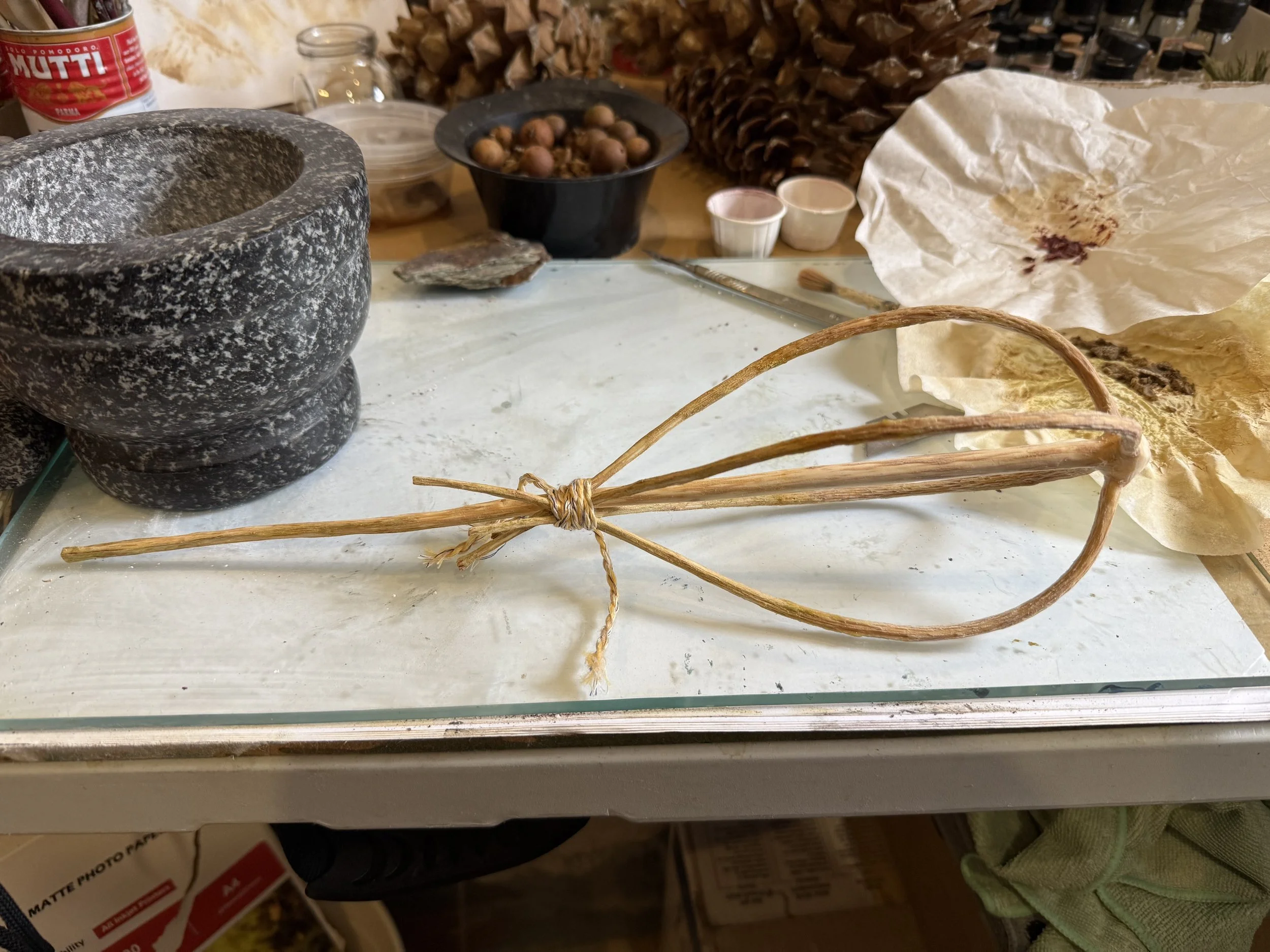
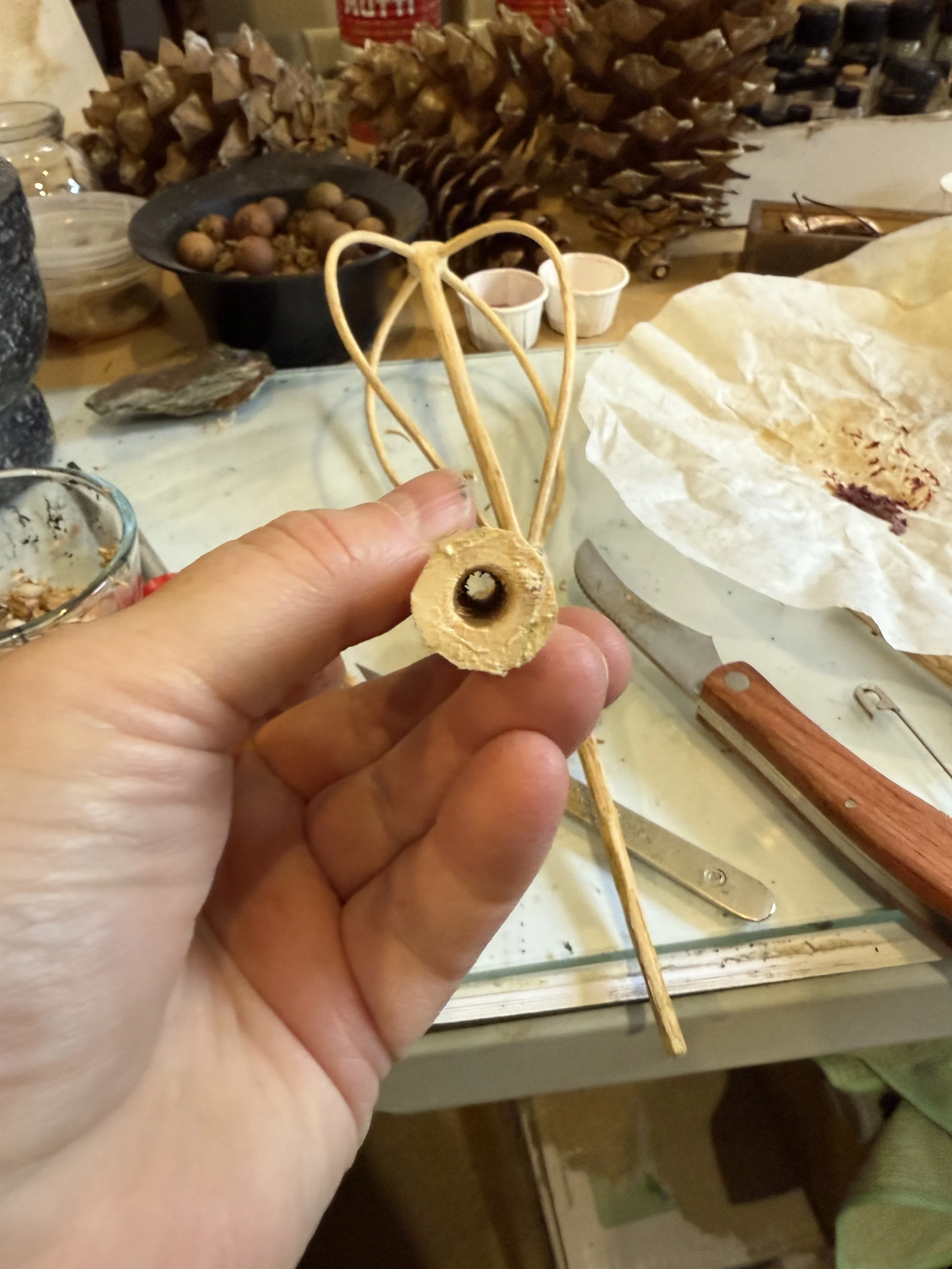
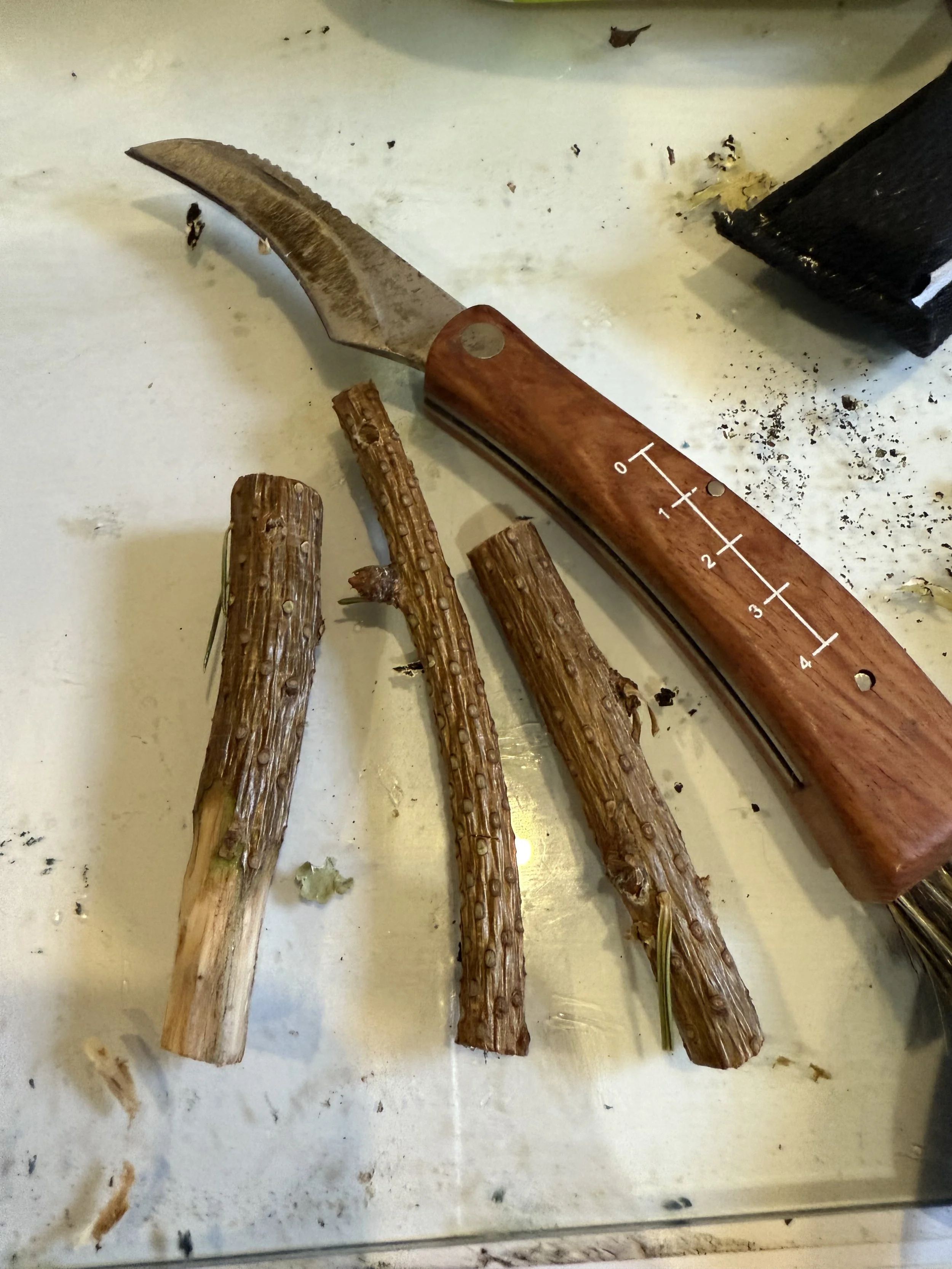
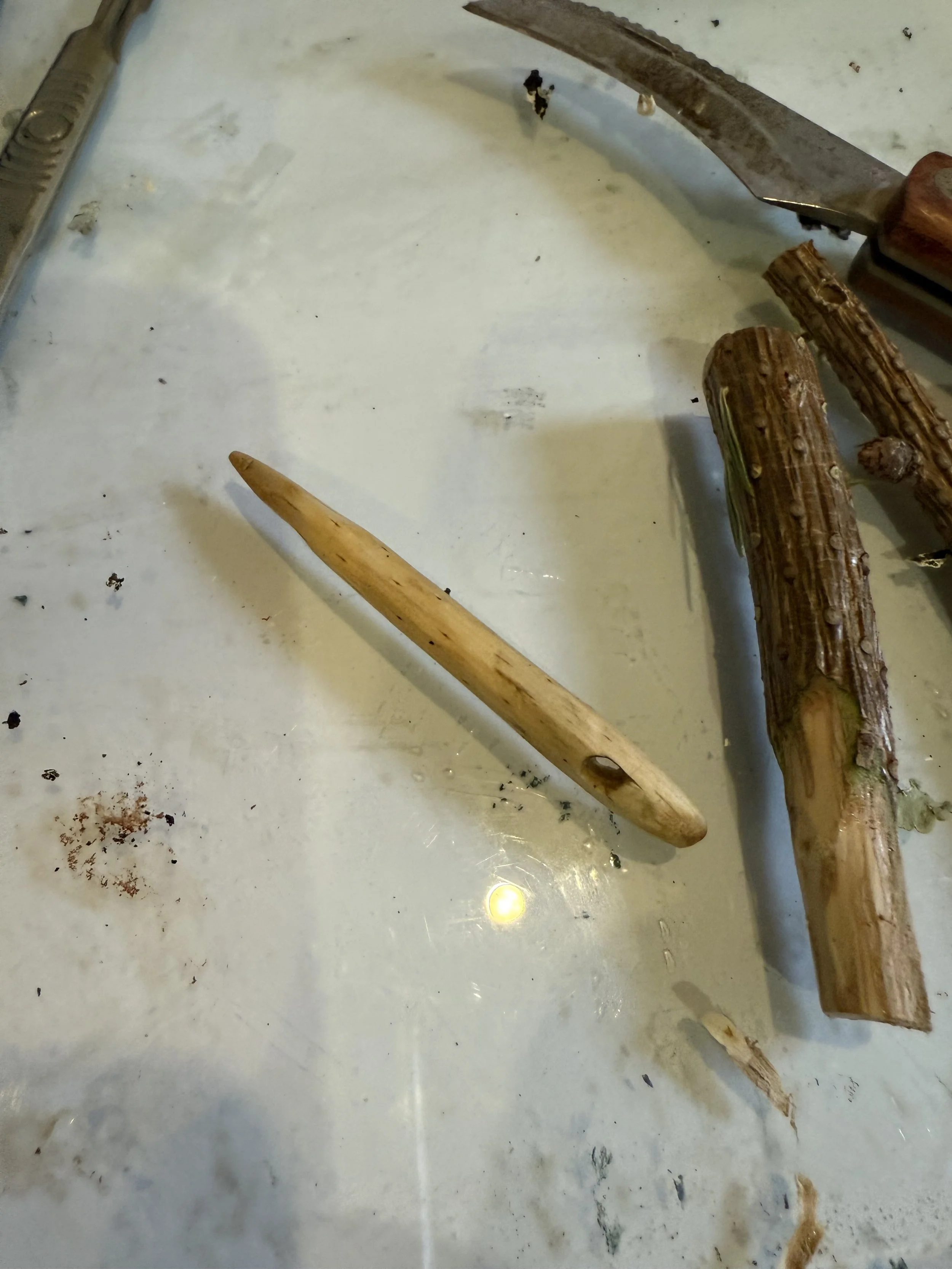
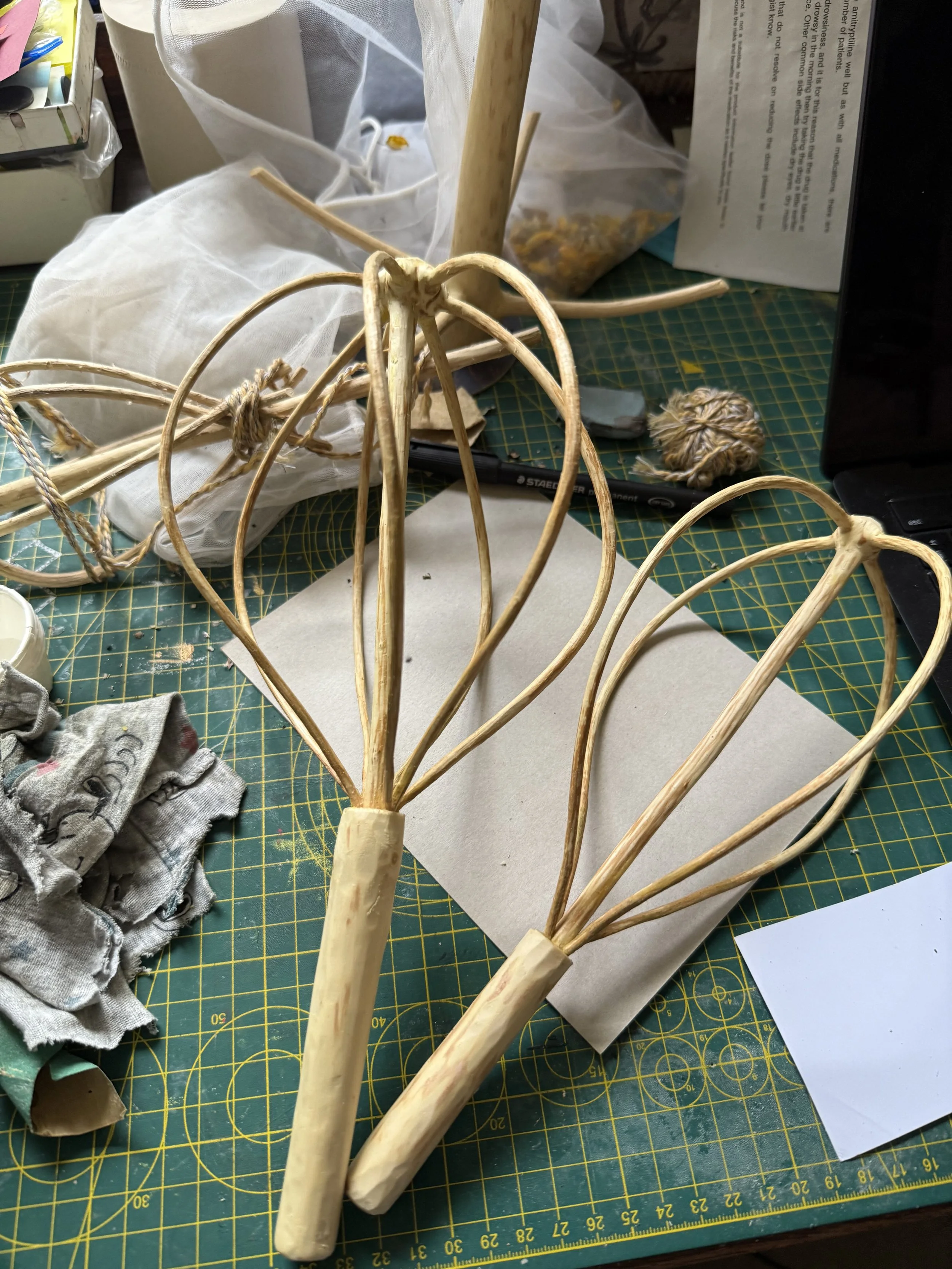
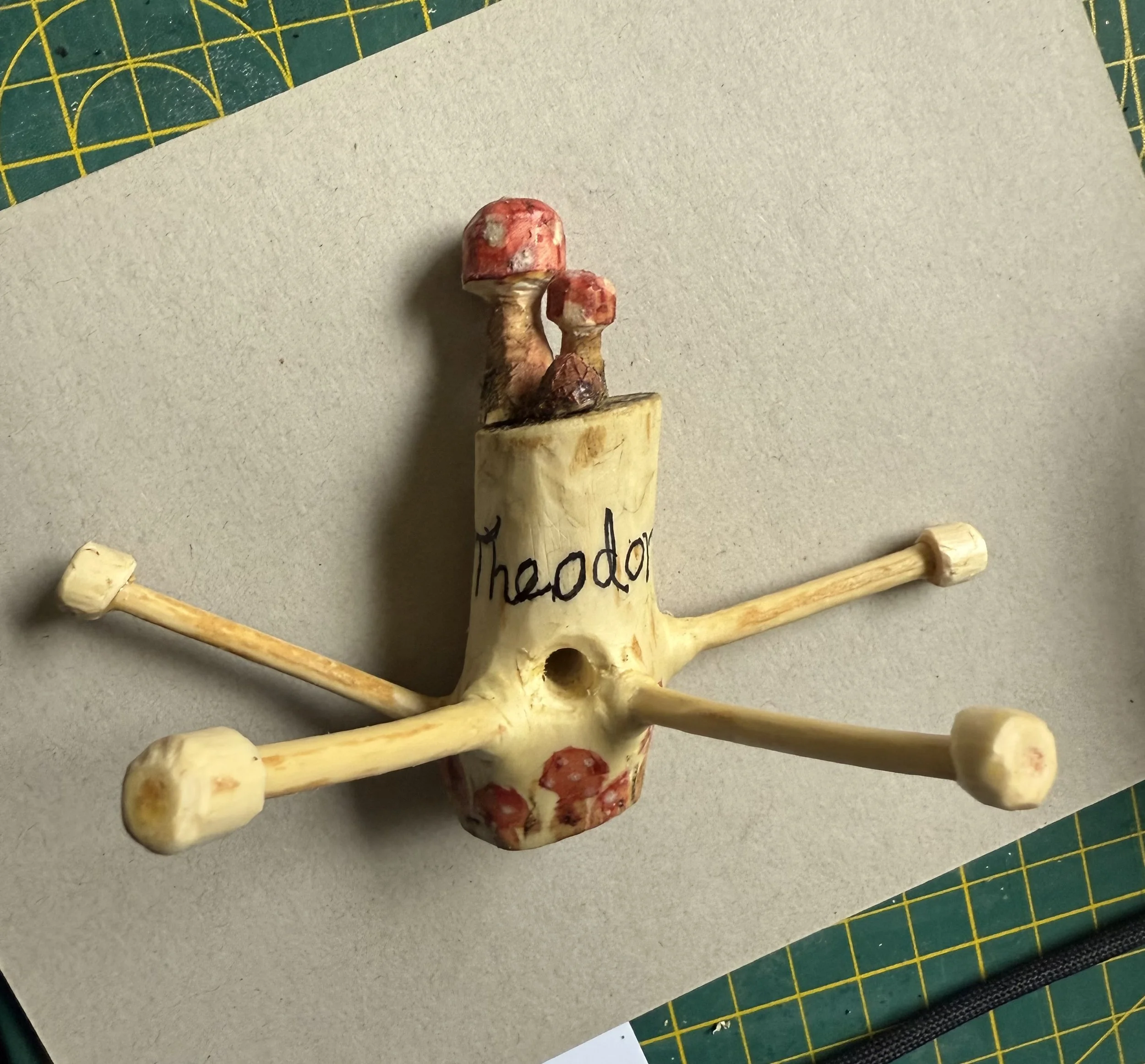
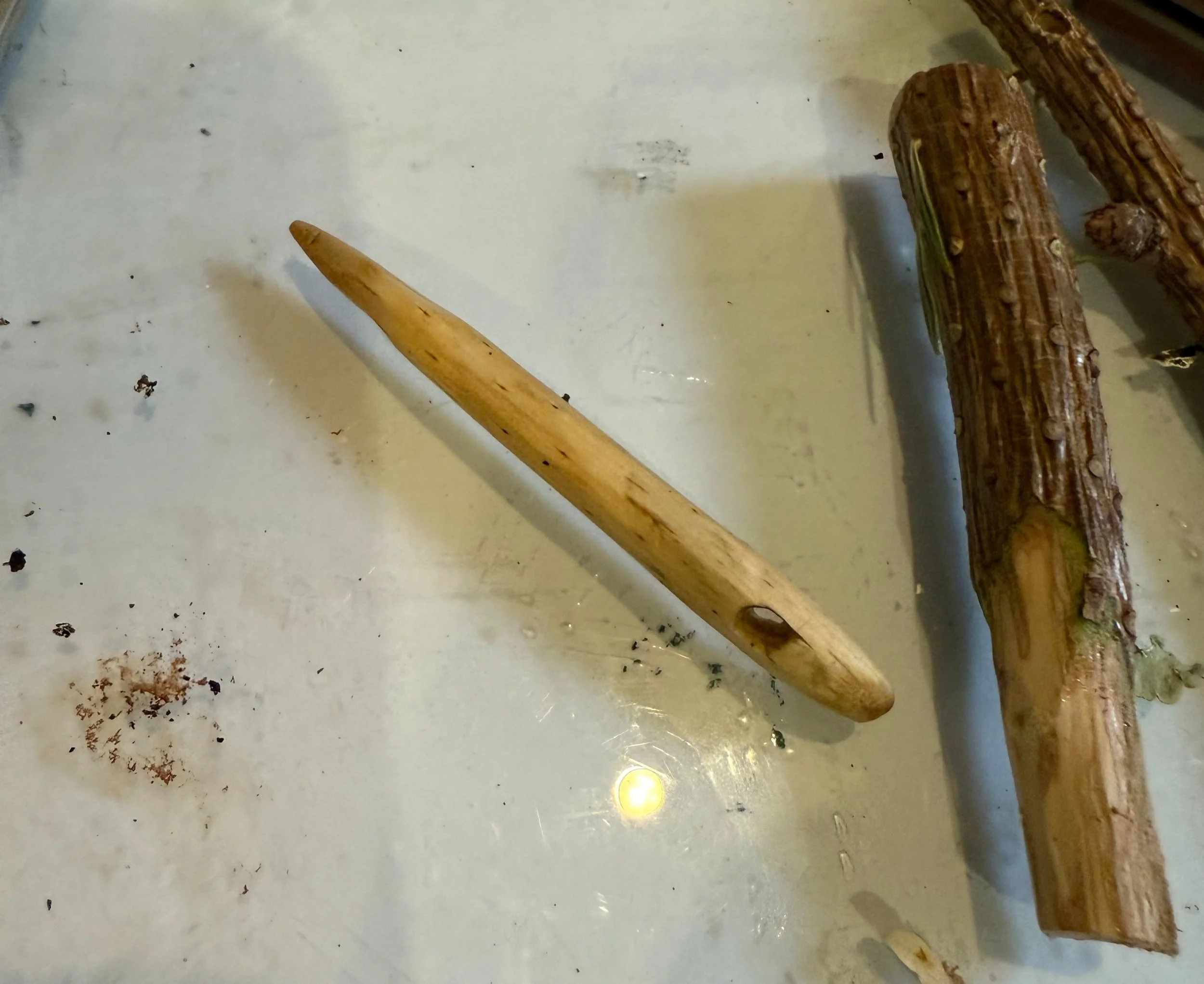

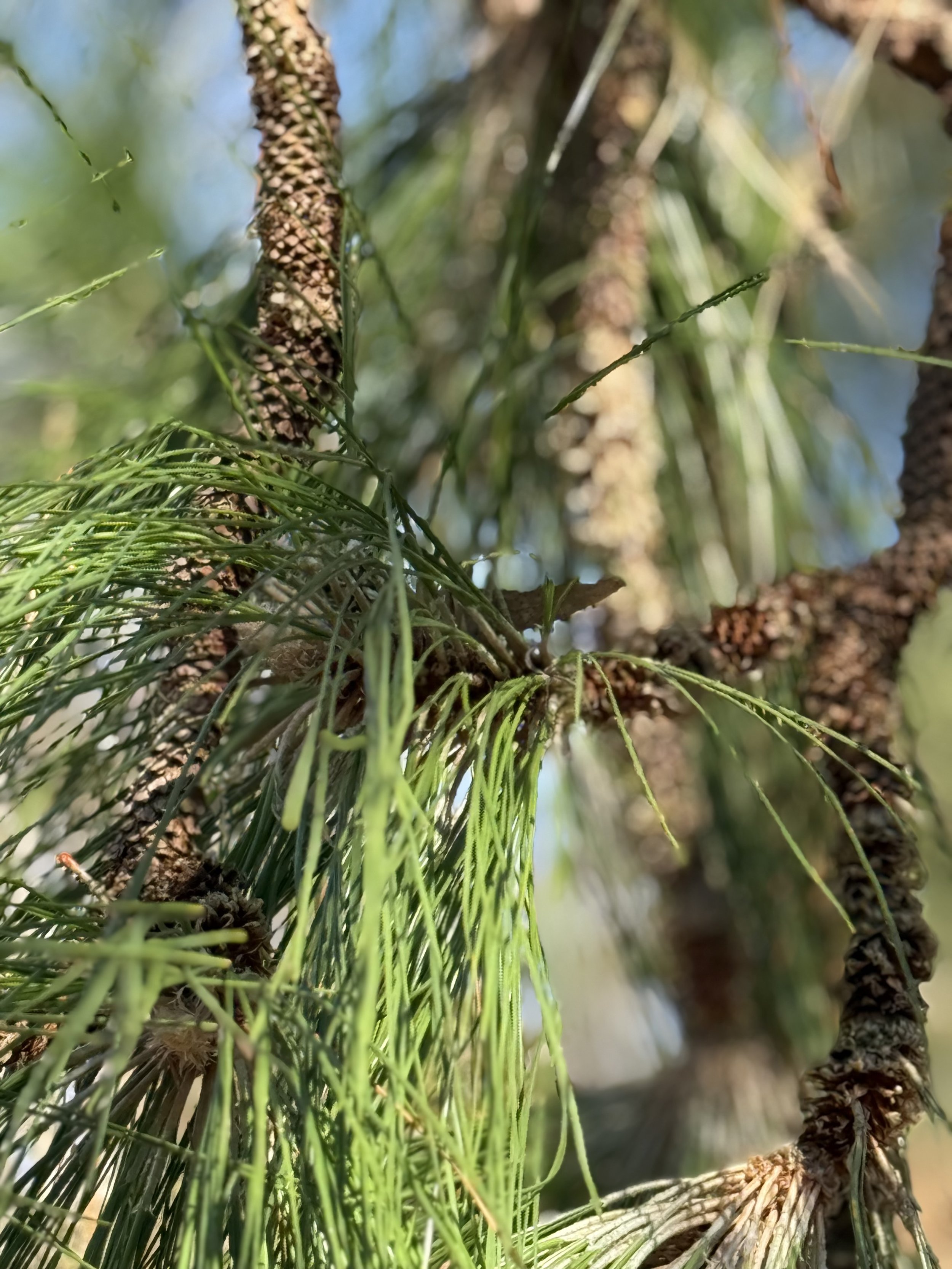
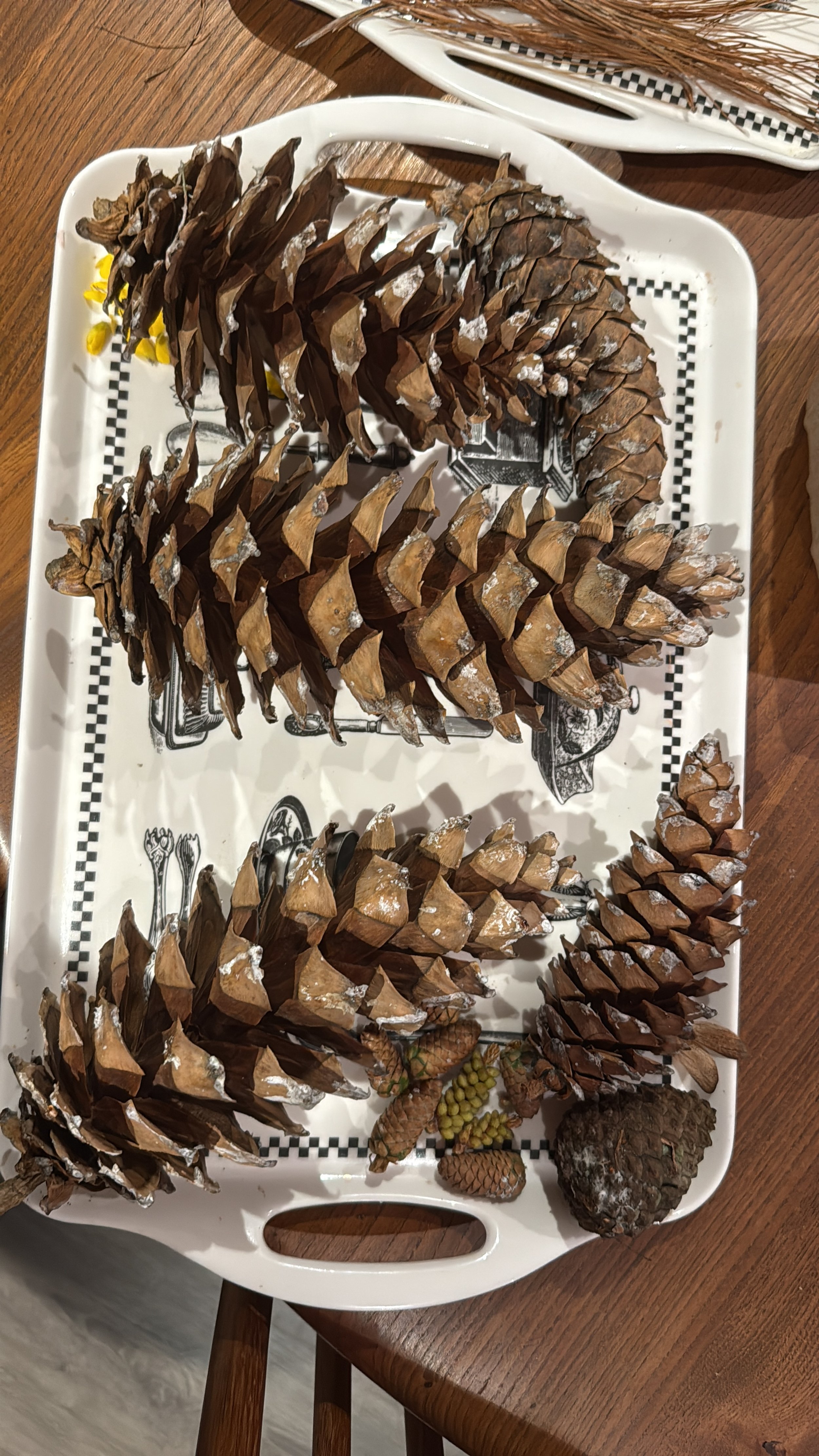

Breathing New Life into the Forgotten: Art Tools from Foraged Fir and Spruce
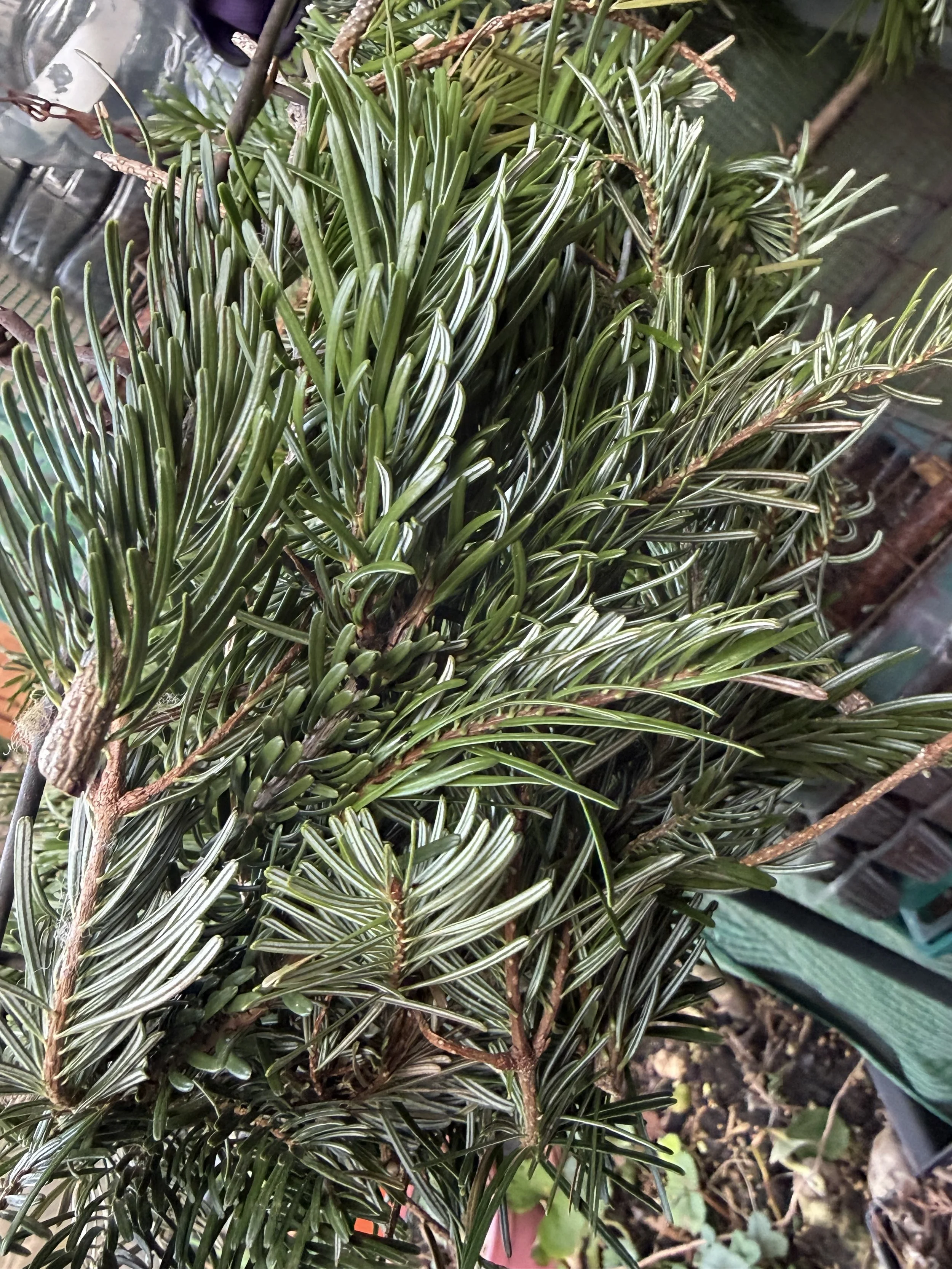
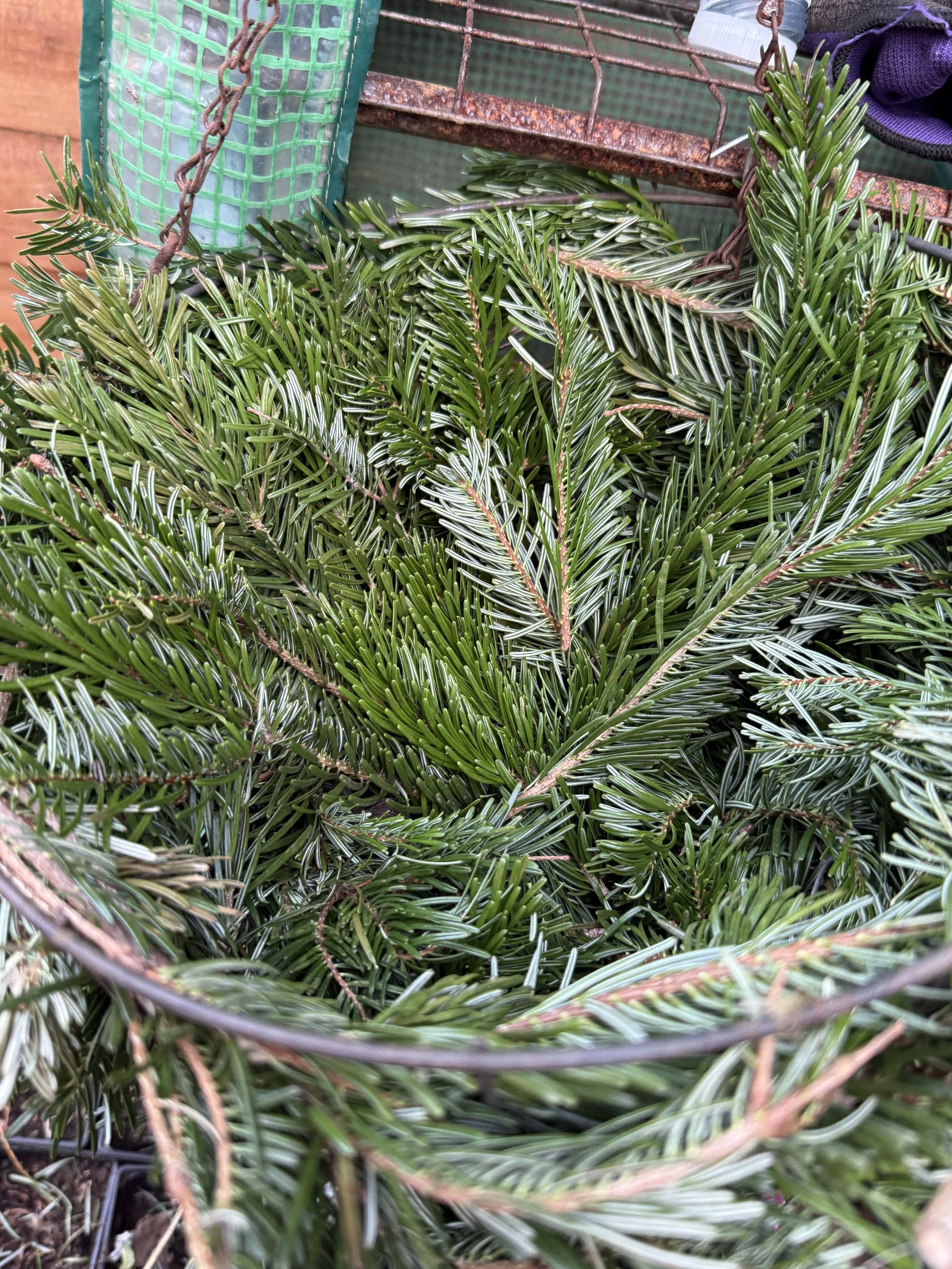
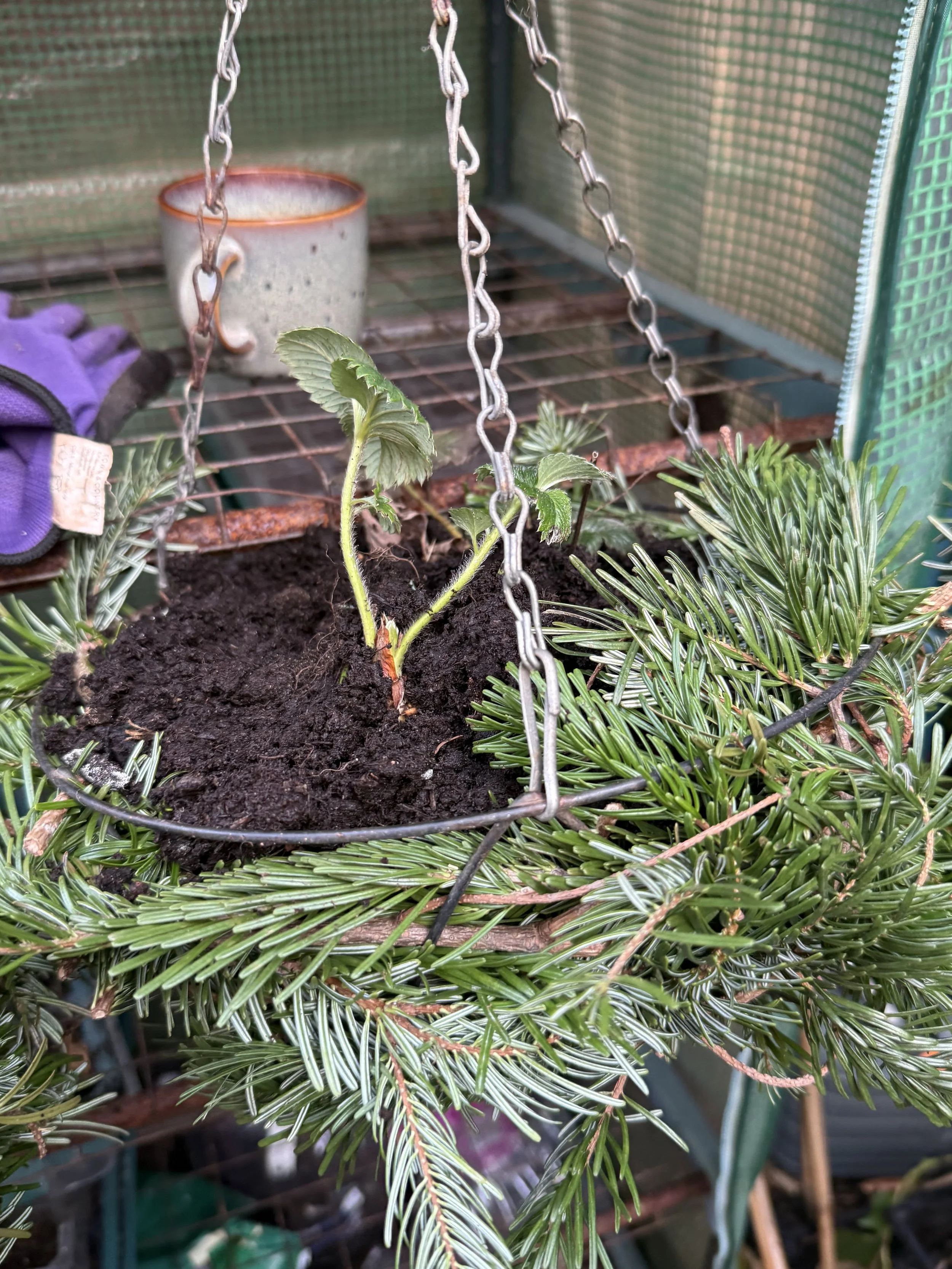
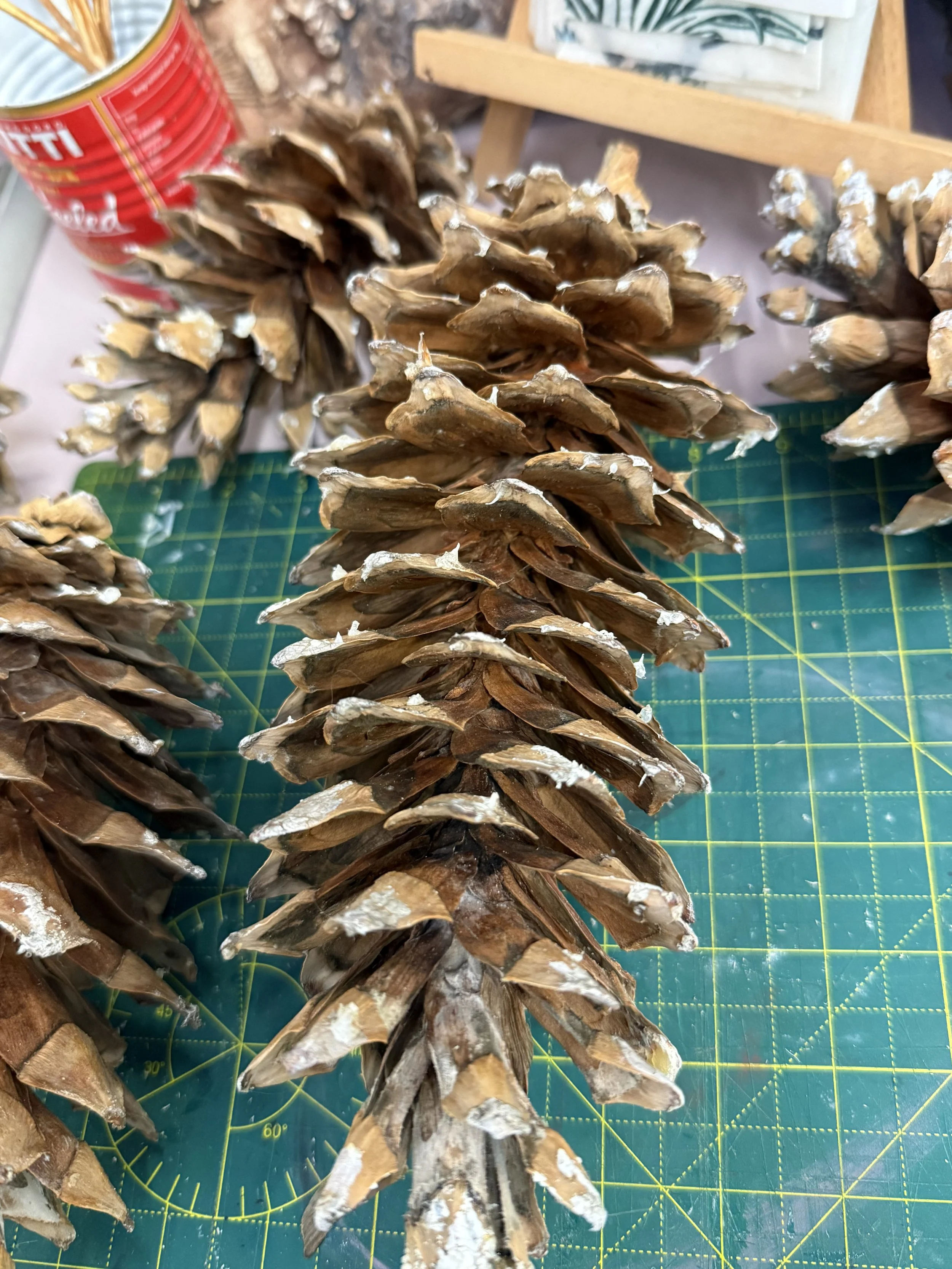
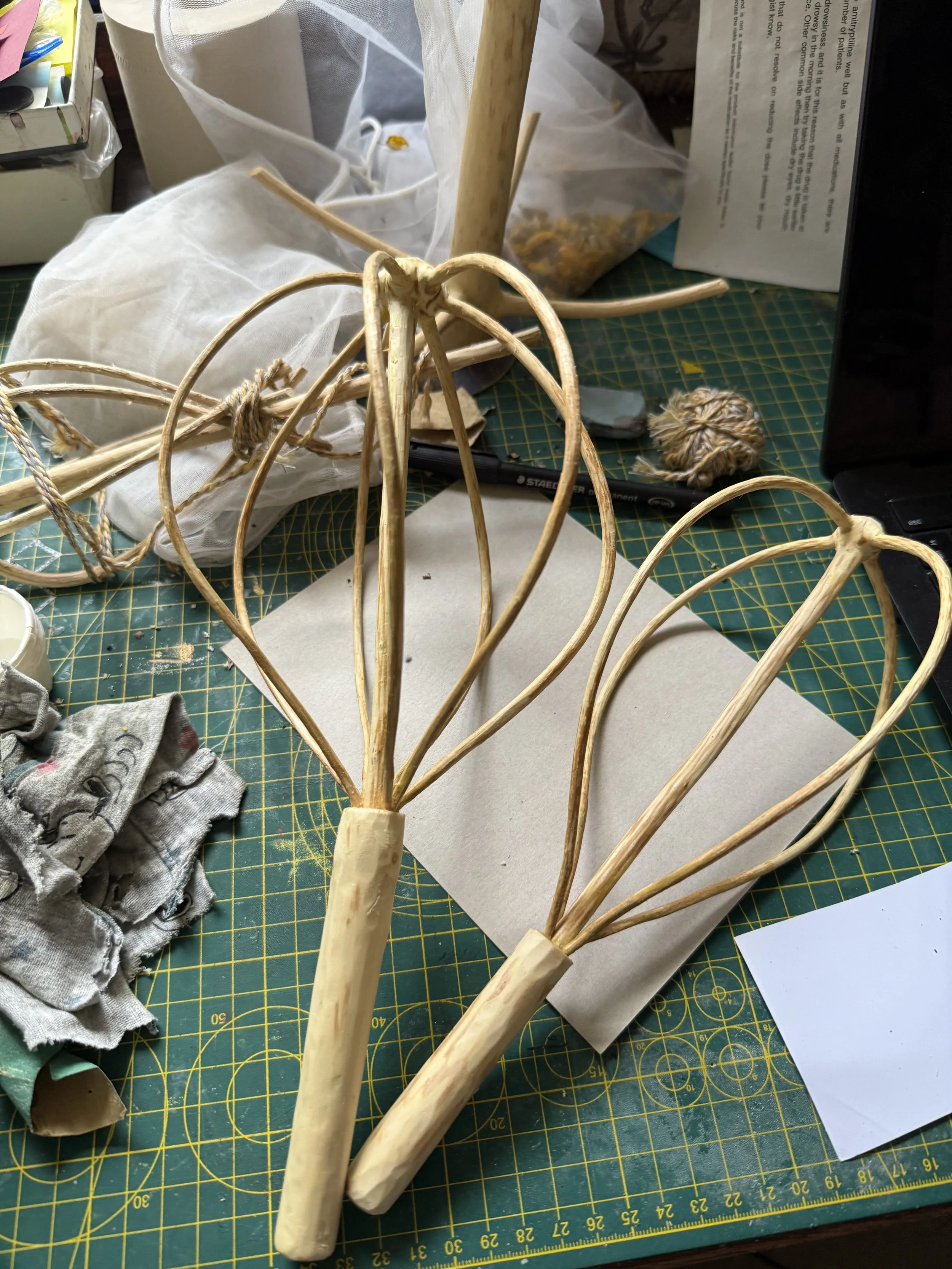
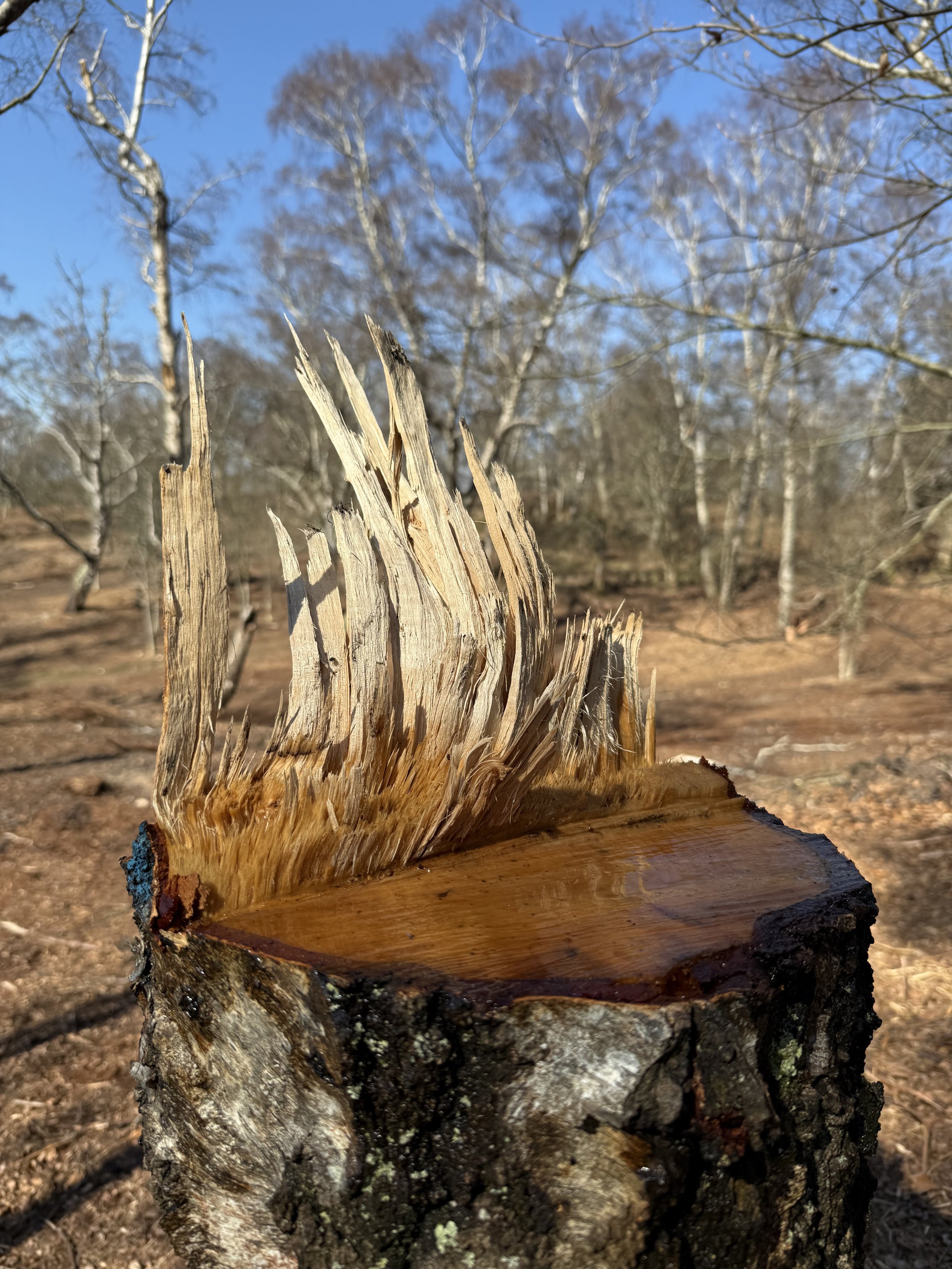
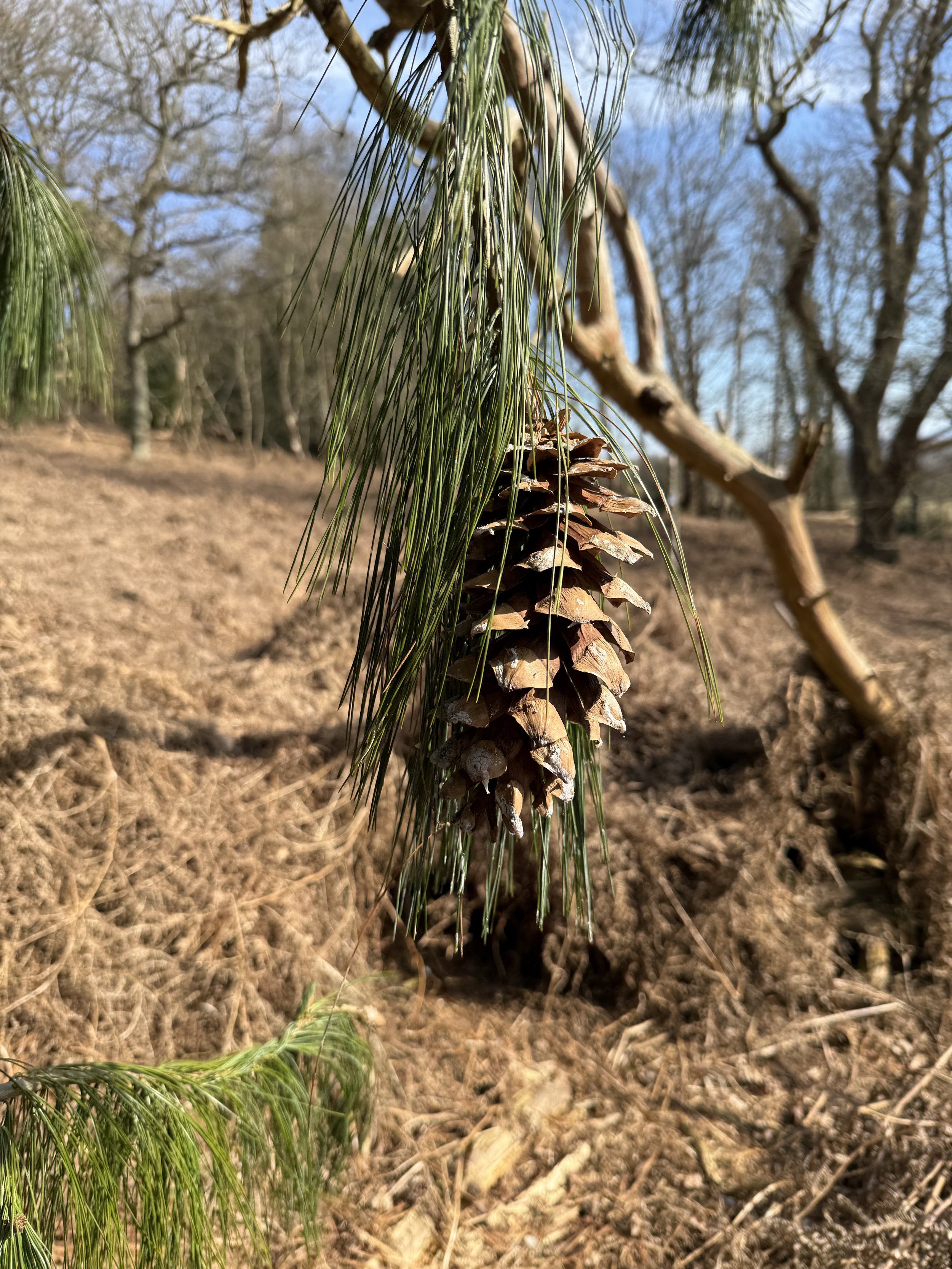
Every winter, countless Christmas trees, once the centerpieces of celebration, are left to dry and decay at the end of gardens or dumped in woodlands, which is where I found some of these. I want us all to see these as more than waste, we need to see potential or a new way of using our discarded plants. By foraging discarded fir and spruce trees, I am reclaiming this beautiful, aromatic wood and giving it a second life as handcrafted tools for my arts practice and I have found a few other uses around the home for these crafted branches.
Each branch and trunk is carefully selected, seasoned, and shaped into brushes, carving handles, burnishing tools, kitchen whisks, clothes pegs, and sewing needles. These tools carry with them the quiet story of a winter past, adding depth and character to the creative process. Fir’s straight grain and spruce’s soft resilience make them surprisingly versatile materials—ideal for tools that are not only functional, but also full of soul.
This is slow crafting with intention, rooted in sustainability, storytelling, and the tactile magic of nature. From tree to tool, every step is guided by respect for the material and the planet.