Weaving with the Land
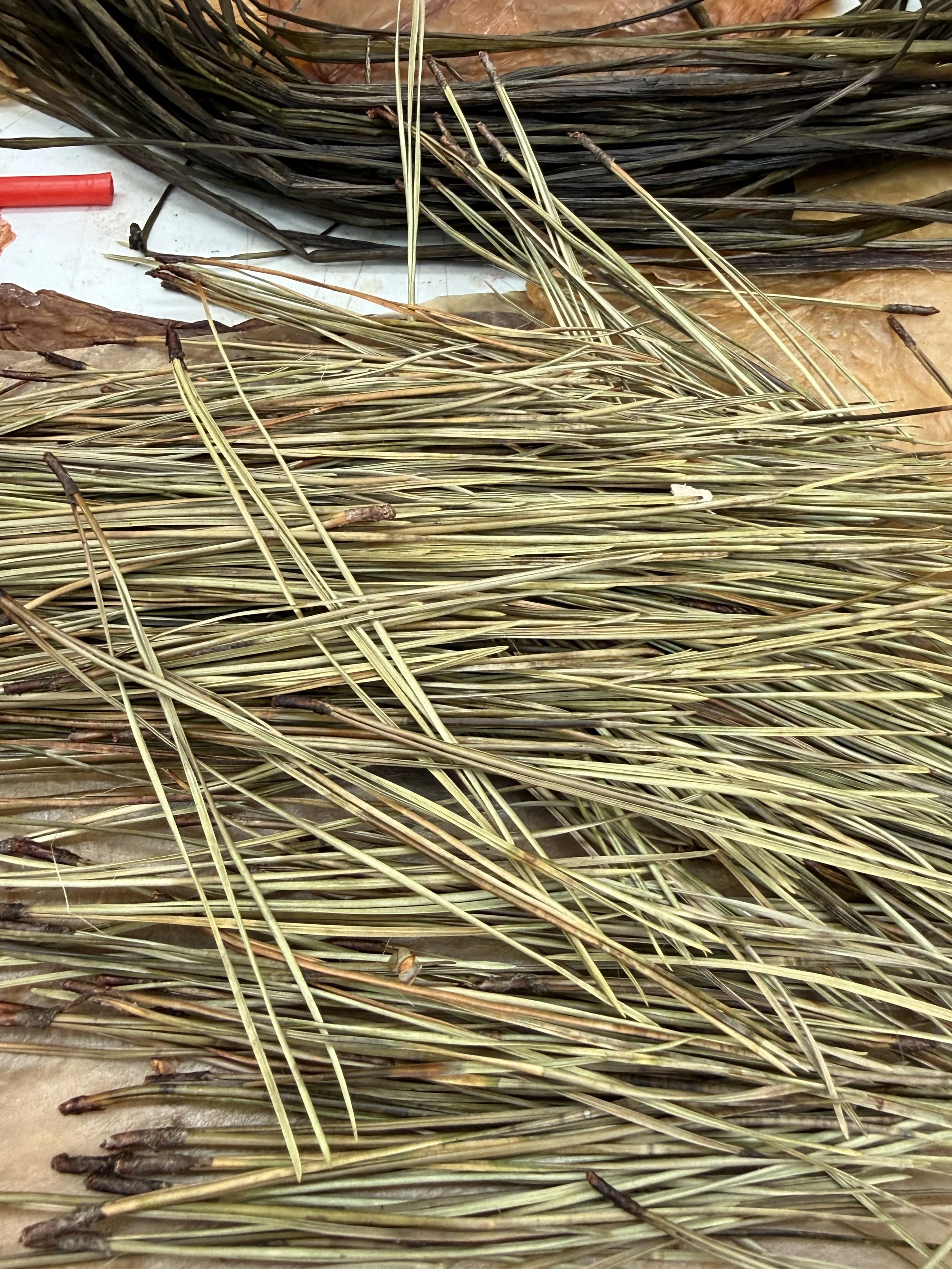
Weaving begins long before the hands touch fibre. It starts in the act of walking, of noticing, of gathering. In fields, hedgerows, and woodland edges, materials present themselves seasonally, twines hidden in bark, fibres in stems, pliable branches, grasses, leaves, and seed heads. These are not inert materials but living matter, carrying time, weather, and memory within them.
To weave with natural twines and plant matter is to work in collaboration with the land rather than in extraction from it. The process asks for patience and attentiveness, understanding when a plant is ready, when it will bend, when it will break.
Weaving as Practice
To weave with natural materials is to accept impermanence. The work will dry, fade, decay, return to the soil. This is not failure but completion.
In this way, weaving becomes more than a technique, it becomes a way of thinking. A method of reconnecting with cyclical time, with the body, and with the land itself. The act of gathering, making, and unmaking forms a continuous loop, where process and material are inseparable.
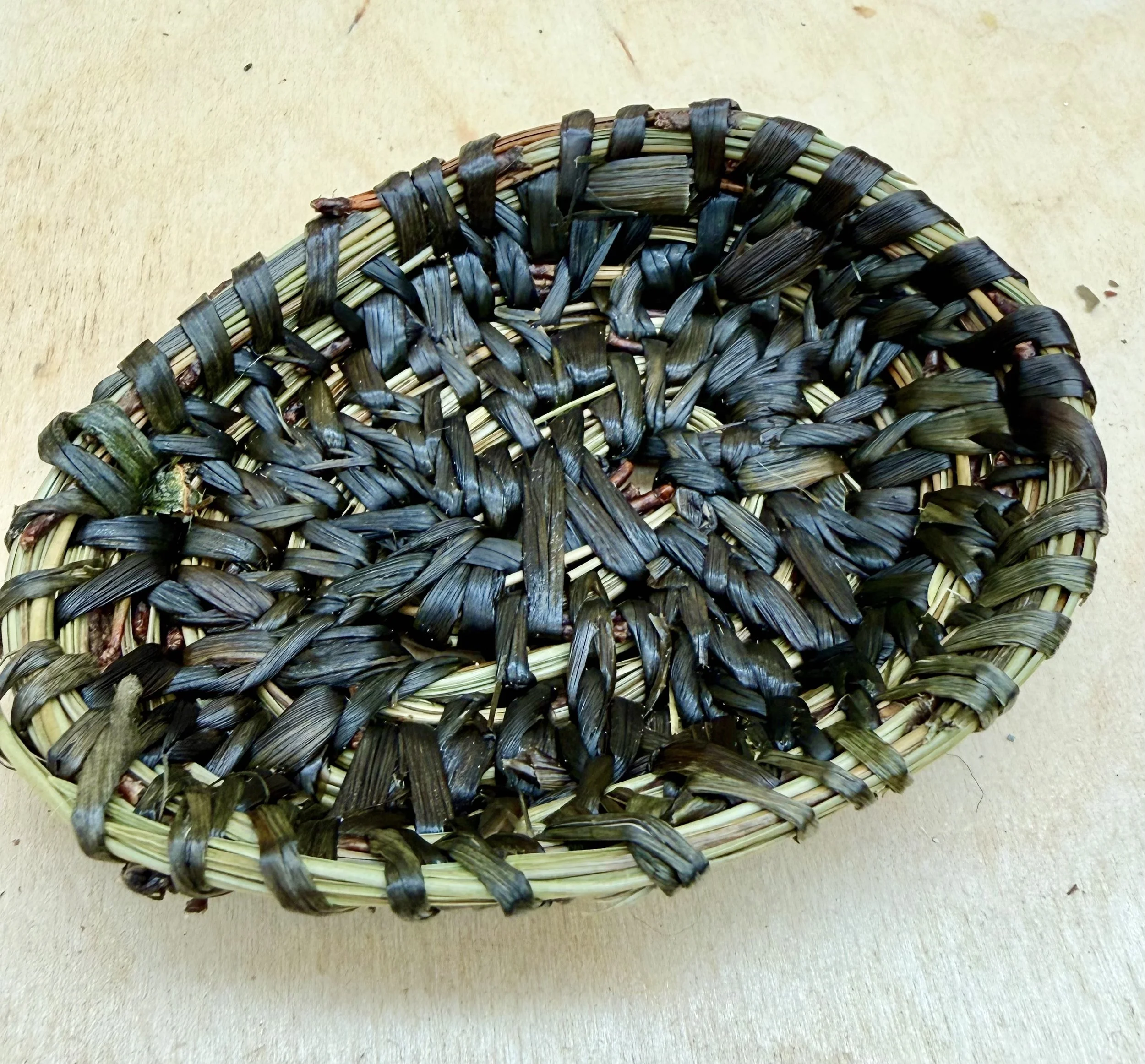
What I like to Use
Natural weaving materials can be found across many environments:
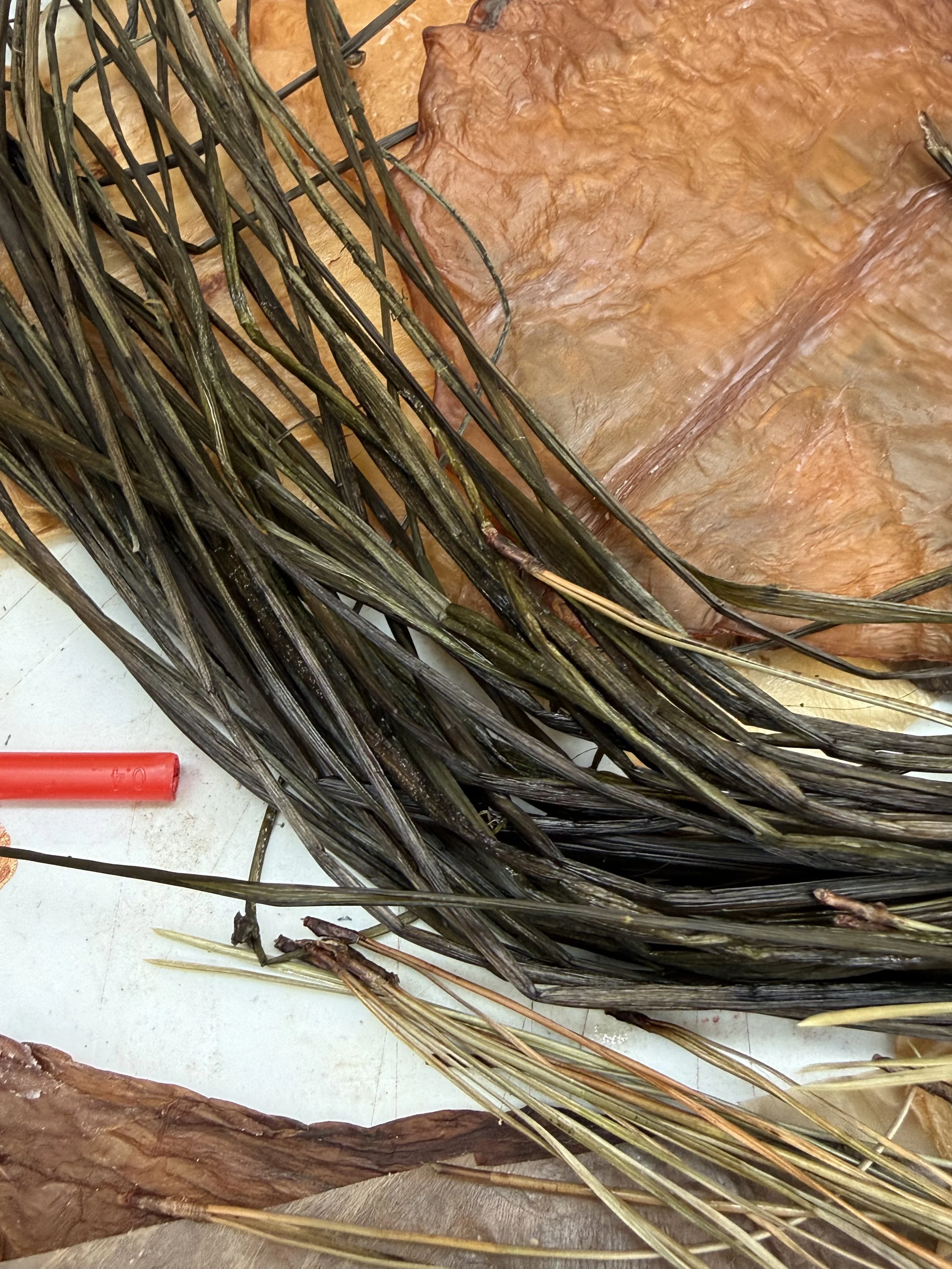
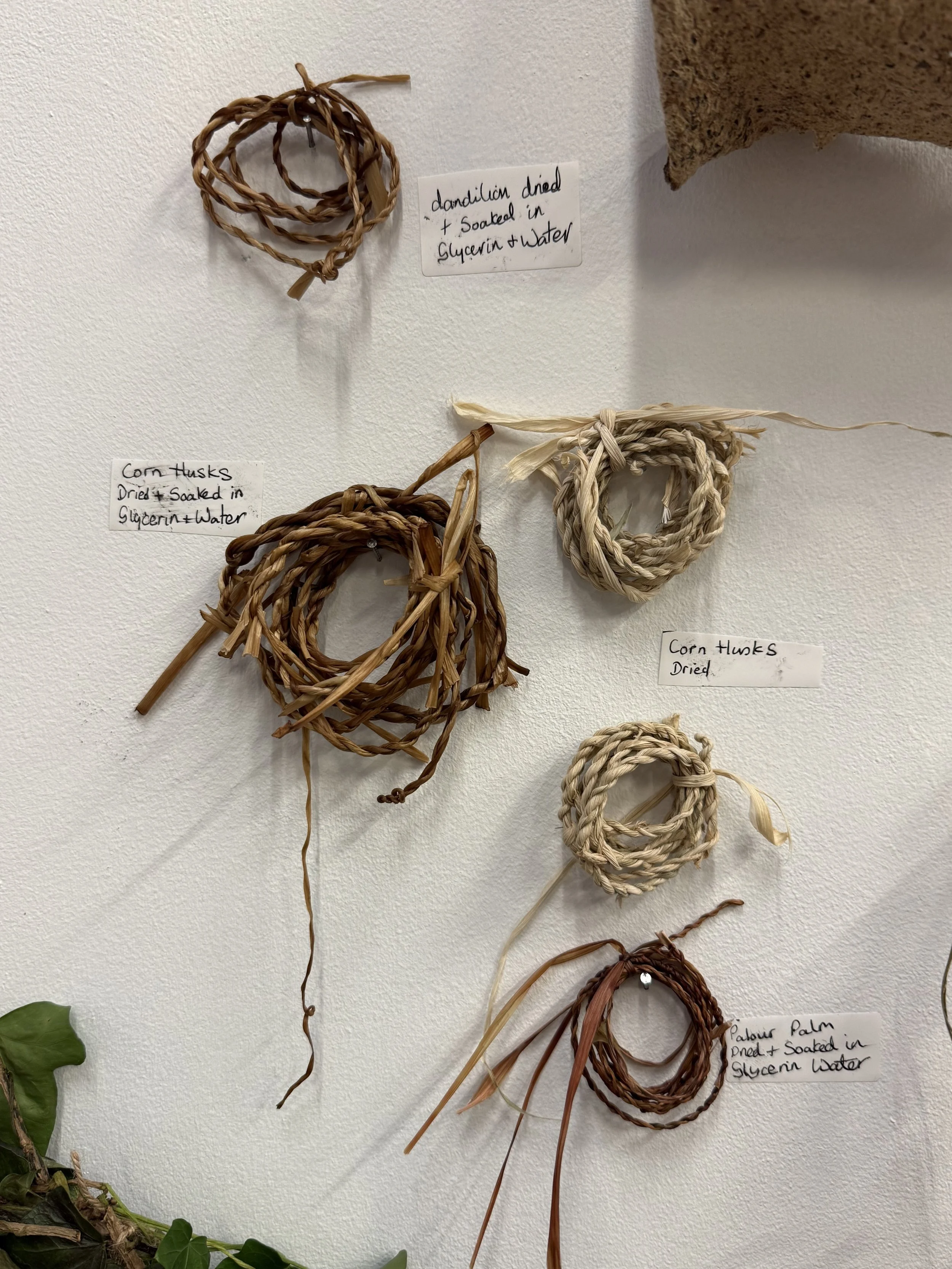
Bast fibres: nettle, flax, hemp, lime bark, strong, thread-like fibres that can be processed into cordage
Flexible stems and rods: willow, hazel, dogwood, ideal for structure and framework
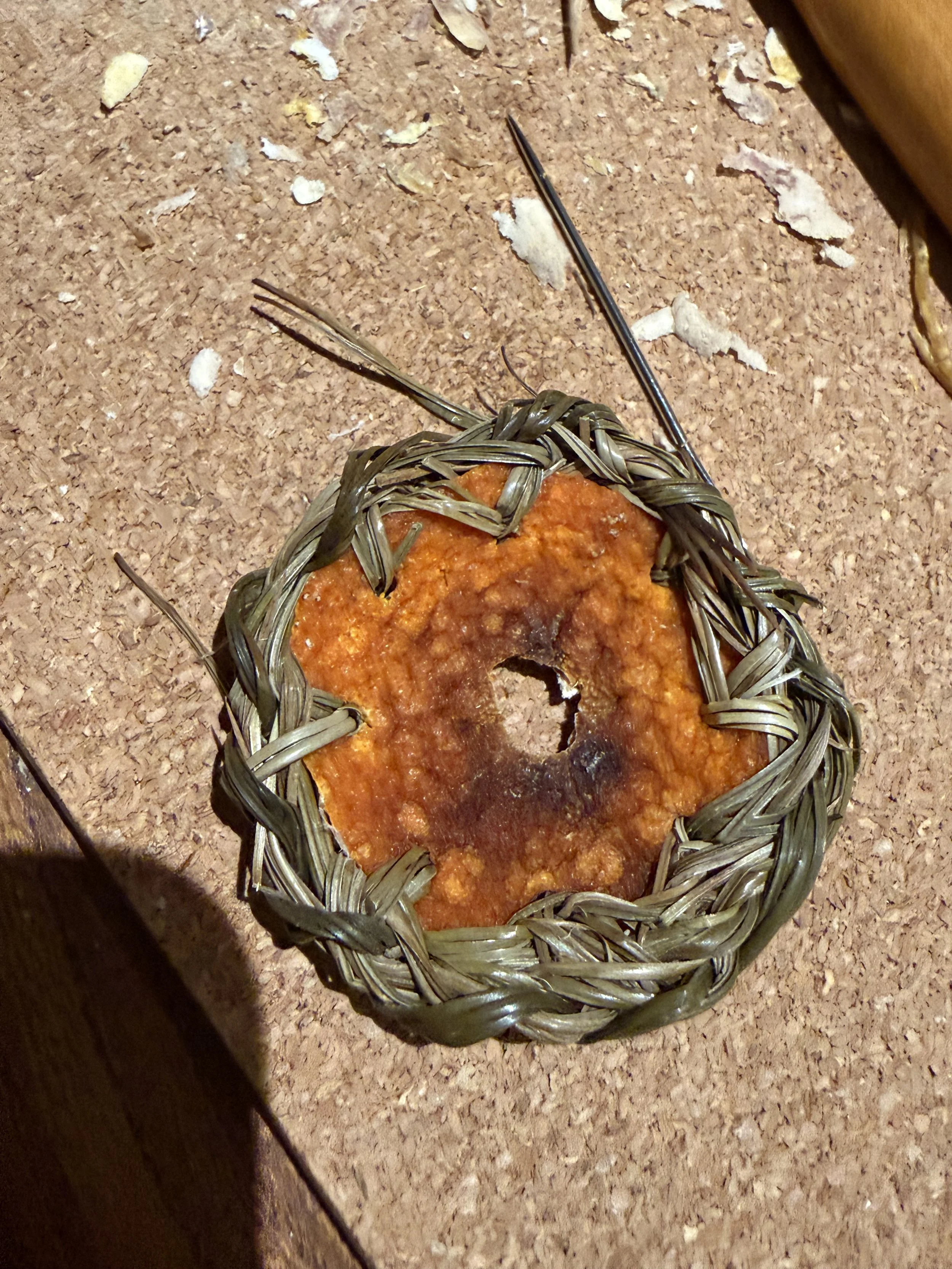
Grasses and rushes: soft rush, marram grass, sedge, useful for coiling, plaiting, and binding
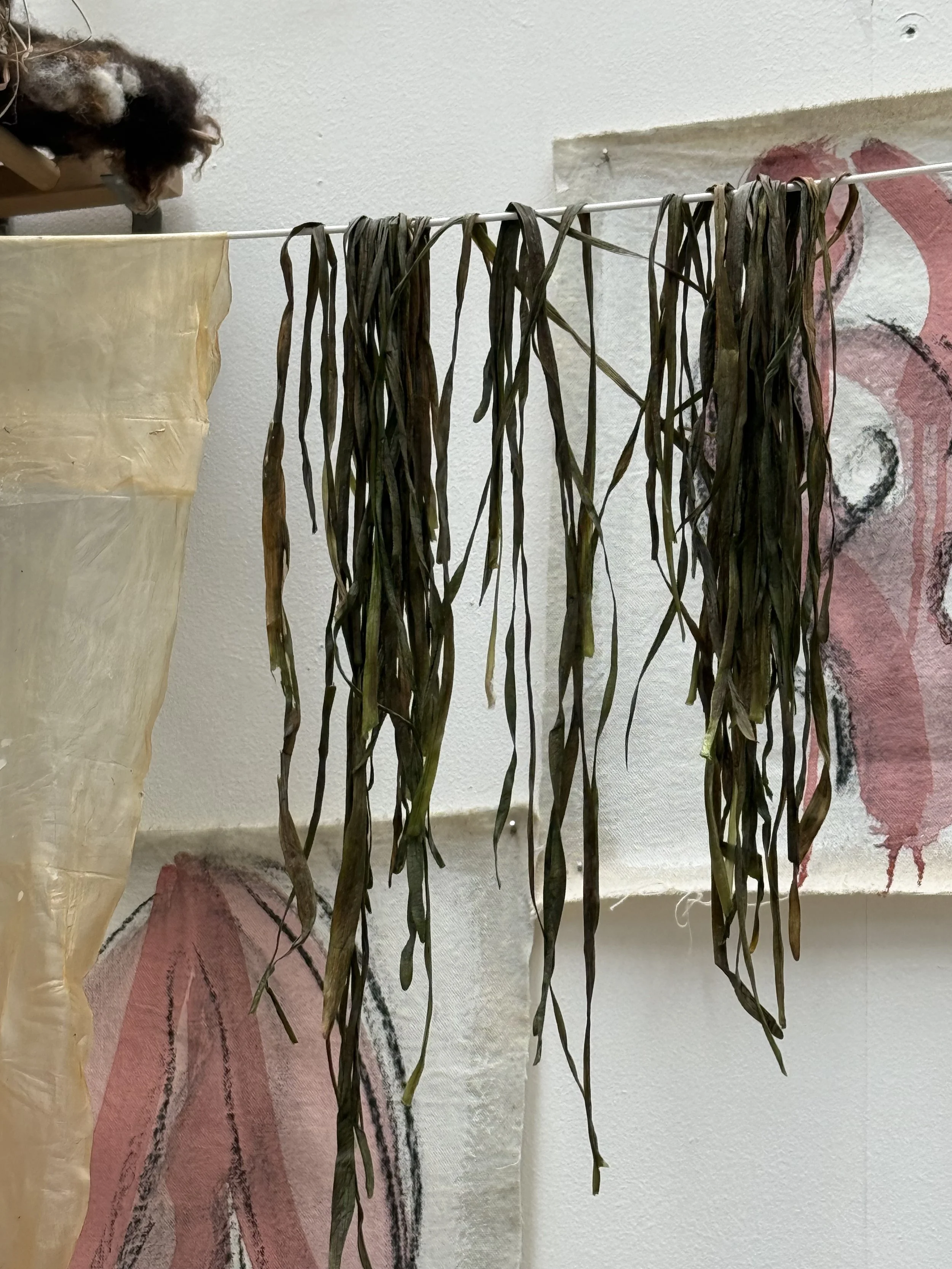
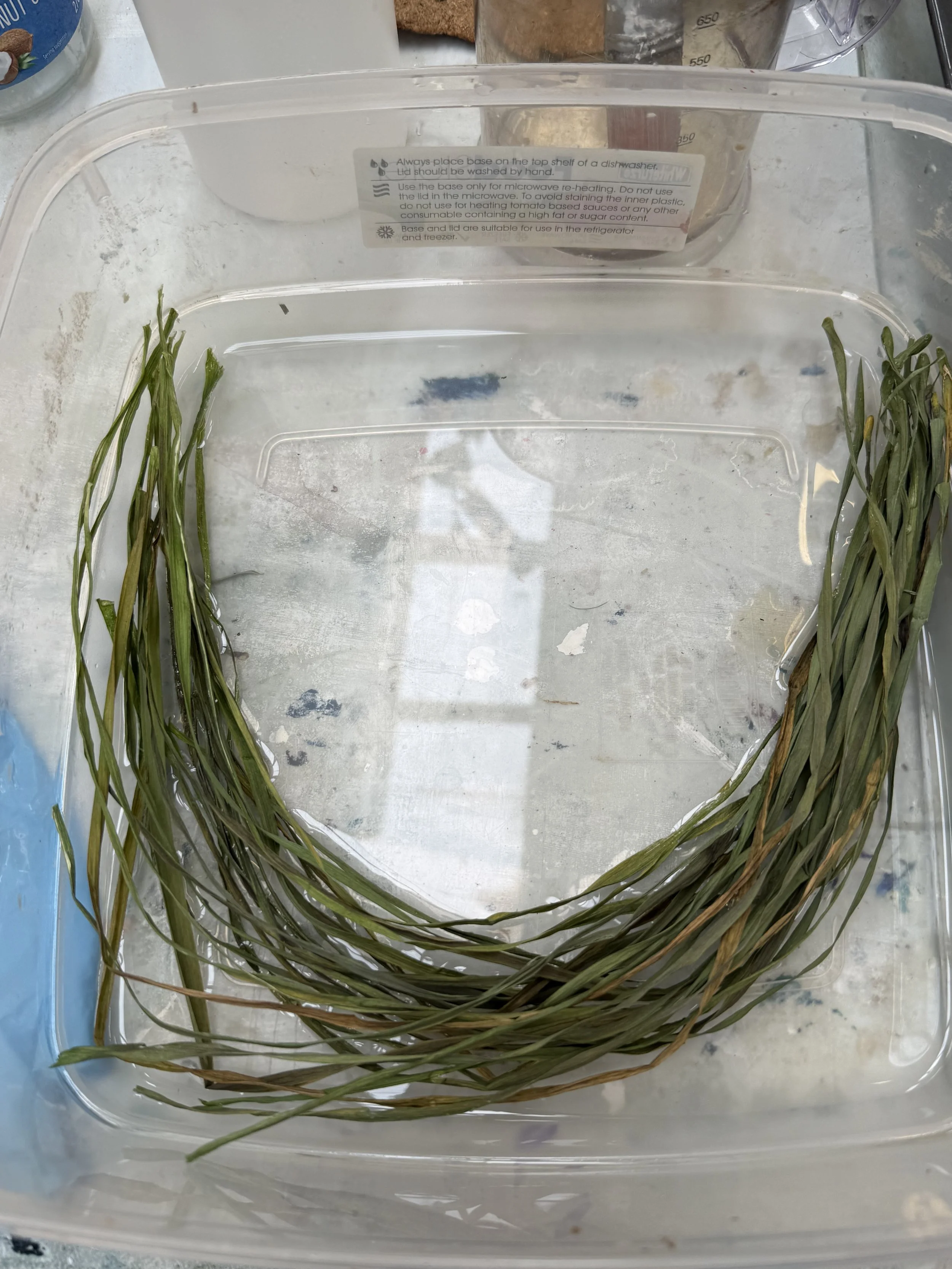
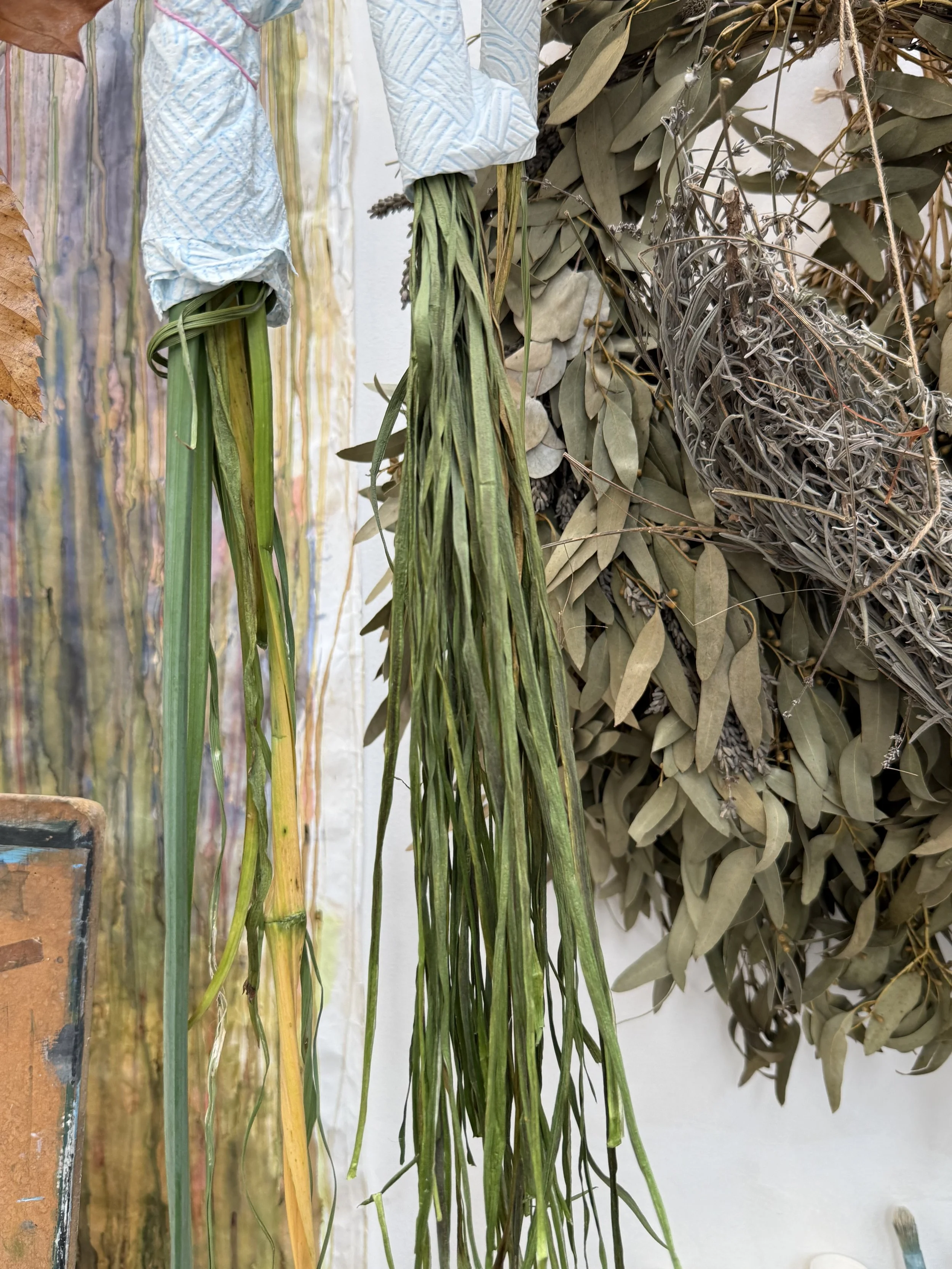
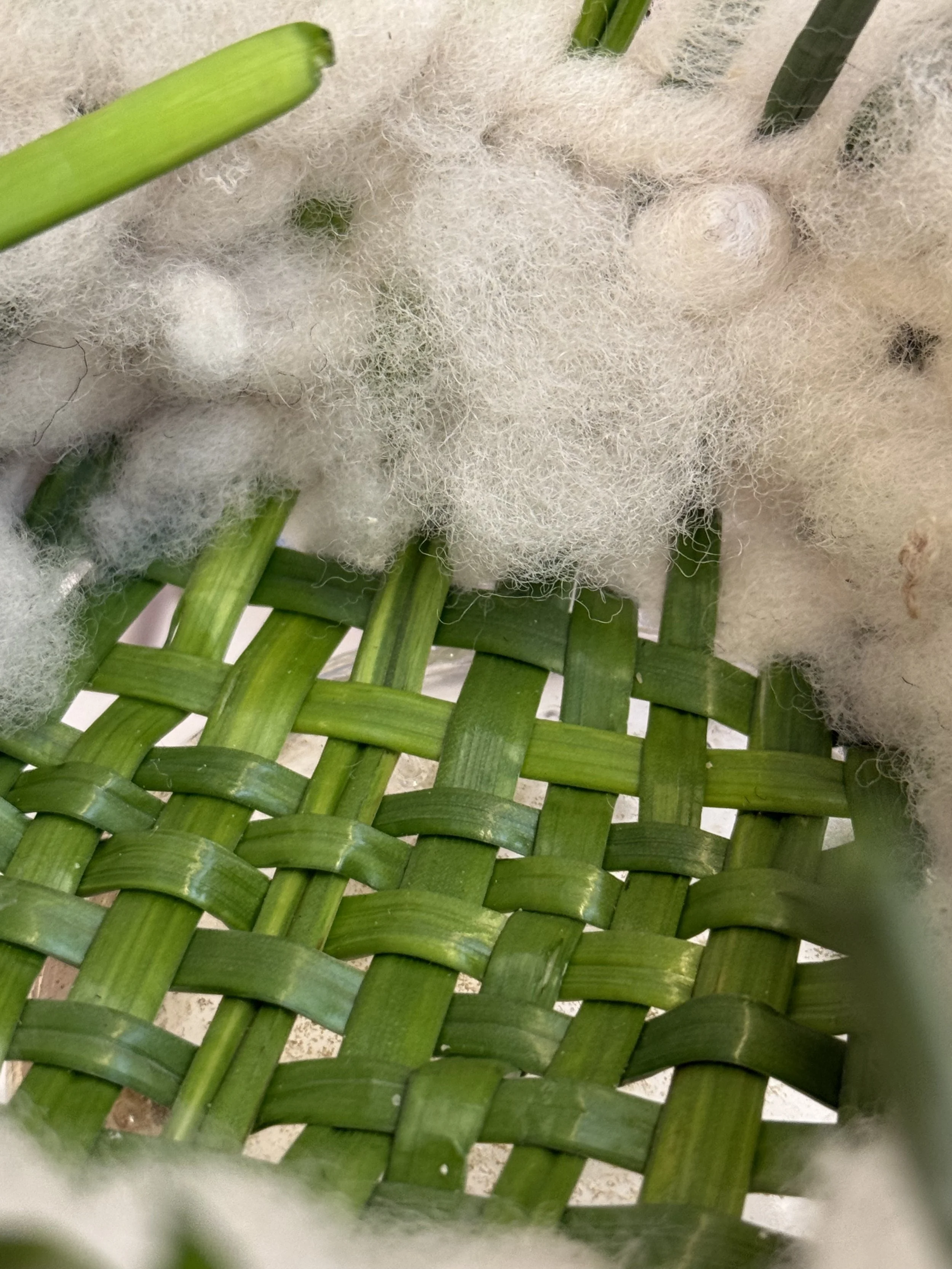
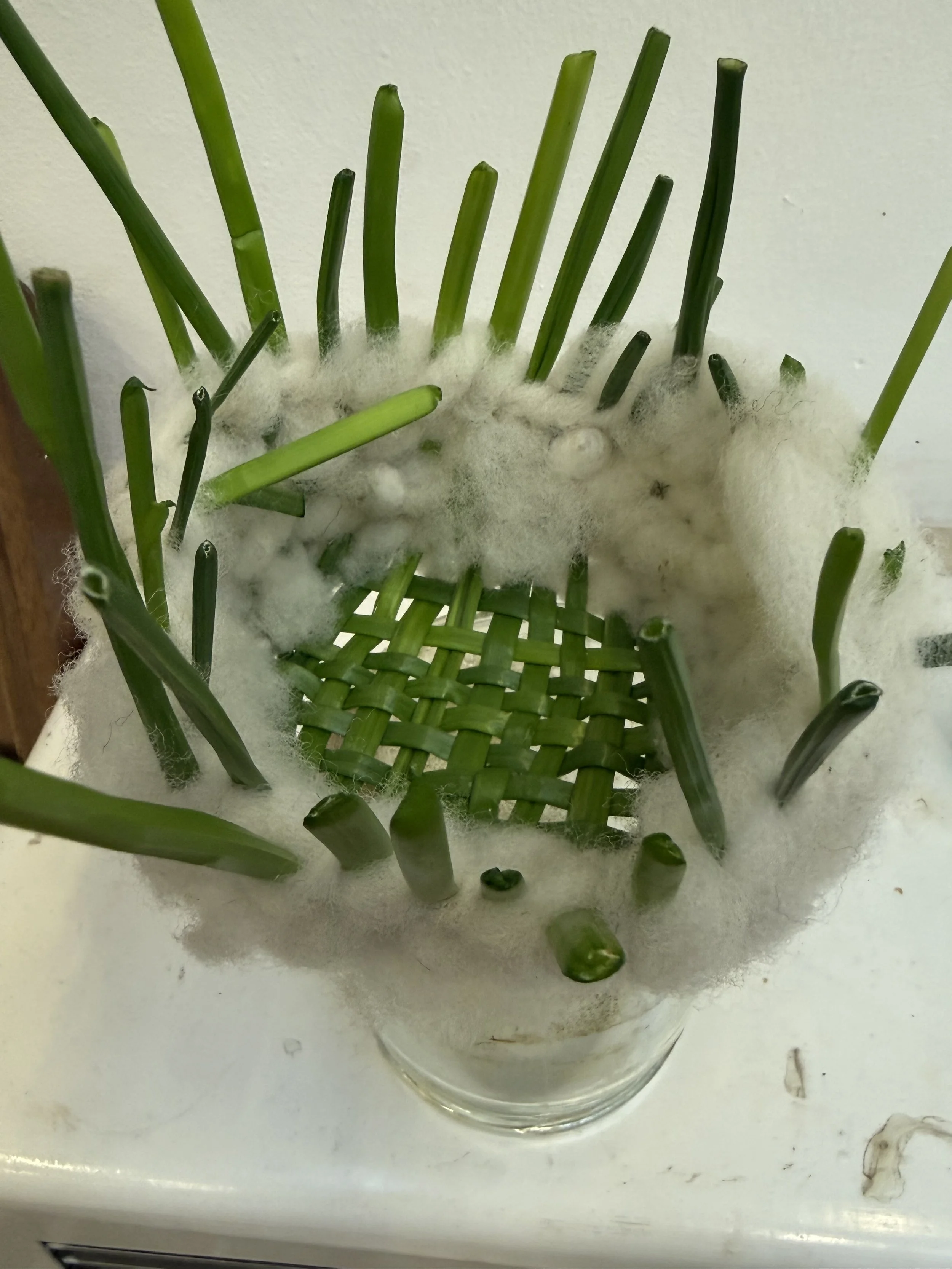
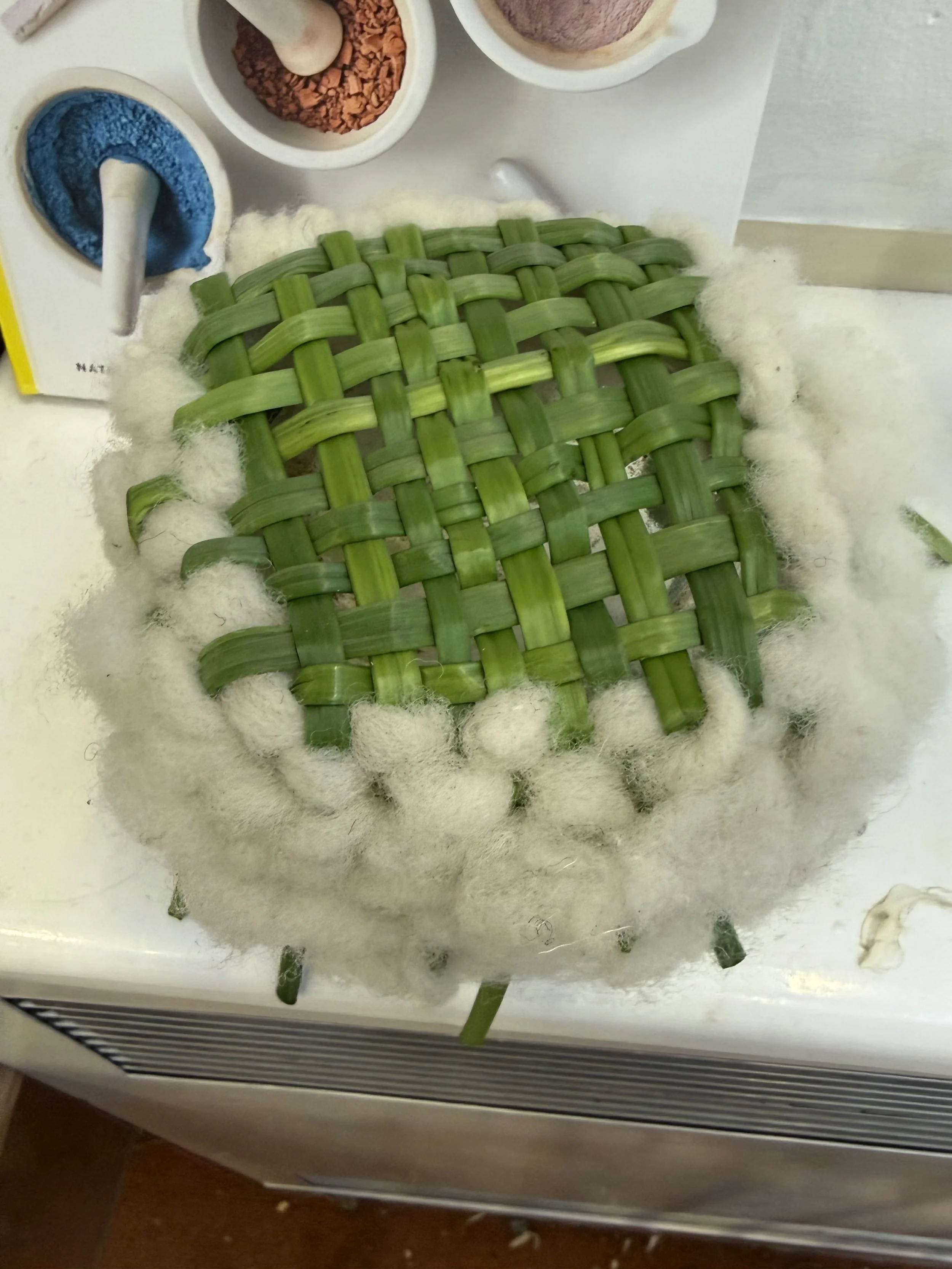
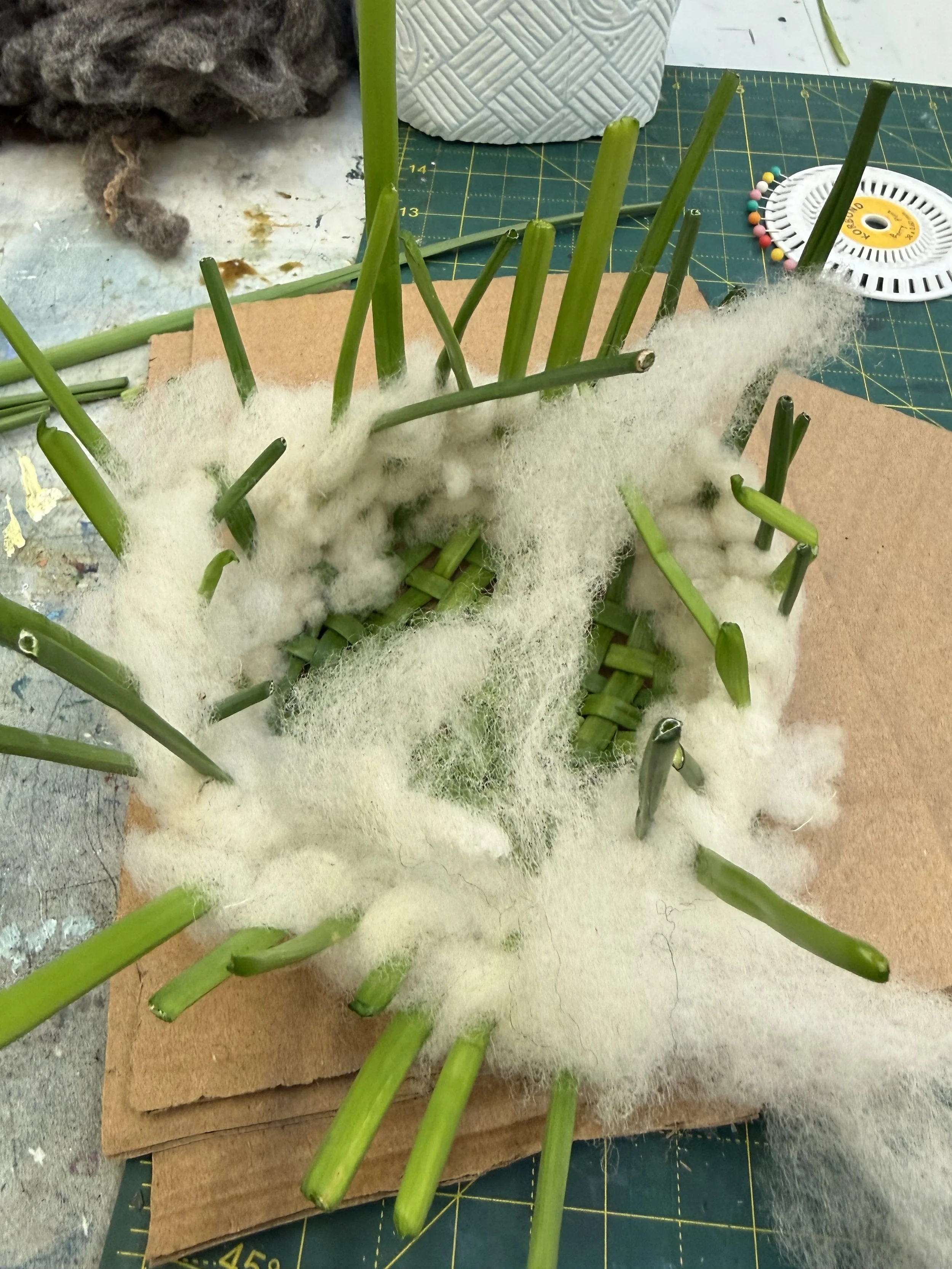
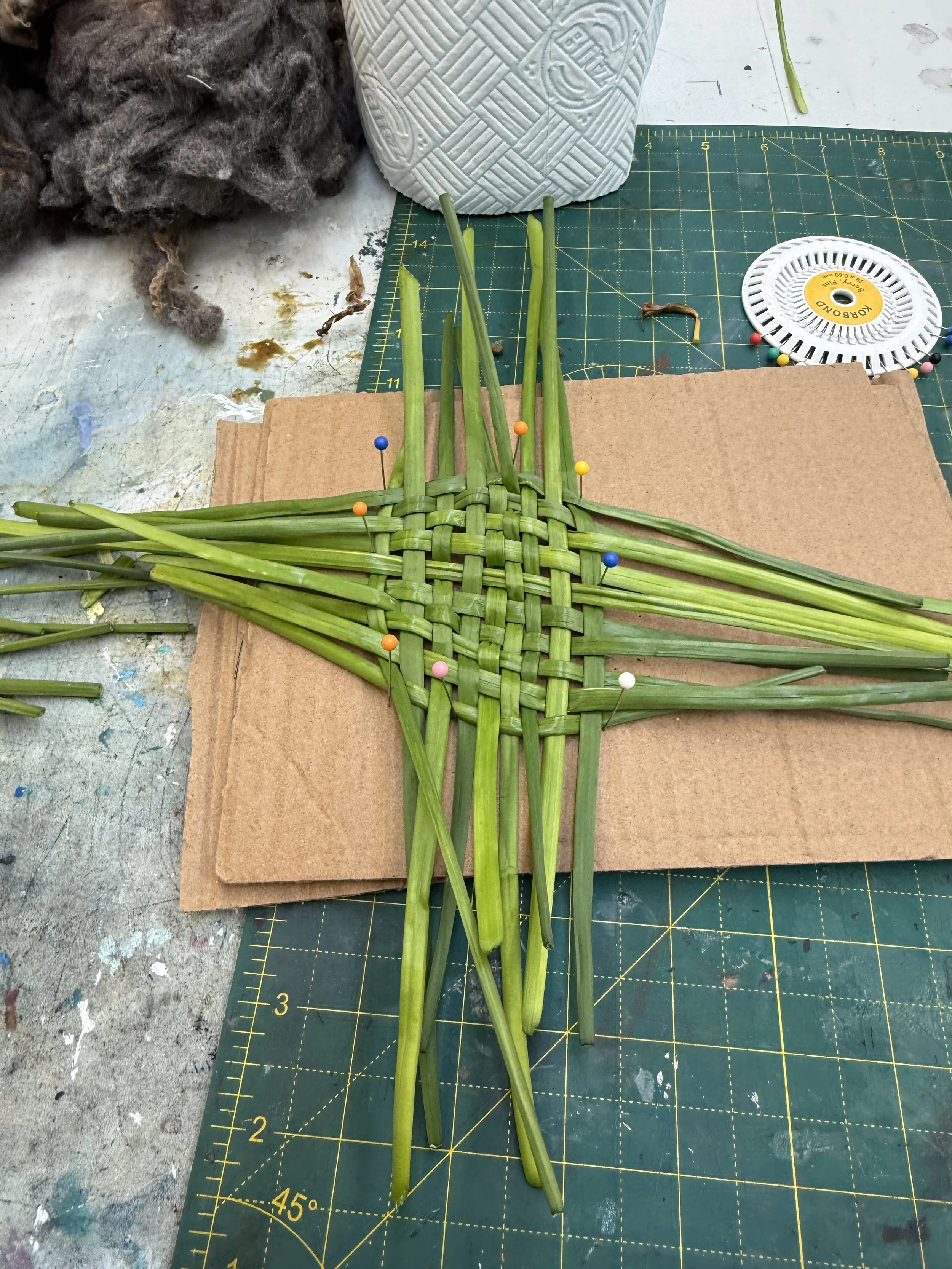
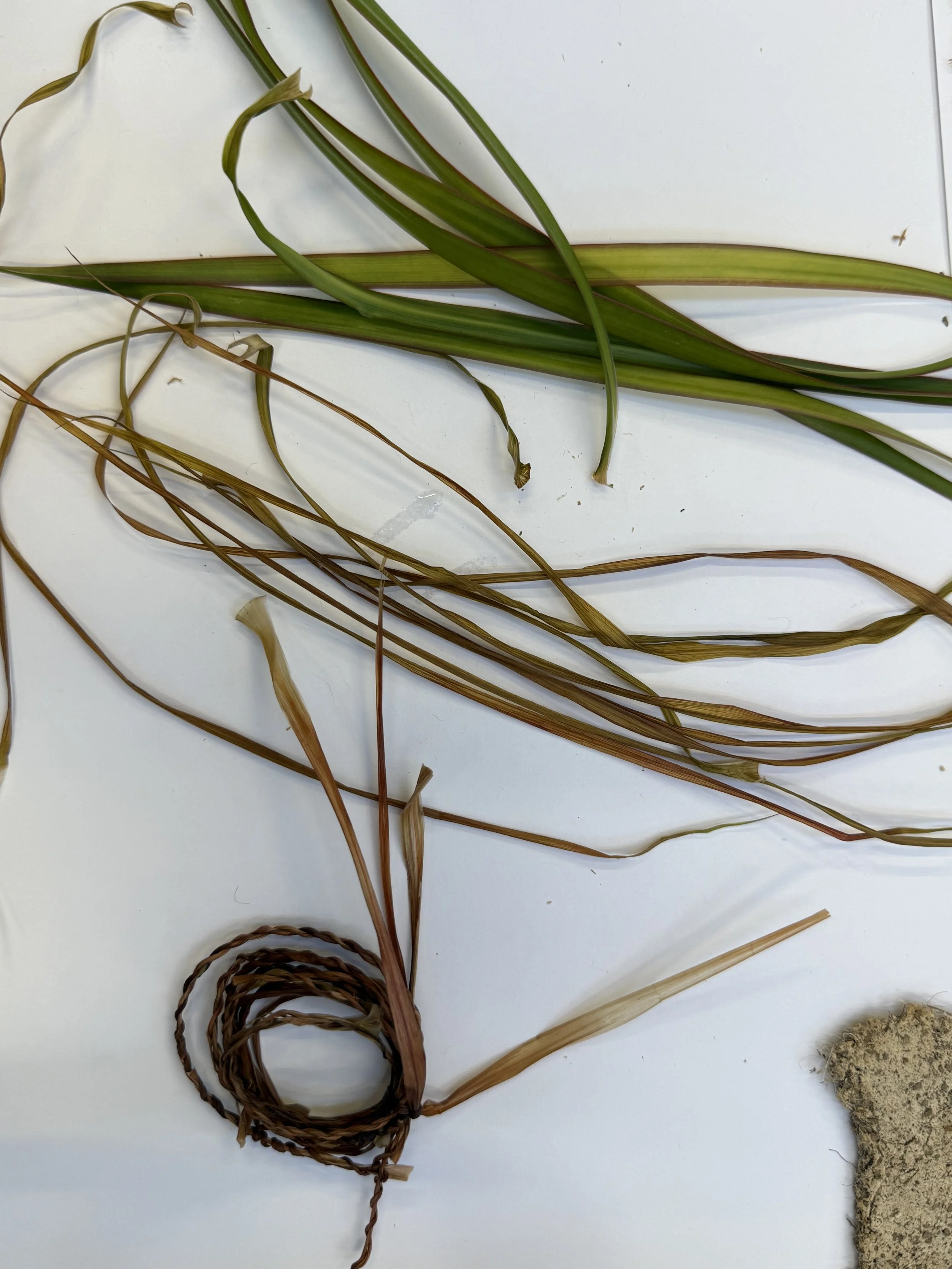
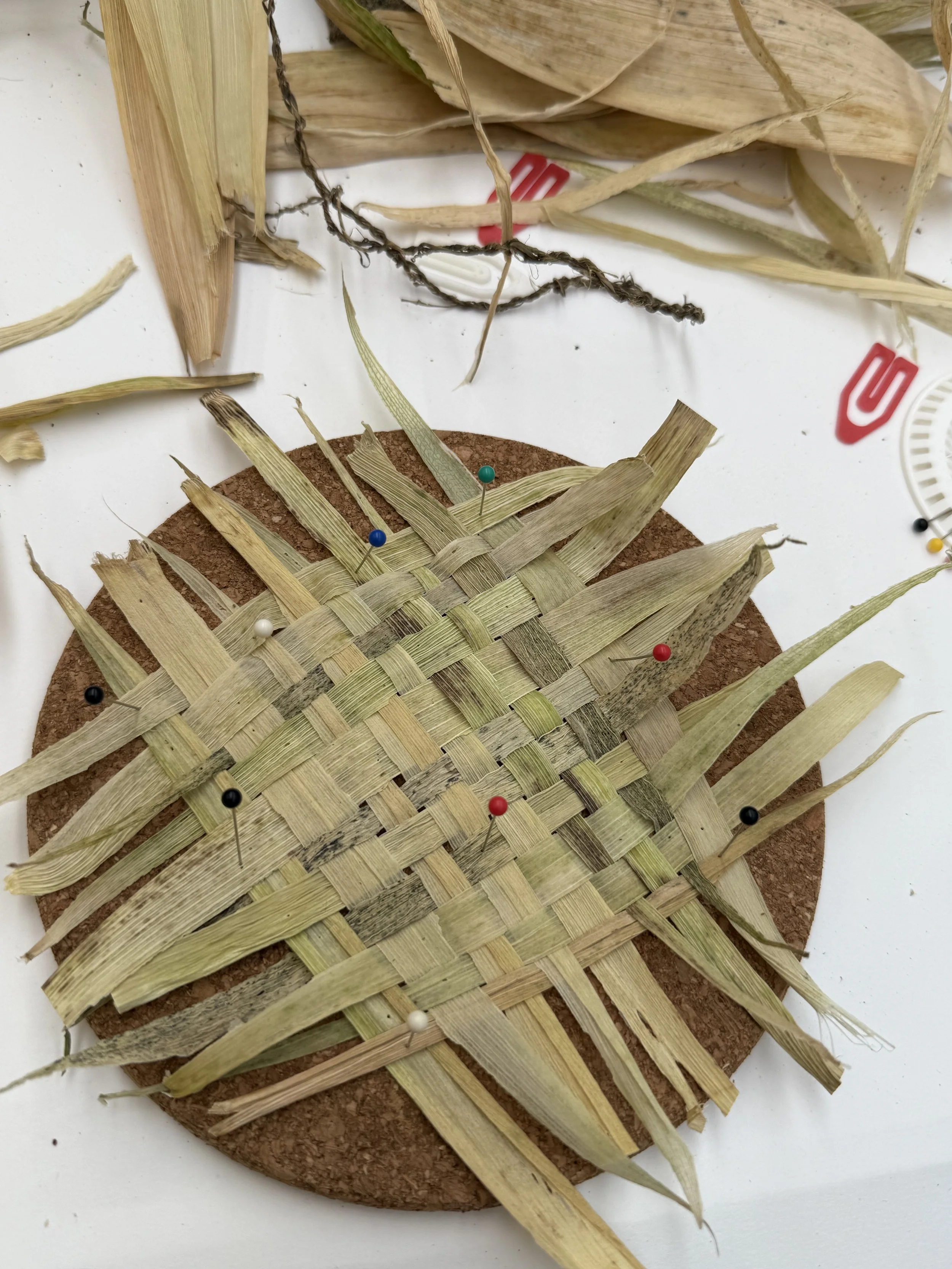
Leaves and blades: iris, reed, daylily, flattened and woven while still supple
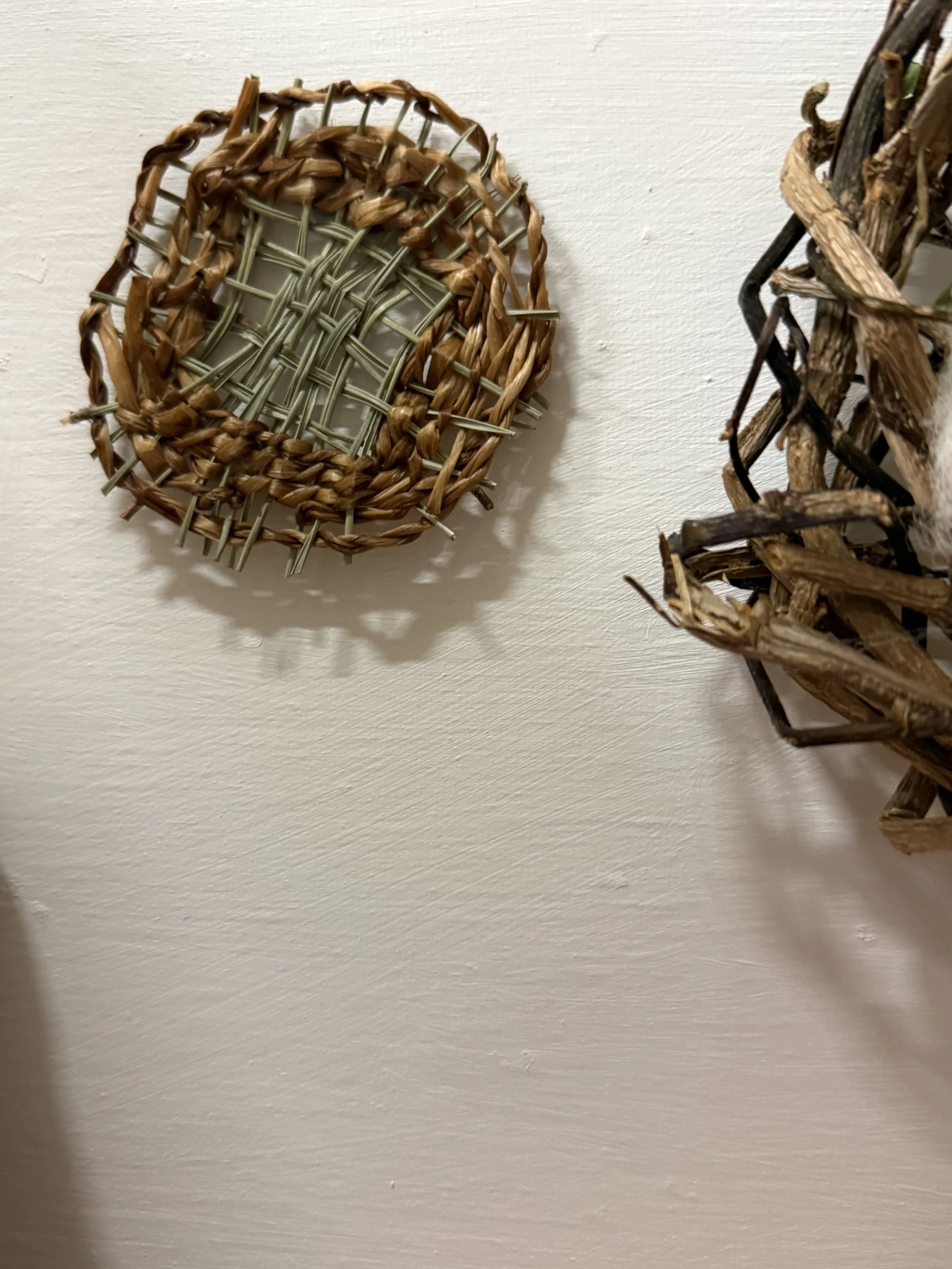
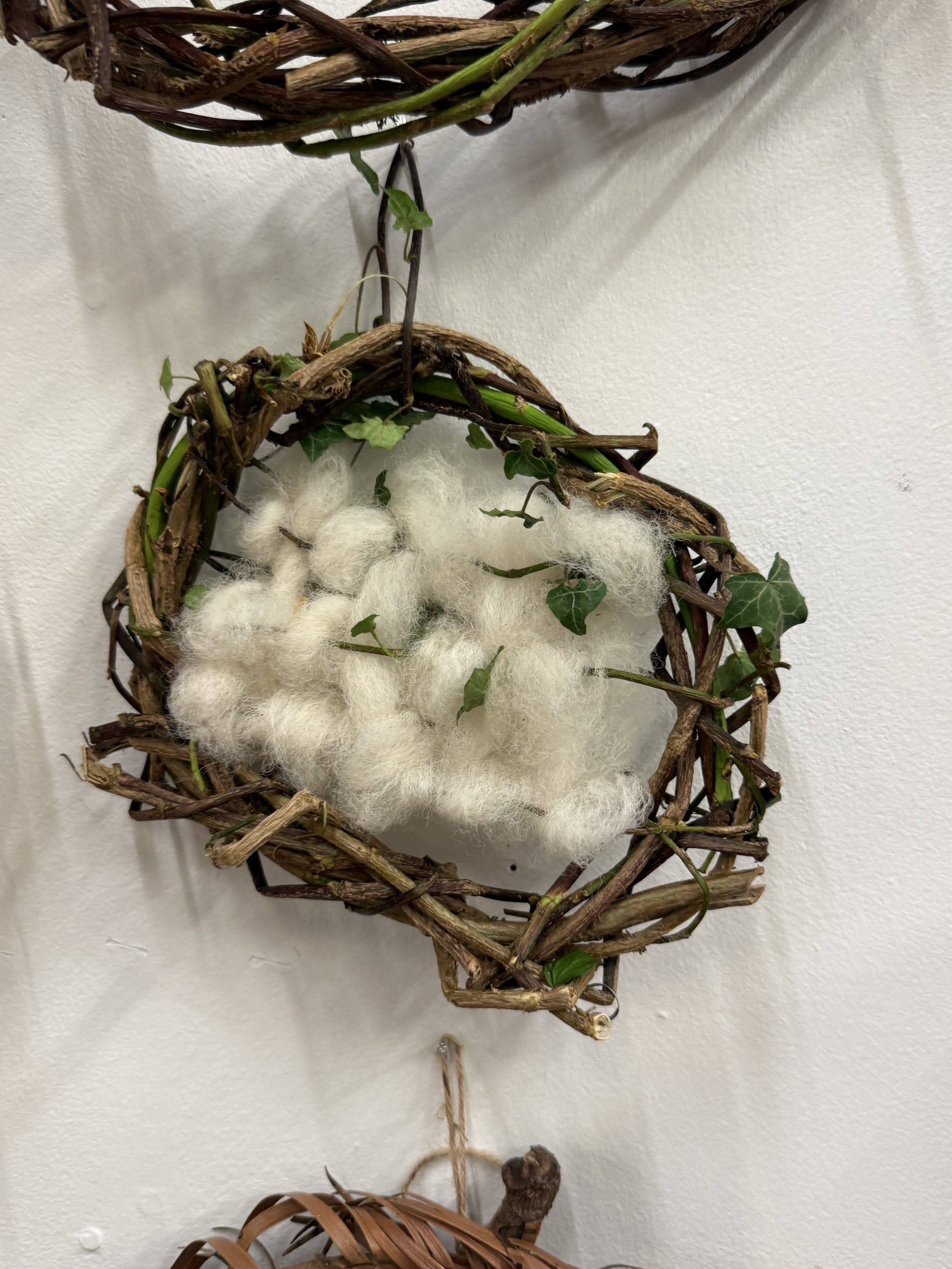
Vines and climbers: bramble, ivy, naturally tensile and often already twisting
Each material holds different properties, some are structural, others binding, others purely gestural or decorative.
When I Gather
Timing is essential. Plants shift dramatically through the seasons:
Spring: young shoots, fresh greens, flexible and full of moisture, ideal for bending and immediate use
Summer: peak growth, grasses and leaves can be harvested and used fresh or dried
Late summer to autumn: fibres are strongest; stems toughen, seed heads emerge, good for structure
Winter: bare frameworks, woody materials like willow and hazel are best harvested when sap is low
Working seasonally ensures both respect for the plant and the usability of the material. Harvesting is often done selectively, taking only what is needed and allowing regrowth.
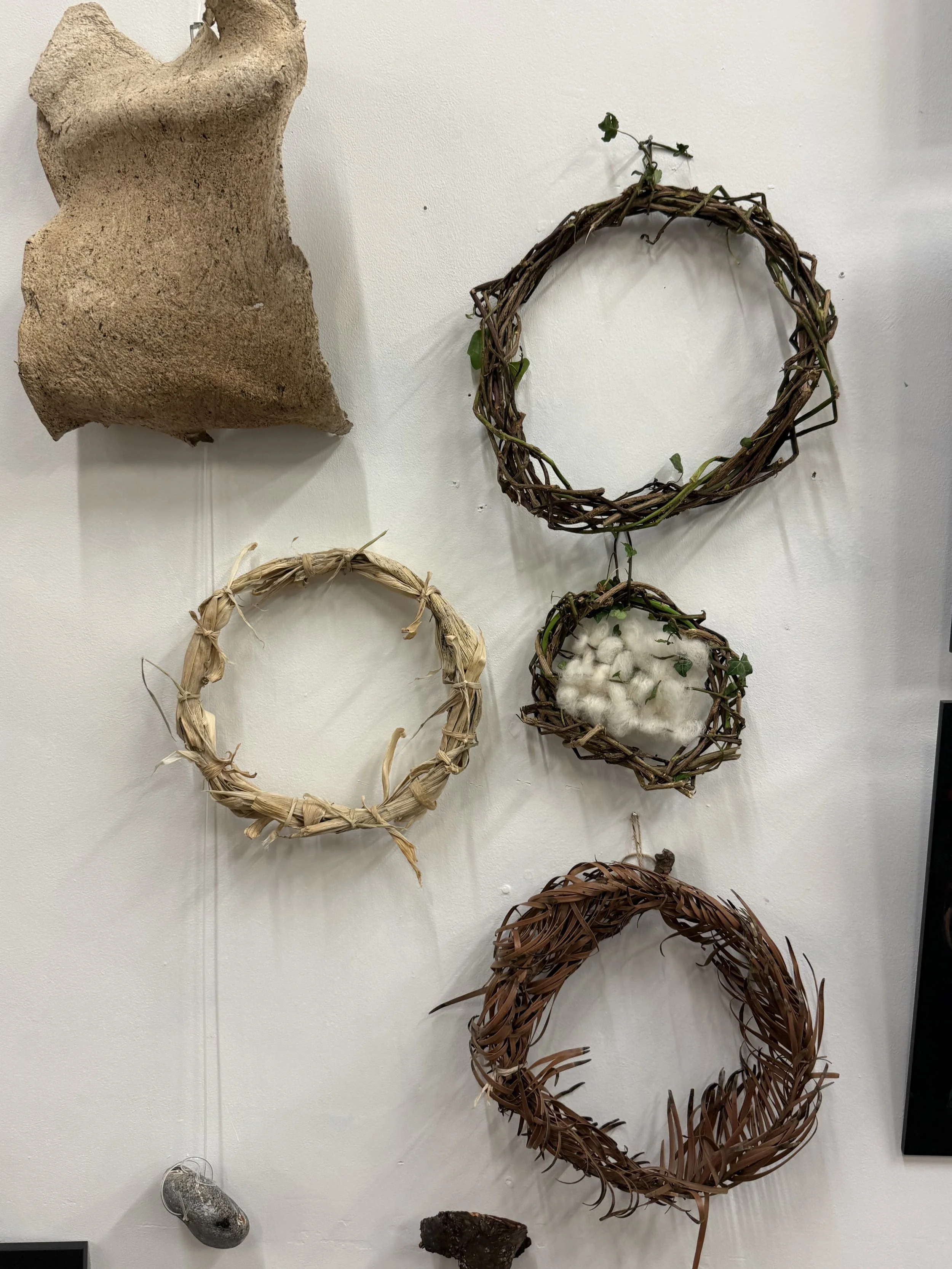
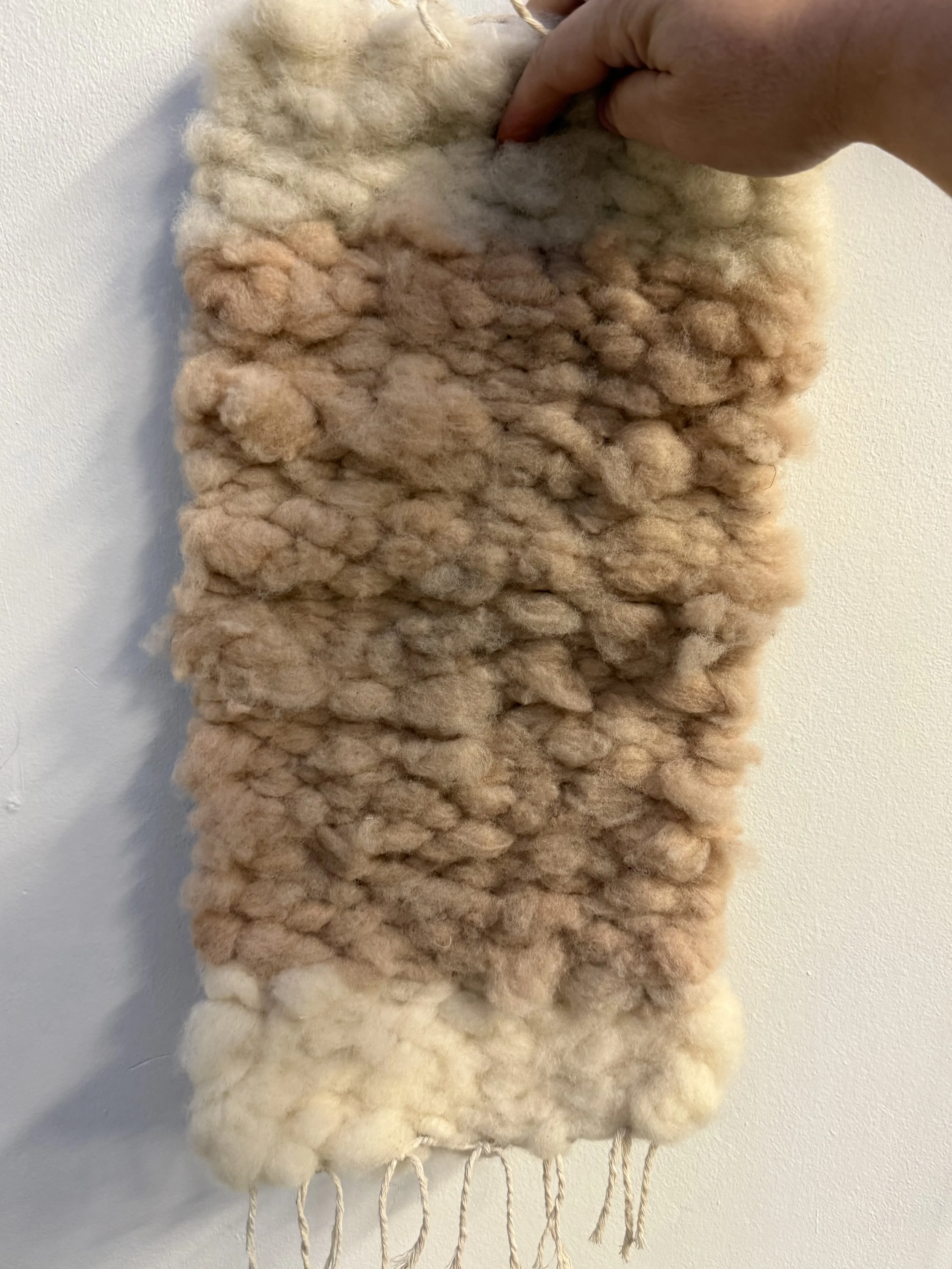
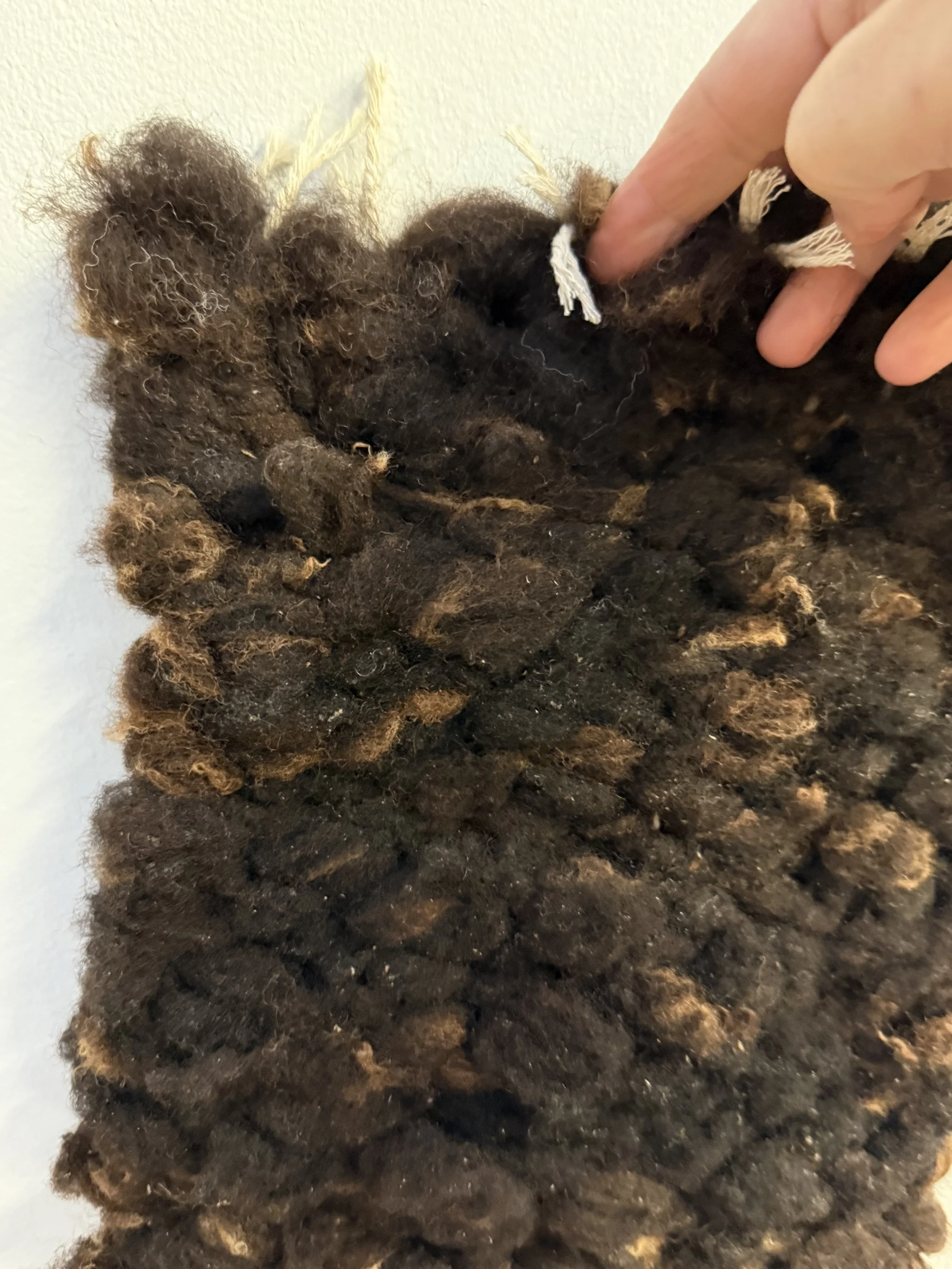
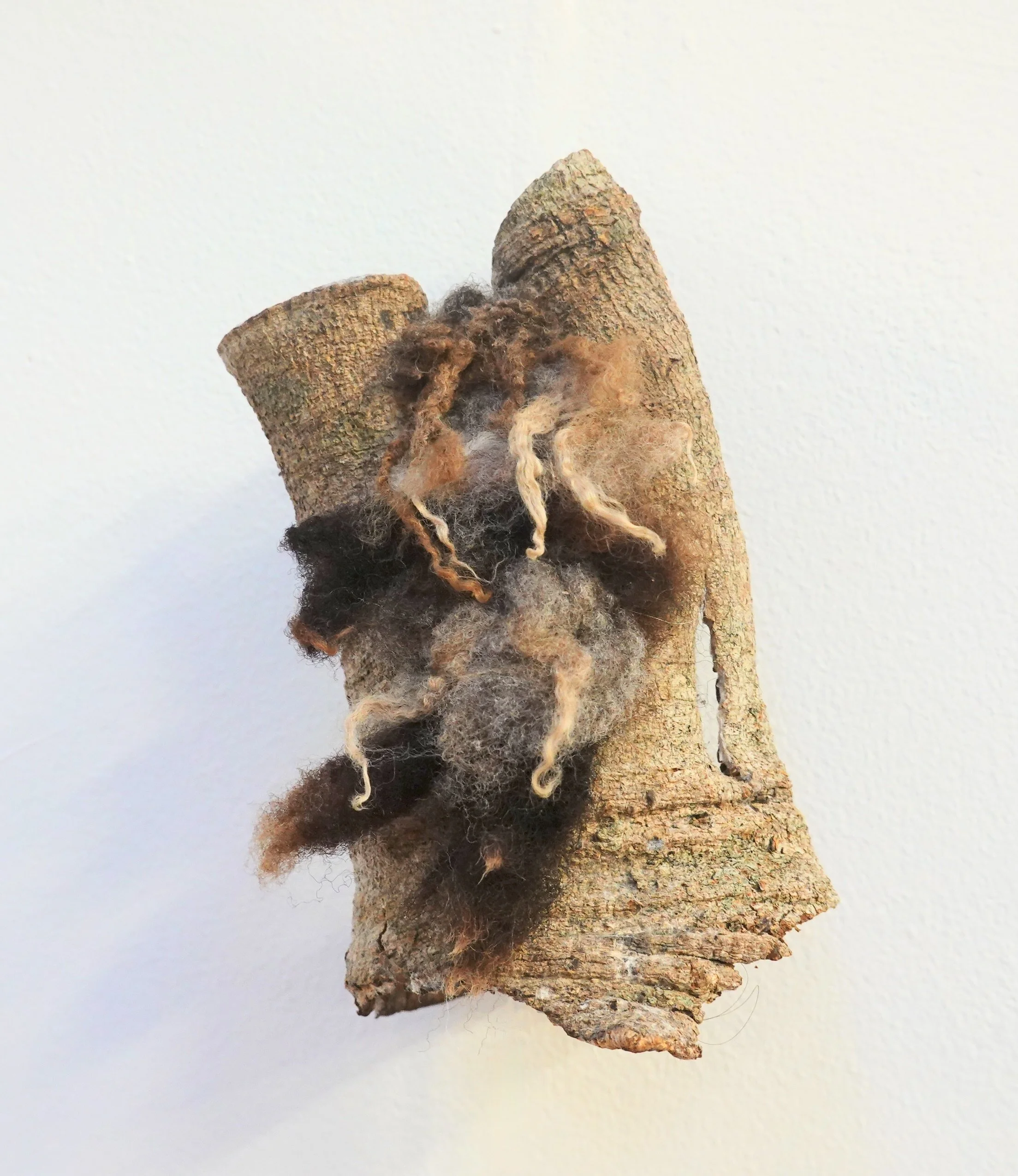
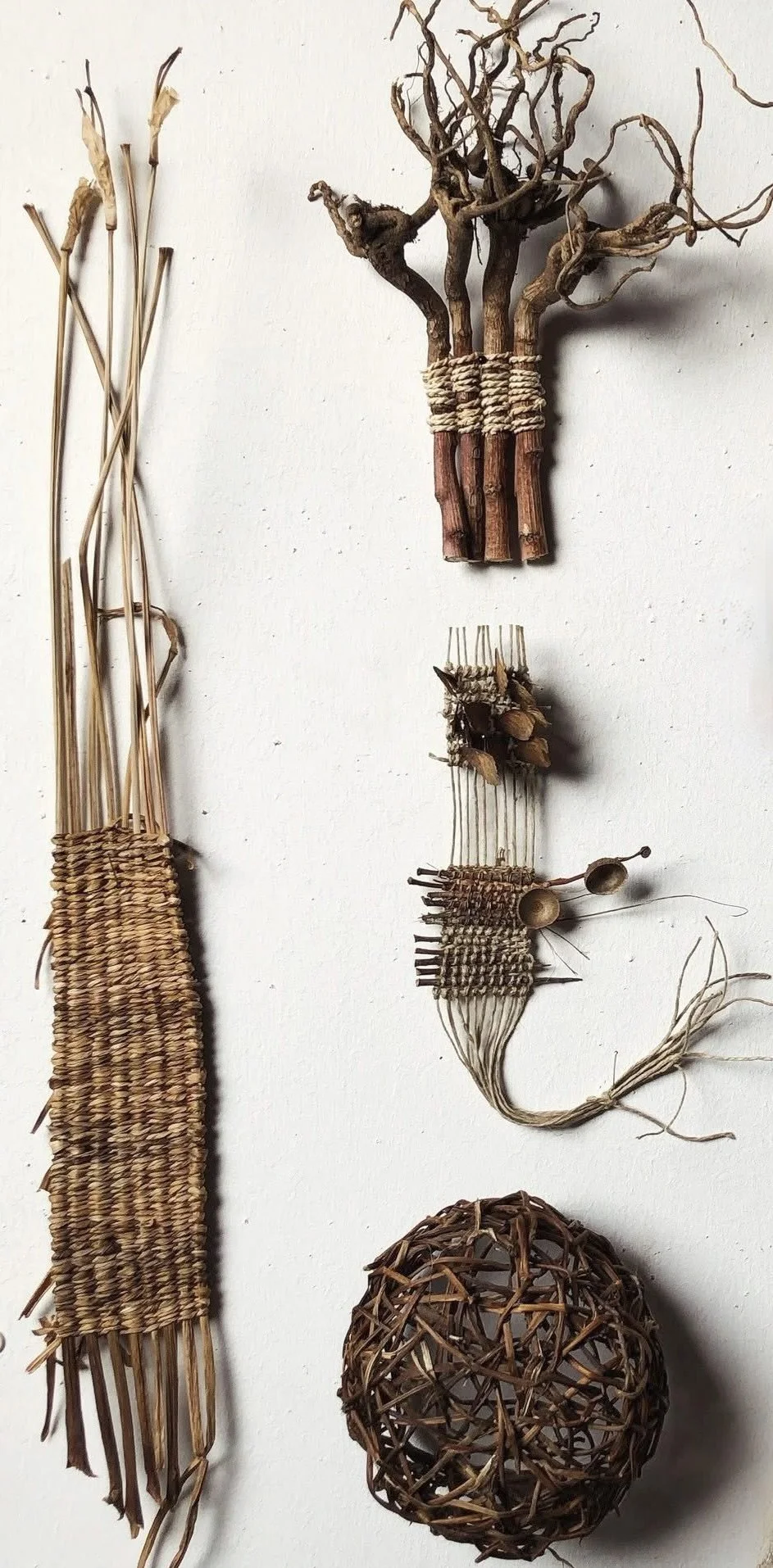
How I Weave
There is no single method, only a language of techniques that can be adapted intuitively:
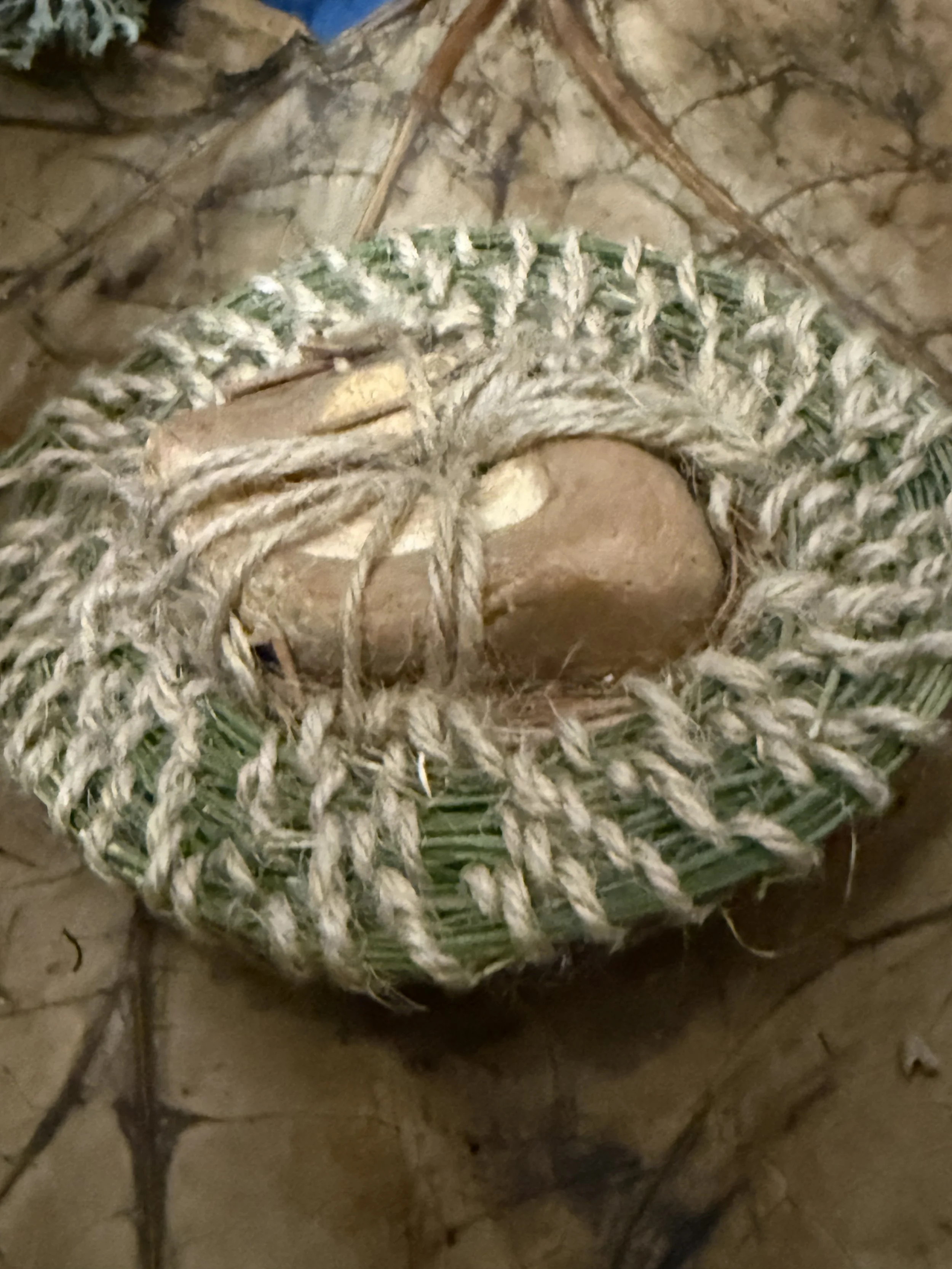
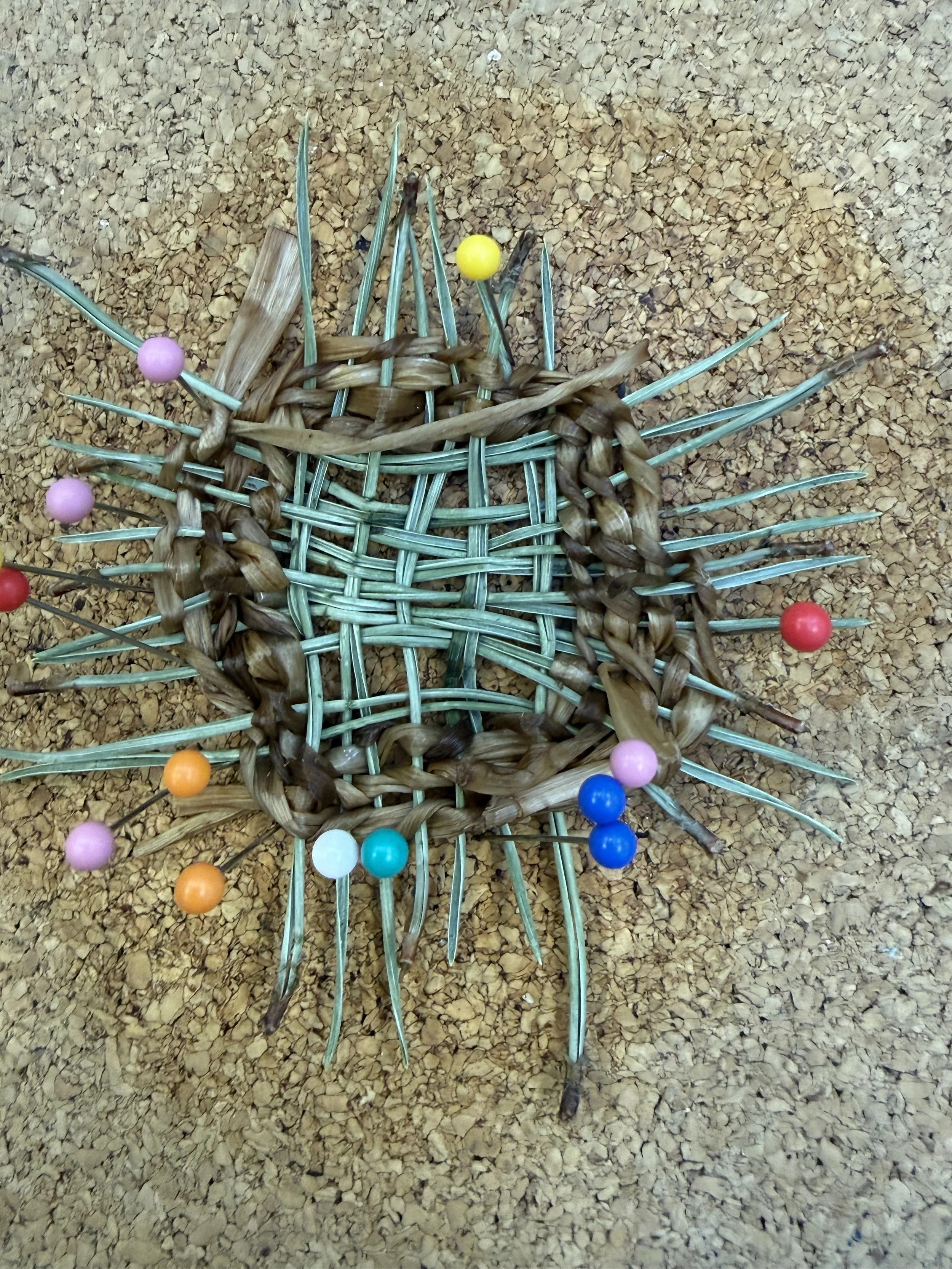
Twining: twisting fibres around a core, often used with grasses and soft stems
Plaiting (braiding): interlacing three or more strands, common with leaves or long fibres
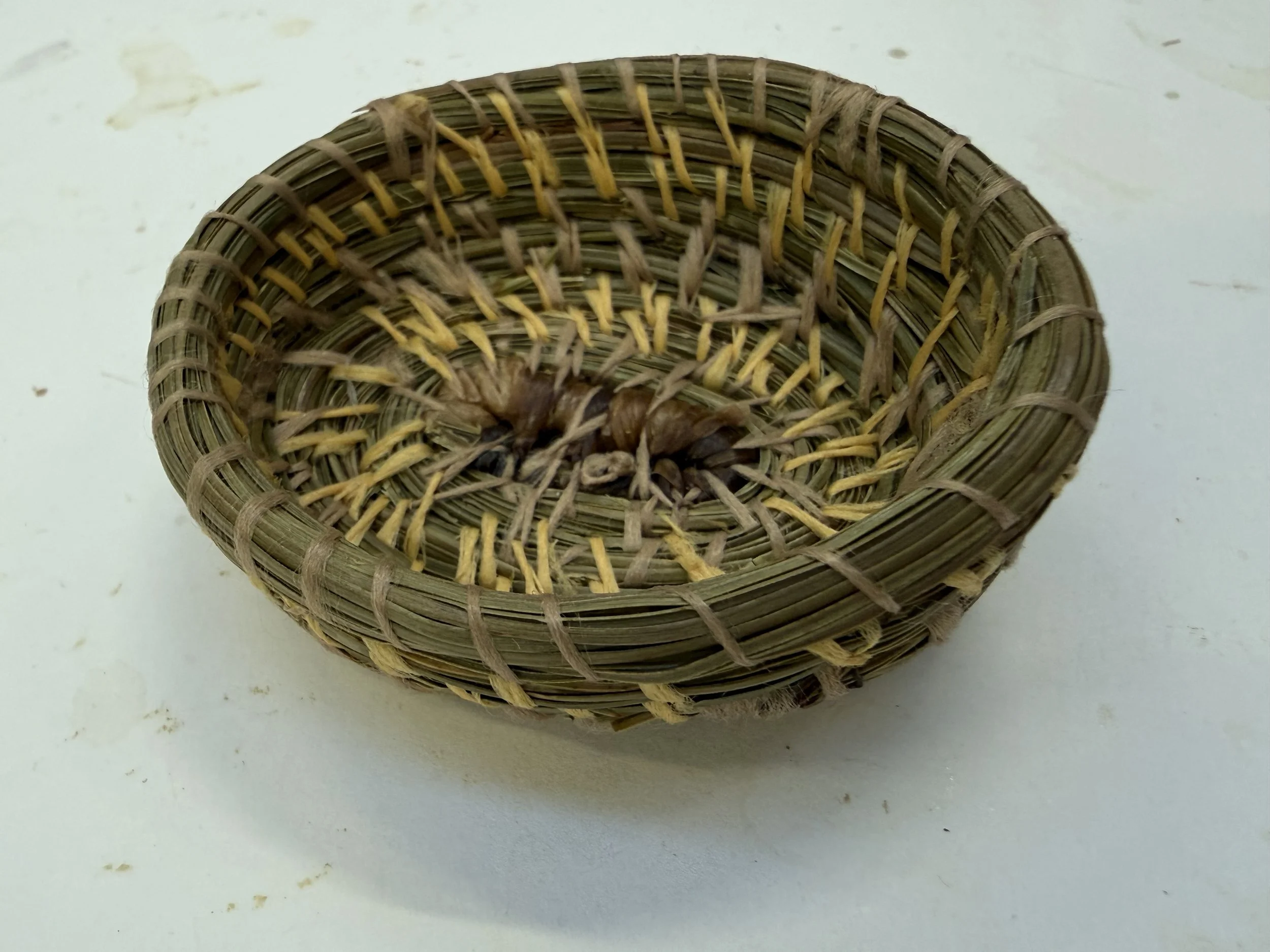
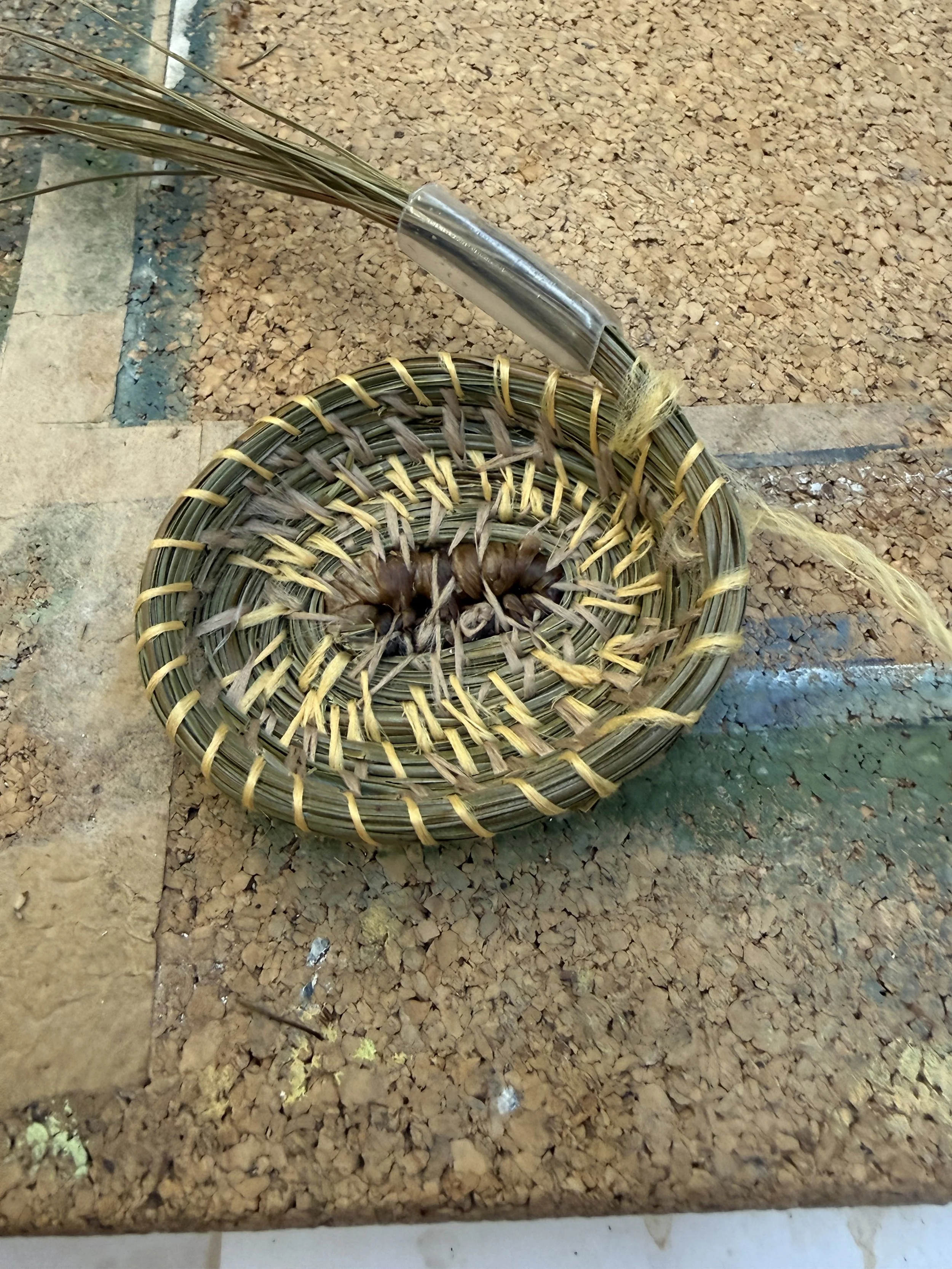
Coiling: wrapping flexible material around itself and stitching or binding it in place
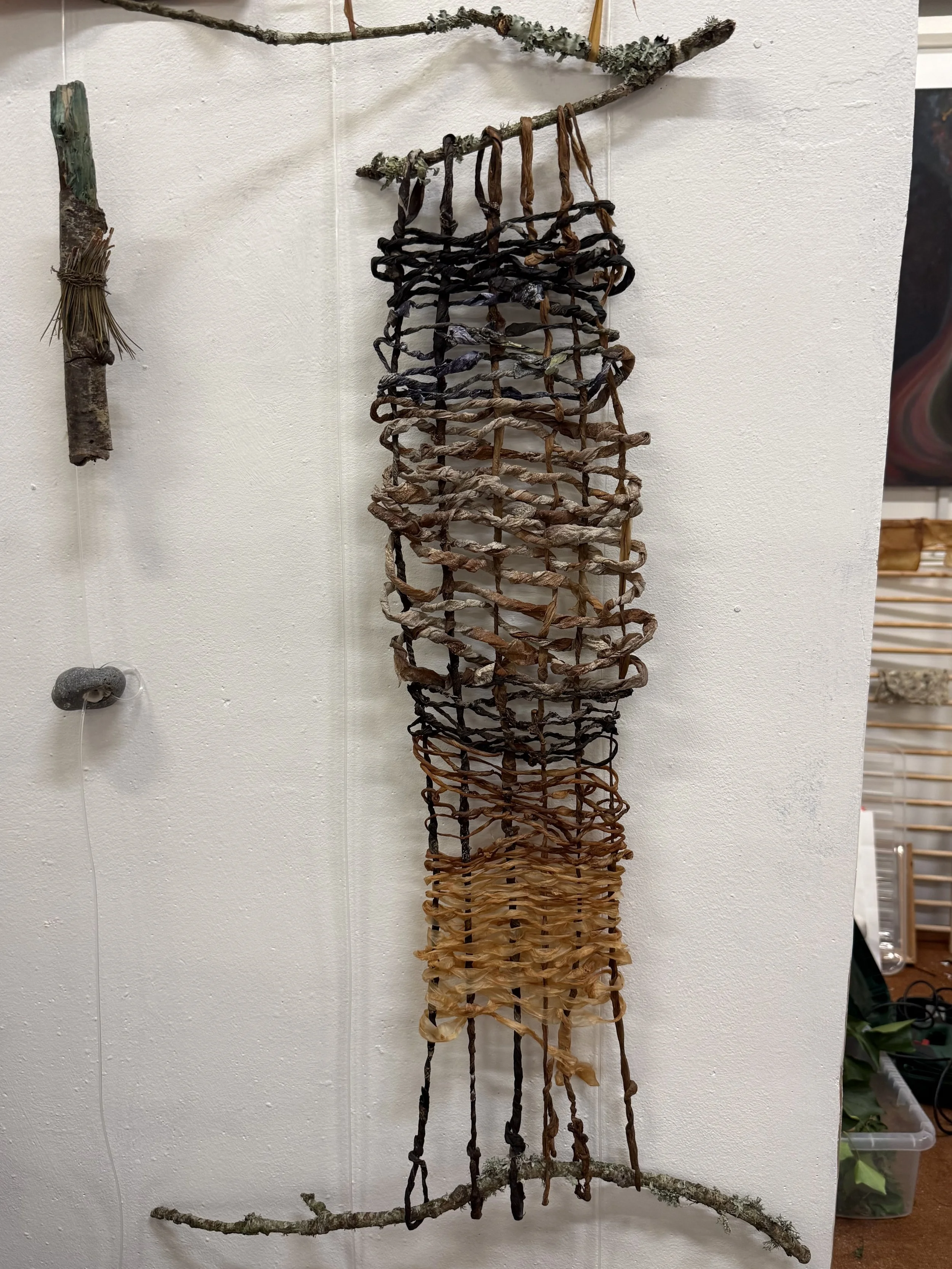
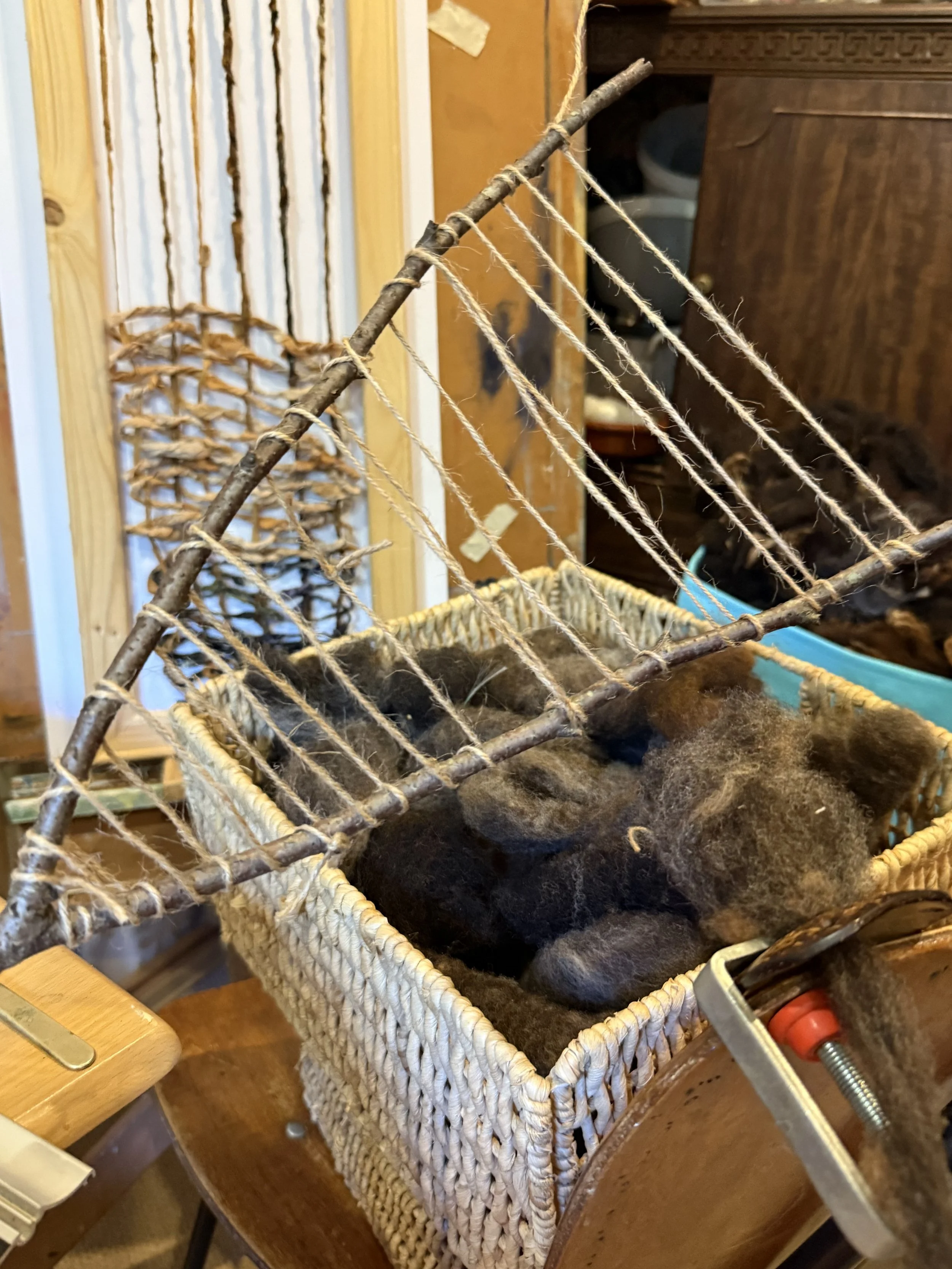
Wattle weaving: weaving rods or branches over and under a fixed framework
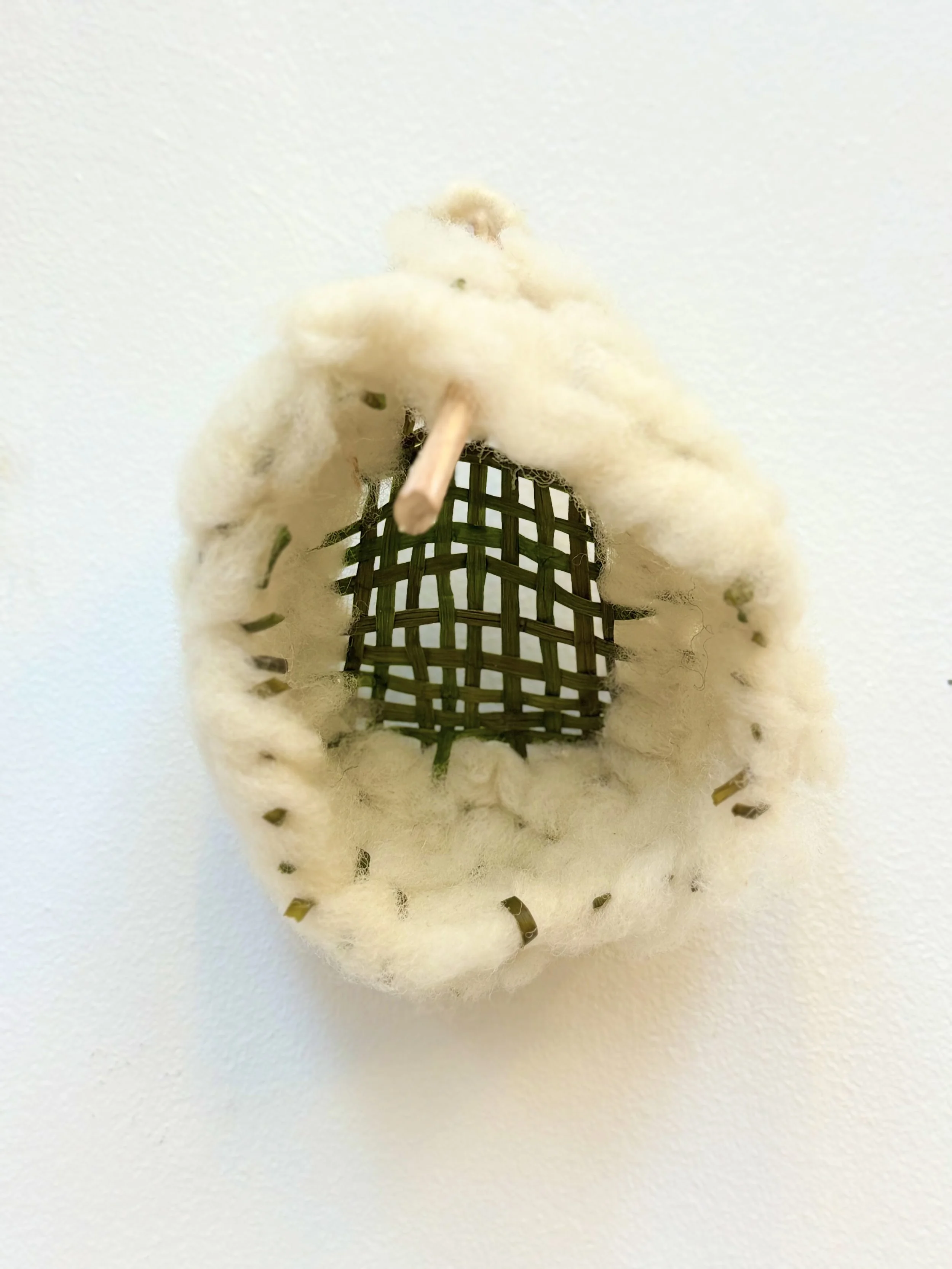
Random weave: a looser, more sculptural approach, allowing the material to dictate form
In many cases, the hands learn directly from the material, responding to tension, resistance, and fragility.
A Brief History
Weaving is one of the oldest human technologies, predating pottery and metalwork. Archaeological evidence shows that early humans used plant fibres to create baskets, nets, shelters, and clothing. These practices were deeply embedded in daily life, functional, and communal.
Across cultures, weaving has held symbolic and ritual significance. It has been associated with cycles of life, storytelling, and the body, threads as lifelines, knots as memory, patterns as language. In many traditions, women were the primary keepers of these skills, passing knowledge through generations.
My own practice echoes this lineage, drawing on foraging, material knowledge, and the body’s relationship to land, reconnecting with what has been “forgotten, buried deep, waiting to be explored” .
Plants as Material and Meaning
Different plants carry both practical and cultural significance:
Willow – flexibility, resilience; widely used in basketry
Nettle – strength; historically used as a linen substitute
Rush – domestic craft; chair seats, mats, and flooring
Straw – agricultural cycles; used in plaiting and ritual objects
Ivy and bramble – wildness; often used in spontaneous, site-based weaving
In working with these plants, the material is never neutral. It holds ecology, place, and history.
Weaving as Sculpture: Fibre, Fleece, Stone
In this work, weaving moves beyond function. It becomes a sculptural language, an intuitive process where fibre, fleece, and found materials meet in quiet negotiation. The act of weaving is no longer about containment or utility, but about forming relationships: between softness and weight, tension and release, the living and the weathered.
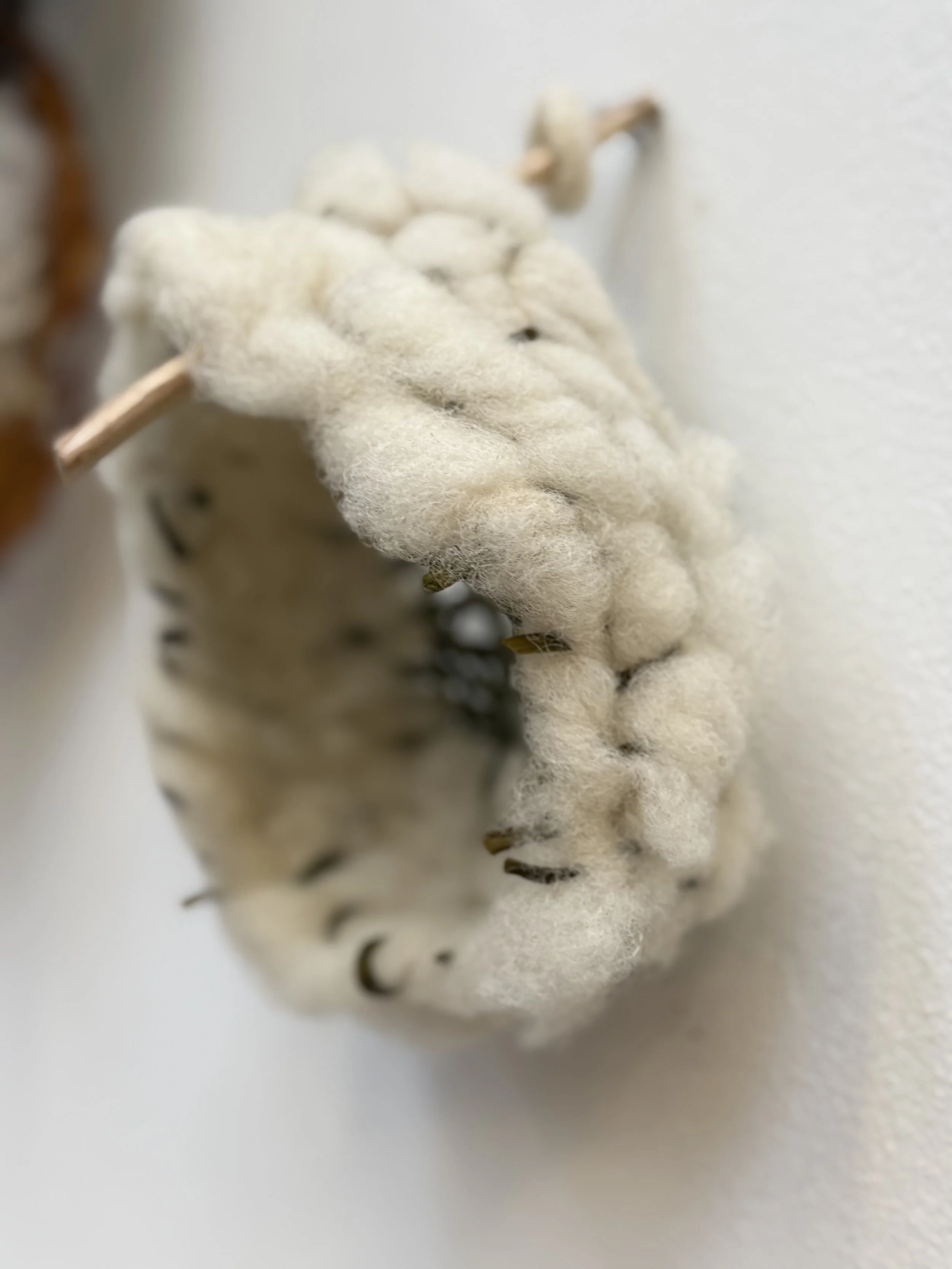
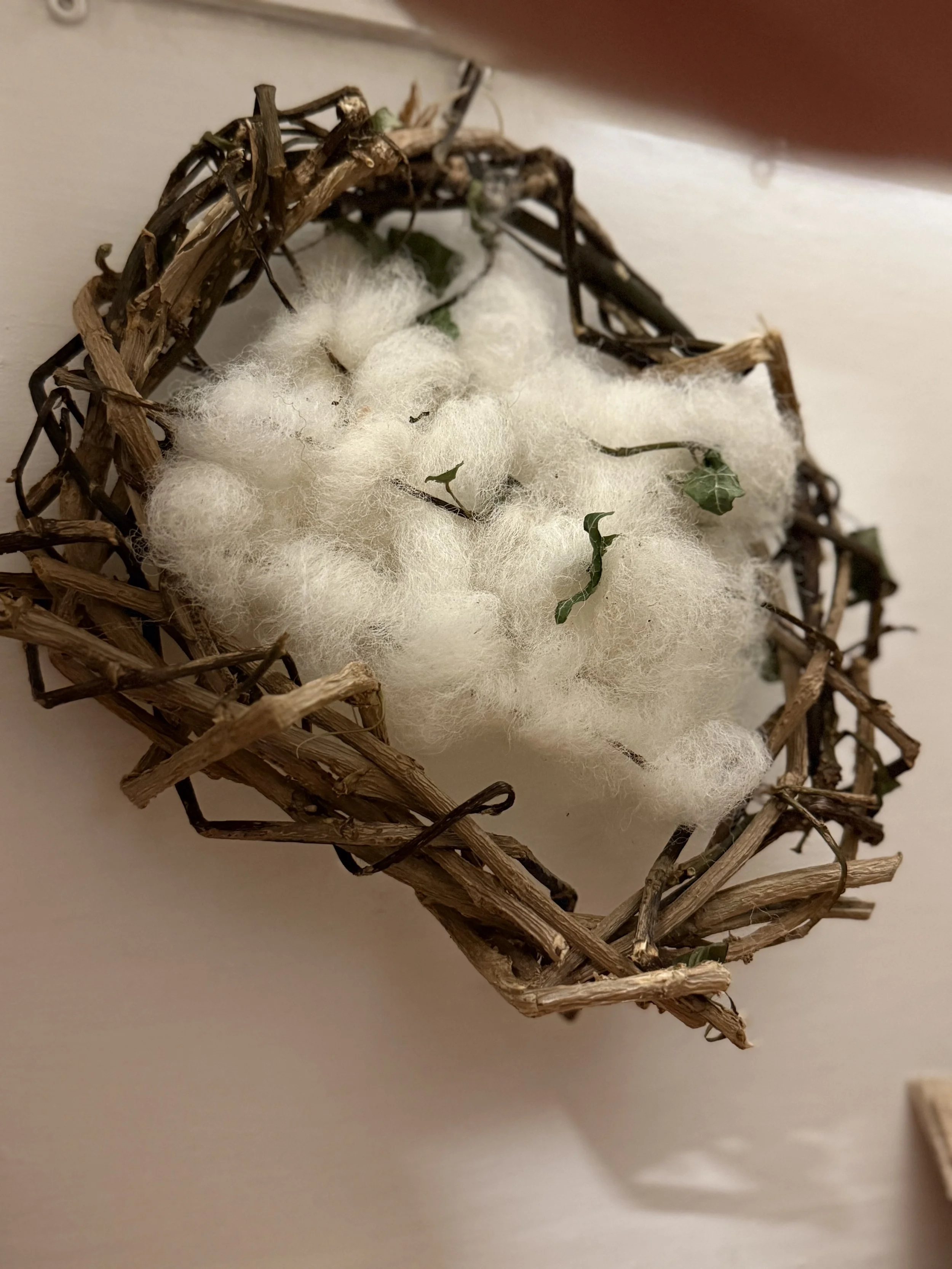
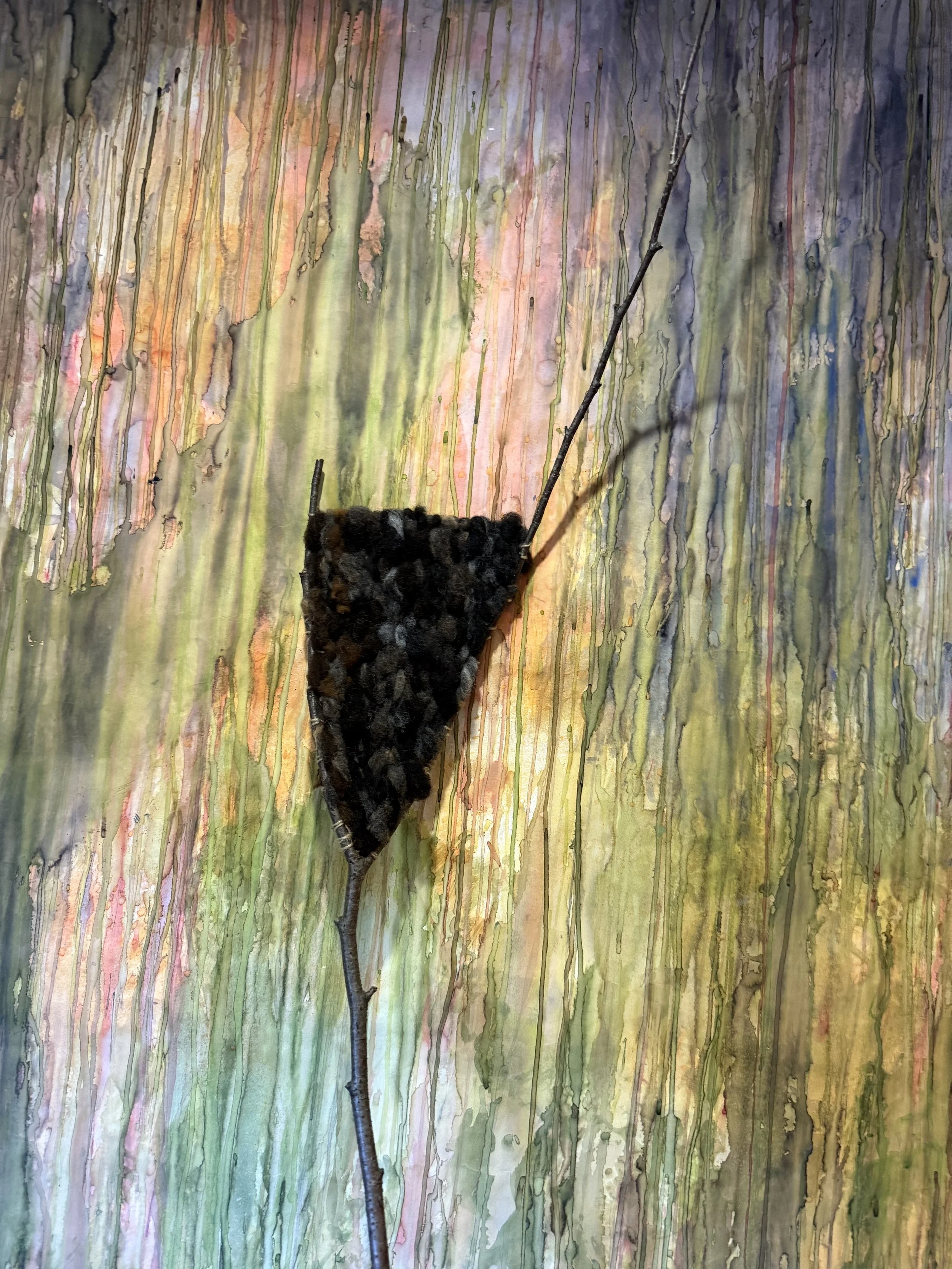
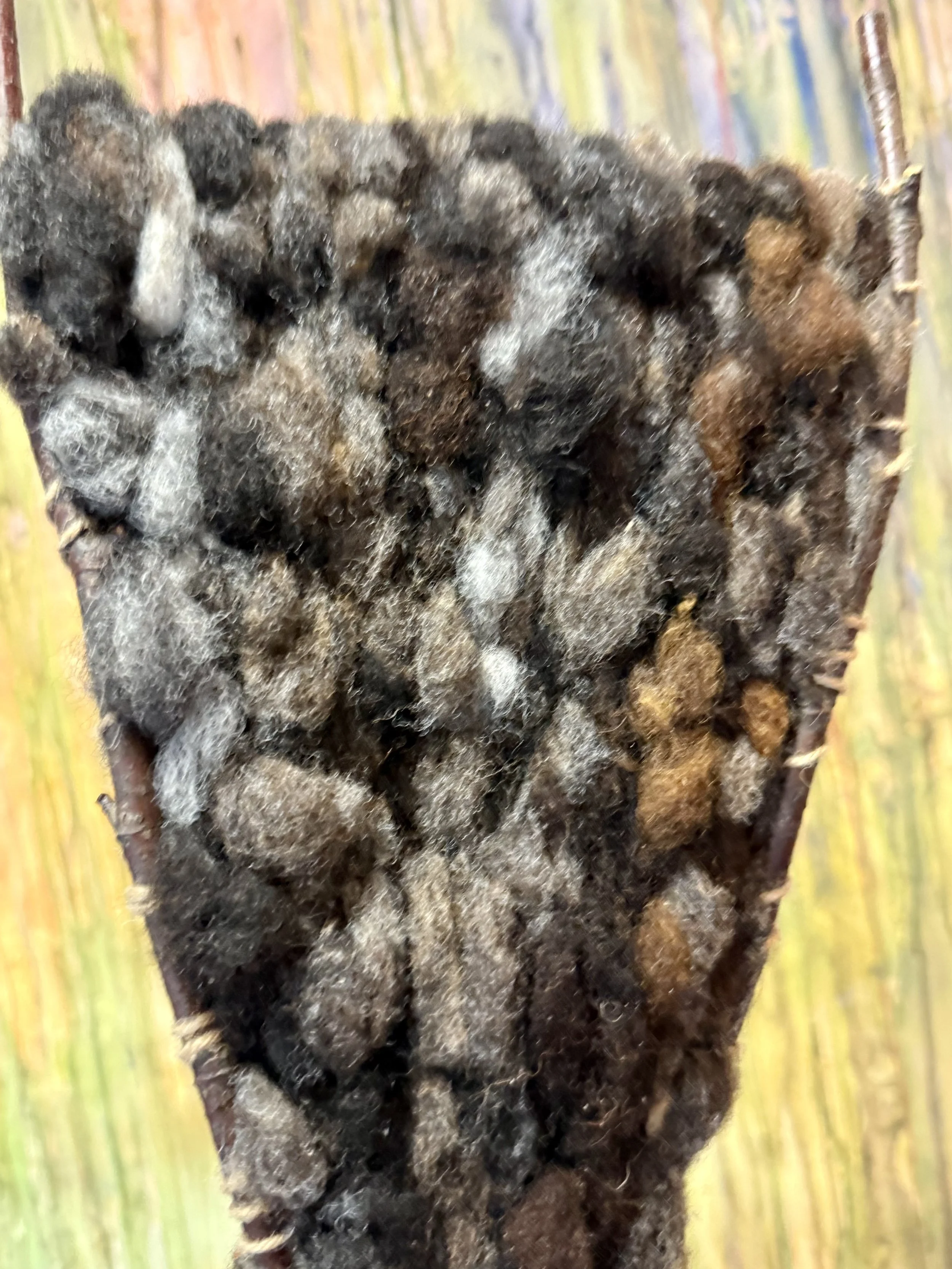
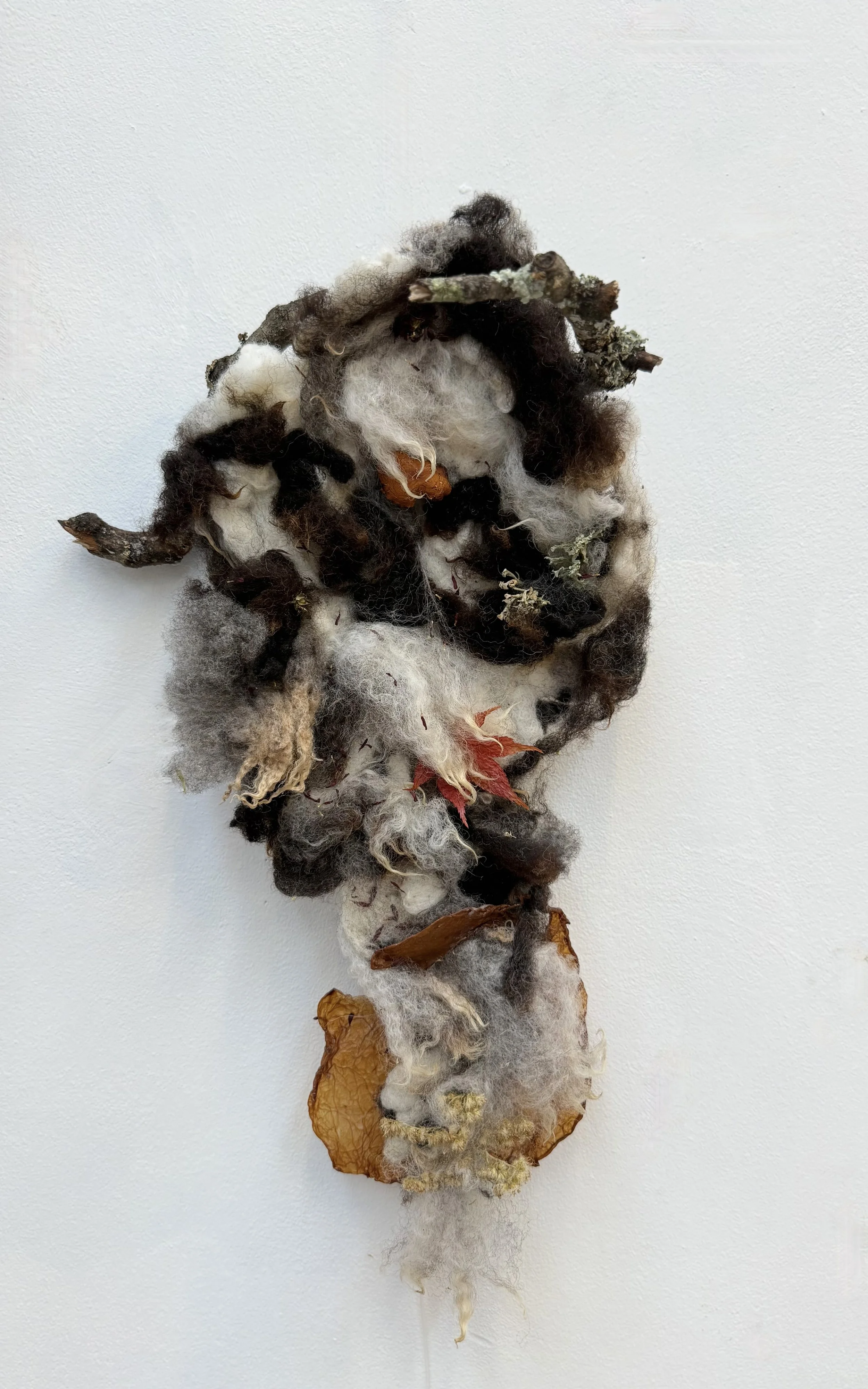
Raw fleece sits at the centre of this practice. Un-spun, irregular, still carrying traces of the animal and the landscape, it resists uniformity. It is worked as both fibre and form, wrapped, bound, teased apart, or compressed, becoming structure as much as surface. Unlike processed yarn, it holds unpredictability, asking to be responded to rather than controlled.
Thread enters as a drawing tool in space. Pulled taut or left slack, it maps connections, binding fleece to stone, looping through hollows, suspending weight. In this way, weaving becomes a form of mark-making, extending line into three dimensions. The gestures are minimal, but deliberate: a crossing, a tension, a hold.
Hag stones, with their naturally formed apertures, act as anchors within the work. Their holes are not made but found, openings shaped over time by water and abrasion. Thread passes through these spaces, creating points of tension and focus. The stone grounds the piece, holding weight and history, while the fibre remains transient, soft, and responsive.
I feel there is a symbiosis here, no material dominates. Fleece softens the hardness of stone; stone gives resistance to fibre; thread mediates between them. Each element retains its own integrity while becoming part of a larger structure. The work emerges through this balance rather than through imposition of form.
The materials I use are foraged or sourced with attention to place and season. Fleece may be gathered raw, unprocessed, still carrying lanolin, scent, and debris from the field or farm. Stones are found along shorelines or riverbeds, shaped slowly through natural forces. Threads, whether natural twine, linen, or wool, act as connective tissue. The making is slow and responsive. There is no fixed pattern. Instead, the process follows the material: where the fleece holds, where it loosens, where the thread can carry weight, where the stone insists on gravity.
Weaving, here, becomes an act of listening.
Contemporary Craft, while rooted in traditional techniques, binding, looping, knotting, the work shifts craft into a contemporary context. It resists the expectation of neatness, repetition, or finish. Instead, it embraces irregularity, asymmetry, and abstraction.
The forms That I create emerge from process and are open rather than closed, suggestive rather than defined. They sit somewhere between object and trace, part structure, part residue of an action. Craft is used not to perfect, but to explore. To test how materials relate, how they hold together, how they might fall apart.
Time, Tension, and Impermanence
These works exist in a state of ongoing change. Fleece dries, loosens, compacts. Thread shifts under tension. Organic matter responds to air, touch, and time. This impermanence is integral, and part of why i switched to nature based practice. The sculptures are not fixed outcomes but moments within a longer process of transformation. The materials continue to act, even after the making has paused.
In this way, weaving becomes a temporal practice, holding together elements that are, by nature, in the process of becoming something else. At its core, this practice is about holding, listening and letting go: holding tension, listening to material, holding relationships between elements that might otherwise remain separate. It is also about letting go, allowing materials to behave as they will, allowing forms to remain unresolved, allowing the work to shift over time.
Between these two states, control and release, the sculpture finds its balance.